

How Do Scientific Experiments Improve Science Olympiad Performance?
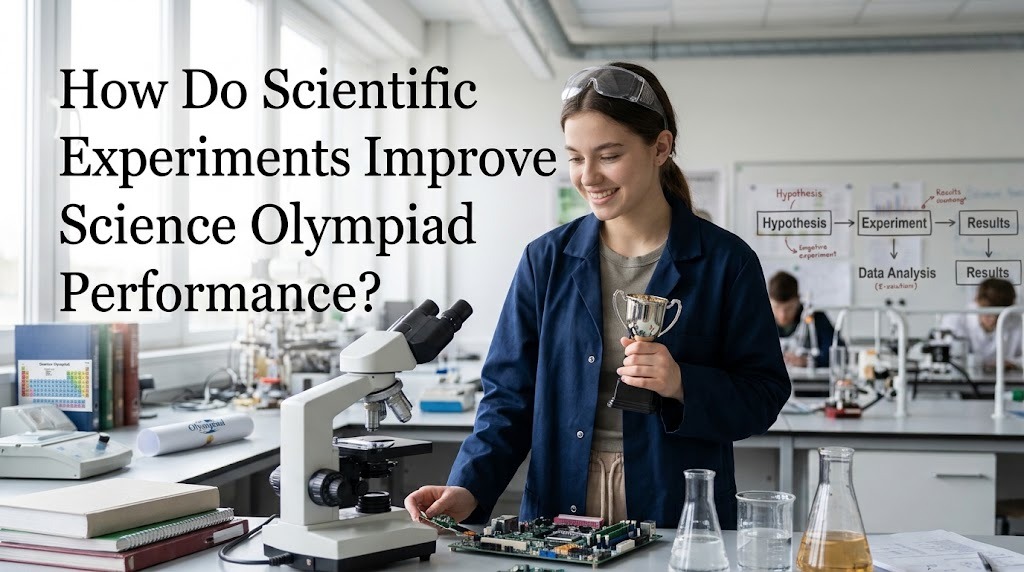
Scientific experiments play an important role in preparing students for Science Olympiad competitions. They allow learners to explore scientific concepts through direct observation, practical activities, and evidence-based investigations. Instead of relying only on textbooks and memorized formulas, students can understand how scientific principles work in real situations. Experimental activities also develop accuracy, critical thinking, problem-solving, and analytical abilities. By combining theoretical knowledge with practical experience, students can become better prepared to face different types of Olympiad challenges.
CONNECTING SCIENTIFIC THEORY WITH PRACTICAL KNOWLEDGE
Scientific experiments help students understand the relationship between theories and real-world phenomena. In classroom lessons, learners may study concepts such as gravity, chemical reactions, or biological processes through written explanations. Experiments allow them to observe these principles directly and understand how they influence different situations. For example, students can investigate how changing the temperature affects the rate of a chemical reaction. This practical experience makes scientific concepts easier to understand and remember during competitions.
DEVELOPING CRITICAL THINKING SKILLS
Critical thinking is essential when students conduct experiments and interpret their results. They must examine the problem, identify relevant information, and determine which scientific principles can explain an observation. Experimental activities encourage students to question assumptions instead of accepting every result without examination. They also learn to compare expected outcomes with actual findings and consider possible reasons for differences. These habits help participants approach complex Science Olympiad questions with logical reasoning.
IMPROVING OBSERVATION AND ANALYTICAL ABILITIES
Careful observation is an important part of scientific investigation. Students need to identify changes, recognize patterns, and record relevant details during an experiment. They may observe differences in color, temperature, movement, or other measurable characteristics depending on the activity. After collecting information, they analyze the results to determine what they reveal about the scientific question. Regular practice strengthens their ability to interpret data and identify meaningful relationships, which are useful skills for theoretical and practical competition questions.
STRENGTHENING PROBLEM-SOLVING ABILITIES
Experiments often involve unexpected results or technical challenges that require students to find appropriate solutions. Participants may need to adjust procedures, check equipment, or reconsider their original explanations. This process teaches them to approach problems systematically rather than making random changes. They learn to identify possible causes, evaluate different solutions, and test their ideas through further investigation. Such experiences can improve their ability to solve unfamiliar problems in Science Olympiad examinations.
DEVELOPING ACCURACY AND ATTENTION TO DETAIL
Scientific investigations require careful measurements and consistent procedures. Students must learn to use equipment correctly, follow instructions, record numerical values, and pay attention to measurement units. Small mistakes can influence experimental results and lead to incorrect interpretations. By repeating experiments and checking their measurements, learners develop accuracy and attention to detail. These habits are particularly valuable in competitions that involve calculations, laboratory procedures, or data interpretation.
UNDERSTANDING VARIABLES AND EXPERIMENTAL METHODS
A well-designed experiment requires students to understand variables and how they influence results. They need to identify the independent variable, dependent variable, and controlled variables to make an investigation meaningful. For example, when studying plant growth, students may change the amount of water while keeping other conditions consistent. Understanding this process helps learners recognize how scientific investigations are structured. It also prepares them to answer questions about experimental design and research methods.
IMPROVING DATA INTERPRETATION SKILLS
Experiments produce information that students must organize and interpret carefully. Results may be presented through tables, graphs, measurements, or written observations. Students need to identify trends, compare values, and determine whether the evidence supports their initial predictions. They should also recognize that unusual results may require additional investigation rather than immediate conclusions. These abilities help participants become more confident when analyzing scientific data during Olympiad competitions.
BUILDING CONFIDENCE IN PRACTICAL COMPETITIONS
Some Science Olympiad competitions include laboratory examinations or practical investigation tasks. Students who regularly participate in experiments may become more familiar with scientific equipment, laboratory procedures, and safety requirements. This experience can reduce uncertainty when they encounter practical challenges during competitions. They also become more comfortable following instructions, recording observations, and explaining their findings. However, practical preparation should always match the subject and format of the competition.
ENCOURAGING CURIOSITY AND INDEPENDENT LEARNING
Scientific experiments encourage students to explore questions beyond the information provided in textbooks. When an experiment produces an interesting result, learners may become motivated to investigate the reasons behind it. They can develop new questions, search for scientific explanations, and design additional investigations under appropriate supervision. This process encourages independent learning and strengthens their interest in science. Curiosity also helps students remain motivated throughout a long period of Olympiad preparation.
DEVELOPING SCIENTIFIC COMMUNICATION AND TEAMWORK
Some experiments require students to work together, discuss procedures, and share responsibilities. Participants may need to explain their observations, compare interpretations, and present conclusions based on collected evidence. These activities develop communication skills and teach students how to collaborate effectively. They also learn to respect different opinions and evaluate suggestions using scientific reasoning. The ability to communicate findings clearly is valuable in practical competitions and future academic research.
CONCLUSION
Scientific experiments improve Science Olympiad performance by helping students connect theoretical knowledge with practical experience. Through investigation, learners develop critical thinking, observation, analytical abilities, problem-solving skills, and accuracy. They also become more familiar with experimental methods, data interpretation, and scientific communication. These skills can strengthen their preparation for both theoretical and practical competition challenges. By practicing experiments consistently and learning from their results, students can build a deeper understanding of science and approach Olympiad competitions with greater confidence.
Recent Posts

Bagaimana Sistem SKS pada Program Kuliah... 22.11.2026/48 View

How Does Technology Make Daily Evaluation... 21.11.2026/76 View

Apa Strategi Menghadapi Kesenjangan antara Kompetensi... 21.11.2026/78 View

Mengapa Inventaris Aset Penting bagi Kelancaran... 21.11.2026/73 View

When Should Musicians Join a Record... 21.11.2026/78 View
