

How Do Sustainable Practices Influence Future Vocational Curriculum Planning?
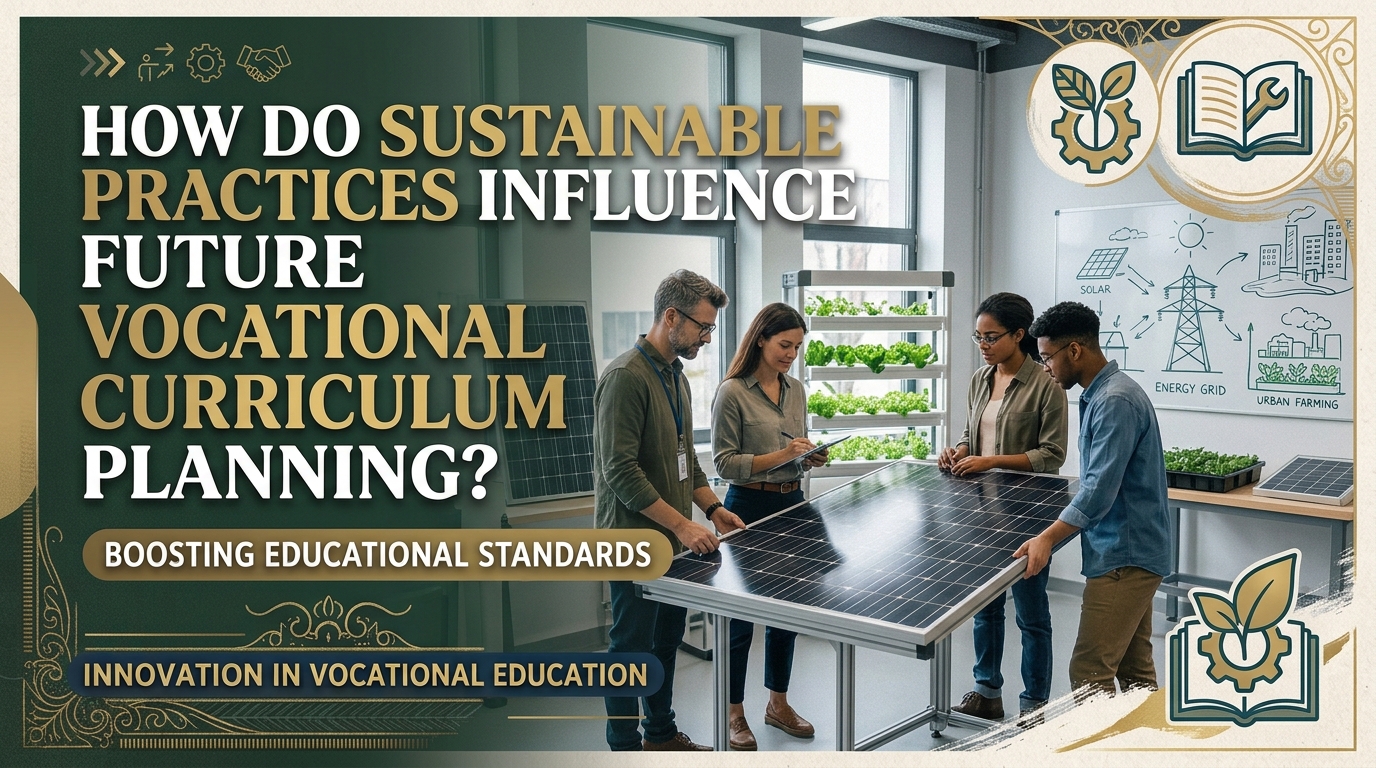
The global shift toward environmental responsibility is transforming modern business operations, manufacturing, and technology sectors. Educational institutions, including high schools, polytechnics, and technical academies, must adapt their training programs to meet these eco-friendly standards. Integrating sustainable vocational practices into long-term academic planning ensures that future workers are fully prepared for green jobs. When academic frameworks prioritize environmental stewardship alongside technical mastery, students gain relevant expertise for eco-conscious industries. However, traditional training models must undergo significant updates to align fully with global sustainability goals.
INTEGRATING GREEN SKILLS INTO TECHNICAL EDUCATION
Incorporating environmental concepts into technical learning programs equips students with green skill sets highly valued by modern employers. Traditional vocational subjects like automotive engineering, construction, and manufacturing now require knowledge of energy efficiency, waste management, and renewable technologies. Teaching students how to minimize environmental impact during standard operations creates responsible professionals.
Furthermore, eco-friendly technical training prepares learners for emerging employment opportunities in clean energy sectors. Students who understand sustainable materials, circular economy principles, and resource conservation gain a distinct competitive advantage. Embedding these principles into daily coursework ensures graduates can solve complex industrial challenges sustainably.
ALIGNING ACADEMIC PLANNING WITH GLOBAL SUSTAINABILITY GOALS
Educational leaders must align their long-term strategic plans with internationally recognized sustainability benchmarks to maintain program relevance. Modern industries must comply with strict environmental regulations, making sustainable operational knowledge an essential job requirement. Vocational centers that proactively update their study programs ensure their graduates remain highly attractive to top corporate hiring managers.
Additionally, collaborating with green technology enterprises allows institutions to co-create relevant instructional content and practical workshops. Industry partnerships help educators identify emerging eco-friendly tools and updated safety protocols quickly. This proactive alignment guarantees that academic planning reflects current market demands and global environmental trends.
UPGRADING CAMPUS FACILITIES AND ECO FRIENDLY INFRASTRUCTURE
Implementing sustainable education effectively requires modernizing physical laboratories, workshop equipment, and campus facilities. Vocational institutions must invest in green campus infrastructure to provide students with authentic, hands-on practice in eco-friendly settings. Practicing on energy-efficient machinery and solar-powered systems builds practical confidence before students enter professional workplaces.
Moreover, adopting eco-friendly workshop habits within educational facilities reinforces practical learning through daily routine. Students learn to implement resource-saving measures, manage hazardous industrial waste properly, and reduce energy consumption during practical sessions. State-of-the-art facilities ensure that learners experience real-world green operations throughout their studies.
EMPOWERING EDUCATORS THROUGH SUSTAINABILITY TRAINING
The success of any updated learning framework relies heavily on well-trained teaching staff capable of delivering green concepts clearly. Vocational institutions must prioritize educator green training programs to keep instructors updated on eco-friendly technologies and teaching methods. Knowledgeable teachers can easily integrate environmental awareness into existing technical exercises and lectures.
Simultaneously, sponsoring specialized green certifications for instructors validates their technical competence in modern environmental practices. Trained educators serve as mentors who inspire students to adopt sustainable mindsets throughout their professional careers. Investing in teacher development guarantees high instruction quality and long-term educational excellence.
CONCLUSION
Integrating sustainable practices into future vocational curriculum planning is essential for creating a highly capable, future-ready workforce. Combining green skill sets, modernized campus facilities, and comprehensive instructor training ensures graduates excel in eco-conscious global industries. While upgrading facilities and updating study plans requires dedicated effort, the long-term benefits for students and the environment are immense. Educational leaders must prioritize environmental sustainability today to build a resilient and prosperous future for the next generation. Empowering young professionals with green technical expertise ensures sustainable economic growth worldwide.
Recent Posts

Bagaimana Sistem SKS pada Program Kuliah... 22.11.2026/54 View

How Does Technology Make Daily Evaluation... 21.11.2026/83 View

Apa Strategi Menghadapi Kesenjangan antara Kompetensi... 21.11.2026/82 View

Mengapa Inventaris Aset Penting bagi Kelancaran... 21.11.2026/78 View

When Should Musicians Join a Record... 21.11.2026/84 View
