

How Do Teachers Help Students Prepare for Language Competitions?
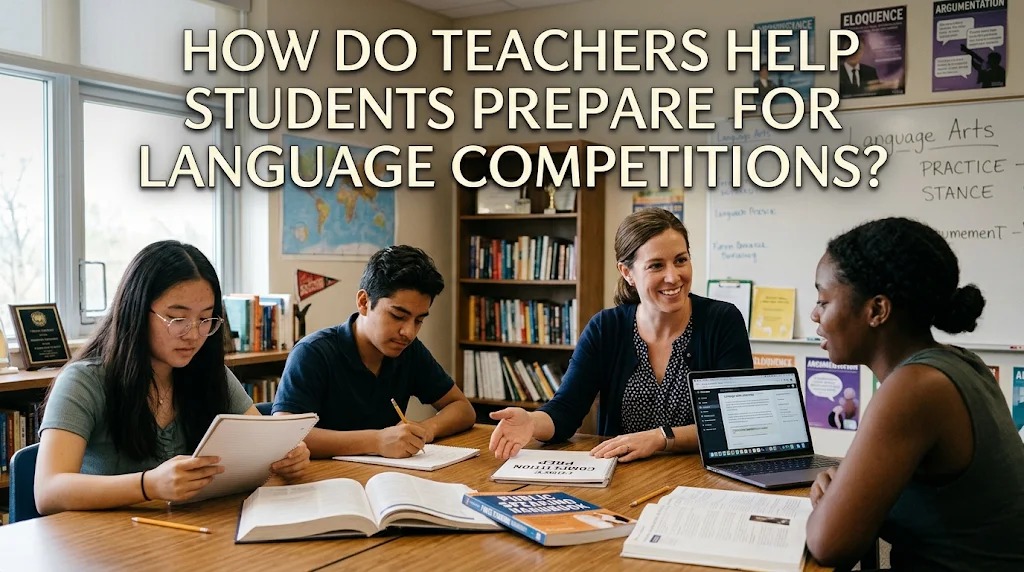
Teachers play an important role in helping students prepare for language competitions. Their guidance allows students to develop language abilities, improve confidence, and understand the requirements of different competitions. Preparing for activities such as speech, debate, storytelling, spelling, and essay writing requires more than just memorizing information. Students also need regular practice, useful feedback, and proper preparation strategies.
With support from teachers, students can identify their strengths, overcome difficulties, and improve their performance. Teachers also create learning opportunities that help participants become more prepared and comfortable when competing. Their involvement can make the preparation process more organized, effective, and enjoyable.
PROVIDING GUIDANCE AND EXPLAINING COMPETITION REQUIREMENTS
Teachers help students understand the purpose, format, and requirements of language competitions. They explain the rules, assessment criteria, topics, and time limits so students know what to expect. This information is important because each competition requires different abilities and preparation methods. For example, speech competitions focus on speaking and presentation skills, while essay writing competitions emphasize grammar, vocabulary, and writing organization.
Teachers can also recommend suitable competitions based on students' interests and language abilities. Beginners may benefit from activities that match their current skills, while more experienced students can try competitions with higher levels of difficulty. By providing clear guidance from the beginning, teachers help students prepare with better direction and avoid unnecessary mistakes.
IMPROVING STUDENTS' LANGUAGE SKILLS
One of the main responsibilities of teachers is helping students improve their English or other language abilities before a competition. They provide lessons and exercises related to grammar, vocabulary, pronunciation, reading comprehension, listening, and writing. These activities help students understand language structures and use words more accurately. Strong language foundations are important because participants need to communicate their ideas clearly during competitions.
Teachers can adjust learning activities according to the needs of each student. For example, students who struggle with pronunciation can receive additional speaking exercises, while those who have difficulty writing can practice organizing paragraphs and developing arguments. Teachers may also introduce new vocabulary and encourage students to use it in appropriate contexts. Through consistent guidance, students can gradually improve their language performance.
ORGANIZING REGULAR PRACTICE AND SIMULATION SESSIONS
Regular practice helps students become familiar with competition activities and develop their abilities. Teachers can organize training sessions that follow the format of the actual competition. For example, they may ask students to deliver speeches, participate in debates, answer vocabulary questions, or tell stories in front of classmates. These activities allow students to experience the competition environment before the actual event.
Simulation sessions also help participants improve their time management and ability to respond under pressure. Teachers can provide different questions or unexpected situations to encourage students to think independently. Repeated practice makes it easier for students to understand their responsibilities and prepare suitable responses. As a result, they can become more comfortable and confident when facing judges and audiences.
PROVIDING FEEDBACK AND EVALUATING STUDENT PERFORMANCE
Constructive feedback is essential for helping students recognize their progress and improve their weaknesses. Teachers observe students during practice and evaluate different aspects of their performance, such as pronunciation, grammar, vocabulary, fluency, creativity, and confidence. They explain which areas need improvement and suggest practical ways to correct mistakes. This guidance helps students understand that improvement requires continuous effort.
Teachers should also recognize students' achievements and encourage them to maintain their progress. Positive feedback can increase motivation, especially for participants who feel nervous or lack confidence. Meanwhile, specific corrections help students avoid repeating the same mistakes during future practice sessions. By evaluating performance regularly, teachers can ensure that preparation remains focused and productive.
BUILDING CONFIDENCE AND PROVIDING MOTIVATION
Participating in a language competition can be challenging, particularly for students who are not accustomed to speaking or performing in front of others. Teachers help reduce this nervousness by creating a supportive learning environment. They encourage students to express their ideas, ask questions, and practice without being afraid of making mistakes. This approach helps participants understand that mistakes are part of the learning process.
Teachers can also motivate students by setting realistic goals and recognizing their efforts. They remind participants that competitions are opportunities to gain experience, develop skills, and learn from others. When students feel supported, they are more likely to practice consistently and remain positive throughout their preparation. Strong motivation and confidence can help them perform more effectively during the competition.
CONCLUSION
Teachers help students prepare for language competitions through guidance, language training, regular practice, constructive feedback, and motivation. Their support allows students to understand competition requirements, strengthen important language skills, and improve their performance. Teachers also help participants develop confidence and learn how to handle challenges during competitions.
Successful preparation requires cooperation between teachers and students. Students need to practice consistently and apply the advice they receive, while teachers provide direction and encouragement. With proper guidance and continuous effort, students can gain valuable experiences, improve their language abilities, and become better prepared to participate in language competitions.
Recent Posts

How Does Technology Make Daily Evaluation... 21.11.2026/62 View

Apa Strategi Menghadapi Kesenjangan antara Kompetensi... 21.11.2026/63 View

Mengapa Inventaris Aset Penting bagi Kelancaran... 21.11.2026/59 View

When Should Musicians Join a Record... 21.11.2026/58 View

Daily Evaluation or Daily Planning Which... 21.11.2026/66 View
