

How Do Work Leave Letters Differ Between Private and Government Employees?
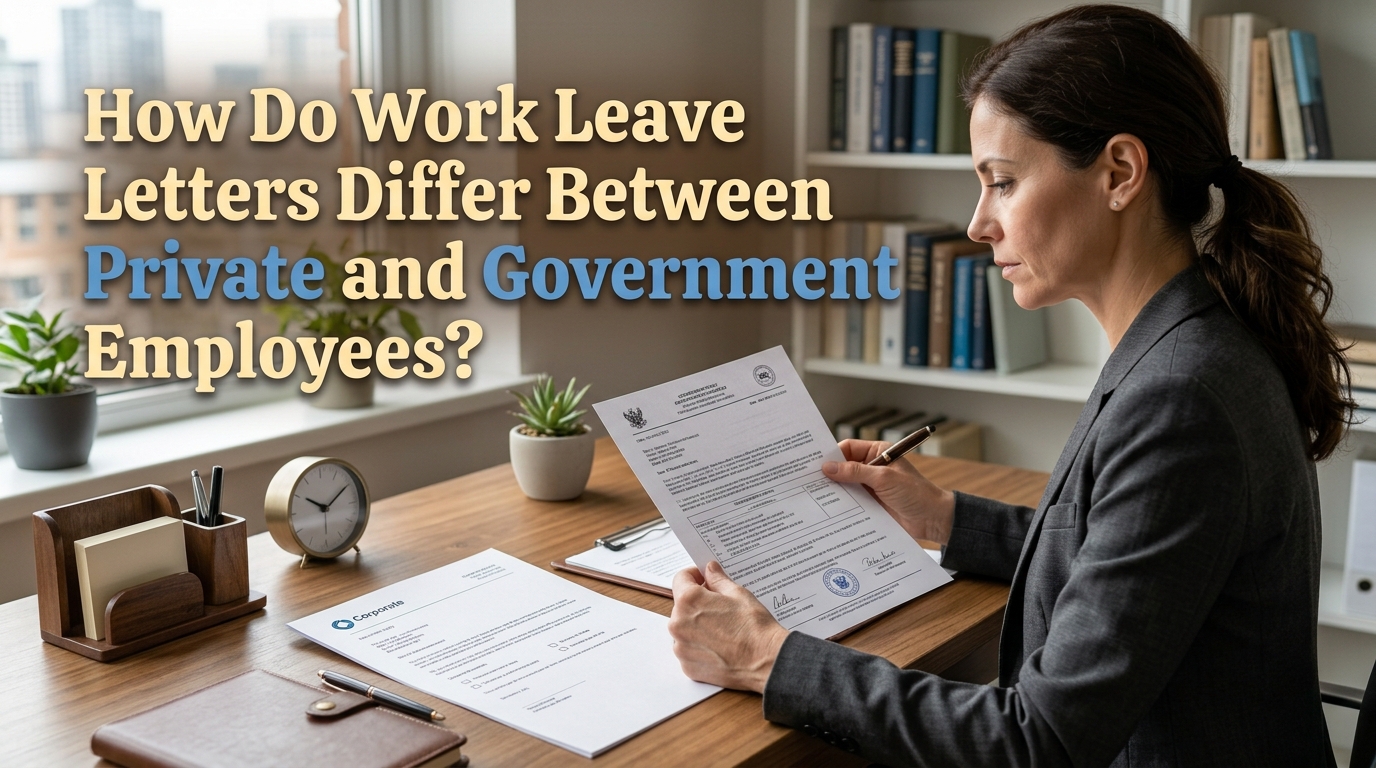
Work leave letters are important documents that employees use to request permission to take time off from their professional responsibilities. Although private and government employees have similar reasons for requesting leave, the procedures, formats, and administrative requirements may differ. These differences are generally influenced by workplace policies, employment regulations, and the administrative systems used by each organization.
Understanding the differences between private and government employee leave letters can help workers prepare appropriate applications and avoid administrative mistakes. Private companies may establish their own leave procedures based on internal policies and applicable labor regulations. Meanwhile, government employees usually follow formal administrative rules established by the relevant government institutions. Knowing these distinctions makes the leave application process clearer and more organized.
WHAT IS A WORK LEAVE LETTER?
A work leave letter is a formal written document used by an employee to request permission to be absent from work for a specific period. The request may involve annual leave, medical leave, personal leave, family matters, or other permitted reasons. The document usually contains the employee's information, the reason for absence, requested dates, and a polite closing. It serves as an official communication between employees and their supervisors or administrative departments.
Both private and government employees may need to submit leave applications before taking time off, depending on the applicable procedures. The main purpose is to inform the organization about the employee's absence and allow managers to arrange work responsibilities. However, the approval process and supporting documentation may differ between the two employment sectors. Therefore, employees should understand the rules that apply to their respective workplaces.
DIFFERENCES IN LEAVE POLICIES BETWEEN PRIVATE AND GOVERNMENT EMPLOYEES
One major difference between private and government employees is the system used to regulate leave entitlements and applications. Private-sector employees generally follow applicable labor laws, employment agreements, company regulations, and internal human resources policies. Companies may establish specific procedures for submitting annual leave, sick leave, and other types of absence, provided they comply with relevant legal requirements. As a result, application procedures can vary between organizations.
Government employees, particularly civil servants, generally follow formal regulations governing leave entitlements and administrative procedures. In Indonesia, civil servant leave arrangements are regulated through government regulations and implementing rules, including Government Regulation No. 11 of 2017 and its amendments. Government institutions may also establish internal administrative procedures for processing applications. These rules create a more standardized framework across government organizations, although specific administrative practices can still differ.
DIFFERENCES IN WORK LEAVE LETTER FORMATS
The format of a leave letter in a private company is often more flexible than the format used in government institutions. Private companies may accept applications through email, printed letters, employee portals, or dedicated human resources applications. Some organizations provide standardized forms, while others allow employees to write their own formal requests. The format usually depends on the company's internal communication practices.
Government leave applications generally follow more formal administrative structures. Civil servants may be required to use official application forms containing employee identification, position, unit of work, leave category, and requested dates. The application may also need to follow institutional document procedures and include specific supporting information. Using the correct format is important because incomplete administrative documents can delay the approval process.
DIFFERENCES IN THE LEAVE APPROVAL PROCESS
In private companies, leave requests are generally reviewed by direct supervisors, department managers, or human resources personnel. The approval process may depend on employee leave balances, work schedules, staffing requirements, and company policies. Some organizations use automated systems that allow managers to approve or reject applications digitally. Other companies may require direct communication and written confirmation.
In government institutions, the approval process usually follows an established administrative hierarchy. Civil servant leave applications are submitted to the authorized official according to applicable regulations and institutional procedures. Depending on the type of leave and the employee's position, the request may require review by a supervisor or another authorized official. This process helps ensure that leave decisions comply with administrative requirements and government service responsibilities.
DIFFERENCES IN SUPPORTING DOCUMENTS
Supporting documents may be required for both private and government employee leave applications. In private companies, the requirements depend on the type of leave and the organization's internal policies. For example, employees requesting medical leave may need to provide a medical certificate when required. Other types of leave may require additional explanations or relevant documents.
Government employees may also need to attach supporting documents according to the applicable leave regulations. Certain applications can require medical certificates, family-related documents, or other official evidence, depending on the circumstances. Civil servants should check the requirements established by their institutions before submitting an application. Providing complete documentation helps the responsible officials evaluate requests more efficiently.
TYPES OF LEAVE AVAILABLE FOR PRIVATE AND GOVERNMENT EMPLOYEES
Private and government employees may have access to several types of leave, although their entitlements and conditions are not necessarily identical. Common examples include annual leave, sick leave, maternity leave, and other forms of authorized absence. Private-sector entitlements are generally determined by labor legislation, employment agreements, and company policies. Employees should review these provisions to understand their available benefits.
Government employees, including Indonesian civil servants, may have additional leave categories established through specific regulations. These can include annual leave, long leave, sick leave, maternity leave, and important-reason leave, subject to applicable requirements. The eligibility conditions and approval procedures depend on the employee's status and the relevant regulations. Understanding the differences helps employees select the correct leave category when preparing an application.
TIPS FOR WRITING A PROFESSIONAL WORK LEAVE LETTER
Regardless of employment sector, a professional leave letter should contain clear and accurate information. Employees should begin by identifying the recipient and writing an appropriate subject line. The main section should explain the purpose of the request, the requested leave dates, and the expected return date. Use polite and formal language to communicate respectfully with supervisors or authorized officials.
Employees should also check the applicable leave policies before submitting their applications. Private employees should follow company procedures, while government employees should use the official administrative format required by their institutions. Make sure all supporting documents are attached when necessary. Finally, review the application carefully and keep a copy for personal records.
WHY IS IT IMPORTANT TO UNDERSTAND THESE DIFFERENCES?
Understanding the differences between private and government leave letters helps employees avoid incorrect application procedures. Each employment sector may have different administrative requirements, approval authorities, and supporting document standards. Submitting an application using the wrong format or procedure can cause unnecessary delays. Employees who understand the applicable rules can prepare their documents more accurately.
This knowledge is also useful for maintaining professional communication and workplace discipline. Employees can identify the appropriate person to receive their requests and understand the steps required for approval. It also helps them become more aware of their employment benefits and responsibilities. By following the correct procedures, workers can manage their leave more effectively without disrupting organizational activities.
CONCLUSION
Work leave letters for private and government employees have the same basic purpose, which is to request permission for an absence from work. However, they can differ in terms of leave policies, document formats, approval procedures, and supporting requirements. Private employees generally follow company regulations and applicable labor laws, while government employees follow formal administrative rules established for their employment sector.
Before submitting a leave application, employees should understand their workplace policies and prepare the required information carefully. Using the correct format, providing complete documentation, and communicating professionally can help make the approval process more efficient. By understanding these differences, both private and government employees can submit leave requests correctly and responsibly.
Recent Posts

Bagaimana Sistem SKS pada Program Kuliah... 22.11.2026/37 View

How Does Technology Make Daily Evaluation... 21.11.2026/70 View

Apa Strategi Menghadapi Kesenjangan antara Kompetensi... 21.11.2026/73 View

Mengapa Inventaris Aset Penting bagi Kelancaran... 21.11.2026/68 View

When Should Musicians Join a Record... 21.11.2026/71 View
