

How Does a Broken Home Affect Children's Academic Performance?
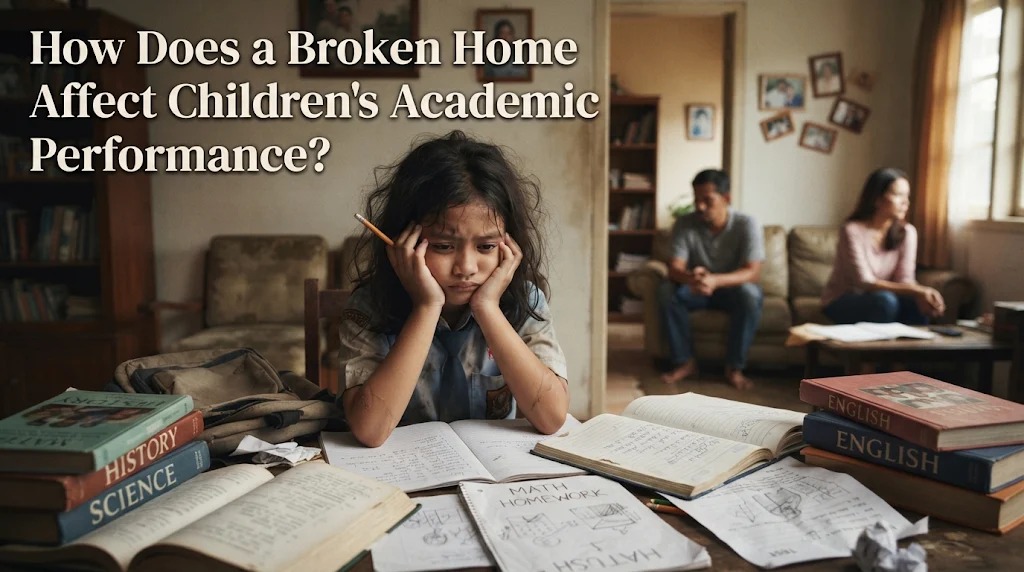
Family plays an important role in supporting children's education and academic development. A healthy family environment can provide emotional security, motivation, guidance, and learning support that help children achieve their educational goals. However, not every child grows up in a harmonious household. Some children experience a broken home due to parental divorce, ongoing family conflicts, poor communication, or the absence of parental support.
Growing up in a broken home can create challenges that affect children's academic performance. They may experience emotional stress, difficulty concentrating, reduced motivation, or changes in their learning environment. These conditions can make it harder for children to complete assignments and achieve their academic targets. However, not all children from broken families experience declining academic performance because proper support and a positive learning environment can help them continue their education successfully.
UNDERSTANDING THE RELATIONSHIP BETWEEN BROKEN HOMES AND ACADEMIC PERFORMANCE
A broken home refers to a family situation in which relationships between family members become disrupted due to separation, divorce, ongoing conflict, or other serious household problems. This condition can influence children's daily experiences, including their ability to focus on education. Family problems may create emotional pressure that makes it difficult for children to concentrate on lessons and complete school assignments. As a result, their academic activities can become less consistent.
Academic performance is influenced by several factors, such as learning motivation, emotional well-being, family support, and the school environment. When children experience instability at home, some of these factors may be affected. For example, children who frequently witness parental arguments may struggle to maintain their attention during lessons. Nevertheless, family structure alone does not determine academic success. The quality of parenting, communication, and support received by children also plays an important role in their educational development.
EMOTIONAL STRESS CAN REDUCE CHILDREN'S LEARNING CONCENTRATION
One of the main ways a broken home can affect academic performance is through emotional stress. Children who experience parental separation or continuous family conflict may feel sad, anxious, confused, or disappointed. These emotions can occupy their thoughts and make it difficult to focus on school activities. Instead of paying attention to lessons, they may spend more time thinking about problems at home.
Emotional pressure can also affect children's ability to complete assignments and prepare for examinations. Some children may become easily distracted, lose interest in classroom activities, or struggle to remember information. If these difficulties continue without proper support, their learning progress may be affected. Parents and teachers should recognize emotional changes early and provide a supportive environment where children feel comfortable expressing their concerns.
LACK OF PARENTAL SUPPORT CAN REDUCE LEARNING MOTIVATION
Parental involvement is an important factor in children's educational development. Parents often provide encouragement, help children organize their study schedules, and monitor their academic progress. However, when family relationships become disrupted, parental attention may decrease because adults are dealing with personal, financial, or emotional difficulties. Children may consequently feel that their education receives less attention at home.
A lack of support can reduce children's motivation to study and achieve their academic goals. They may feel less encouraged to complete homework, participate in school activities, or prepare for examinations. Some children may also struggle because they do not have someone available to discuss their educational problems. To prevent these difficulties, parents should continue showing interest in their children's education, even after separation. Regular communication, encouragement, and consistent guidance can help children maintain positive learning habits.
FAMILY FINANCIAL PROBLEMS CAN AFFECT EDUCATIONAL OPPORTUNITIES
A broken home can sometimes lead to changes in a family's financial situation, especially after parental separation or divorce. Household income may decrease while living expenses and parental responsibilities remain significant. These circumstances can make it more difficult to provide educational necessities, such as books, school supplies, internet access, transportation, and additional learning resources. In some situations, children may need to adjust their educational activities because of financial limitations.
Financial difficulties can also create additional pressure that affects children's learning experiences. For example, students may have limited access to tutoring, extracurricular activities, or suitable study facilities. Some older children may even feel responsible for helping their families financially, which can reduce the time available for studying. However, financial challenges do not necessarily prevent children from achieving academic success. Support from schools, scholarships, educational assistance programs, and relatives can help maintain access to learning opportunities.
CHANGES IN FAMILY ENVIRONMENT CAN DISRUPT STUDY ROUTINES
Children from broken homes may experience changes in their living arrangements and daily routines. After parental separation, some children move to another house, live with different family members, or divide their time between two households. These changes can make it difficult to maintain consistent study schedules. Adjusting to different environments and household rules may also affect their ability to organize school responsibilities.
An unstable learning environment can create additional distractions during homework and examination preparation. Children may have fewer opportunities to study in a quiet place or receive regular supervision from parents. To address these challenges, caregivers should establish consistent daily routines and provide a comfortable study area whenever possible. Cooperation between parents is also important to ensure that children receive similar educational support regardless of where they live.
HOW PARENTS AND SCHOOLS CAN SUPPORT CHILDREN'S ACADEMIC SUCCESS
Parents and schools have important roles in helping children from broken homes maintain their academic performance. Parents should provide emotional support, encourage positive learning habits, and remain involved in educational activities. They should also avoid involving children in conflicts between adults because such situations can create additional emotional pressure. Even when parents live separately, they can cooperate to support their children's educational needs and future goals.
Schools can also provide assistance through teachers, school counselors, and appropriate educational programs. Teachers should pay attention to changes in students' behavior, attendance, concentration, and academic results. Providing additional guidance, a safe learning environment, and access to counseling can help students manage challenges at home. When parents and schools work together, children have a better opportunity to maintain their confidence, improve their learning abilities, and achieve their educational goals.
CONCLUSION
A broken home can affect children's academic performance through emotional stress, reduced learning motivation, limited parental support, financial difficulties, and changes in their daily routines. These challenges may influence concentration, homework completion, classroom participation, and overall educational progress. However, not every child experiences the same effects because individual circumstances and available support can make a significant difference.
Children from broken families still have opportunities to achieve academic success when they receive proper attention and guidance. Parents, teachers, and caregivers should work together to create a stable and supportive learning environment. With consistent encouragement, emotional support, and access to educational resources, children can overcome family challenges and continue developing their academic potential.
Recent Posts

How Does Technology Make Daily Evaluation... 21.11.2026/57 View

Apa Strategi Menghadapi Kesenjangan antara Kompetensi... 21.11.2026/59 View

Mengapa Inventaris Aset Penting bagi Kelancaran... 21.11.2026/54 View

When Should Musicians Join a Record... 21.11.2026/54 View

Daily Evaluation or Daily Planning Which... 21.11.2026/61 View
