

How Does a Campus Bus Operating System Work?
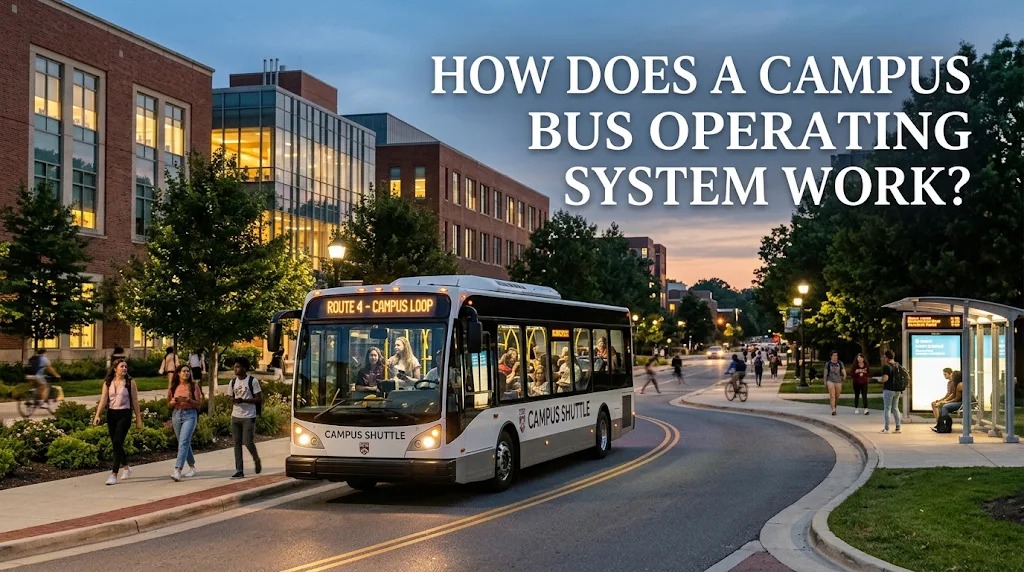
A campus bus operating system is an organized transportation system designed to help students, lecturers, and university staff travel easily within or around a campus. This service plays an important role in supporting daily academic activities by providing convenient, affordable, and reliable transportation. The system involves several processes, including route planning, scheduling, passenger management, vehicle maintenance, and driver coordination. Each process must work together to ensure that campus buses operate safely and efficiently. Understanding how a campus bus operating system works can help students use this facility more effectively.
UNDERSTANDING THE CAMPUS BUS OPERATING SYSTEM
A campus bus operating system refers to the procedures and arrangements used by a university to manage its transportation services. The system determines how buses operate, where they stop, when they depart, and how passengers access the service. Universities usually design this system based on the number of students, campus locations, transportation needs, and available vehicles. Some campuses operate buses within university grounds, while others provide transportation between different campus buildings, student housing areas, and nearby public transportation stations.
The main purpose of this system is to make student transportation more organized and accessible. It also helps universities reduce traffic congestion and improve mobility across campus areas. Depending on the institution, campus bus services may be free or require a specific payment method. Some universities also use digital platforms to provide schedules, route information, and service updates. With proper management, the operating system can support a more comfortable and efficient campus environment.
HOW CAMPUS BUS ROUTES AND SCHEDULES ARE ORGANIZED
Campus bus routes are planned according to the locations that students and university staff frequently visit. Transportation managers usually identify important destinations, such as lecture buildings, libraries, laboratories, dormitories, parking areas, and campus entrances. These locations become bus stops that connect different parts of the university. Route planning also considers road conditions, travel distances, passenger demand, and the time needed to complete each journey. The goal is to create routes that allow passengers to reach their destinations without unnecessary delays.
Bus schedules are arranged to match the daily activities of the university. For example, additional buses may be provided before morning classes and during afternoon departure periods when passenger demand is higher. Each bus follows a planned departure time and route to maintain service consistency. Universities may also adjust schedules during examinations, holidays, special events, or changes in academic activities. Clear route information and accurate schedules help students plan their journeys and avoid missing important classes.
THE ROLE OF DRIVERS AND TRANSPORTATION MANAGEMENT
Drivers are essential to the campus bus operating system because they are responsible for transporting passengers safely. They must understand the assigned routes, follow departure schedules, obey traffic regulations, and maintain professional behavior. Drivers also need to check basic vehicle conditions before starting their journeys. These checks may include examining the tires, brakes, lights, fuel levels, and other important components. Proper preparation helps reduce the risk of technical problems during operation.
Transportation management teams are responsible for coordinating the entire service. They arrange driver shifts, monitor bus conditions, evaluate passenger demand, and respond to operational problems. When a bus experiences a technical issue or a driver cannot work, the management team may arrange a replacement to prevent major service interruptions. Good communication between drivers and transportation staff is also important for handling unexpected situations. Through effective coordination, universities can maintain reliable transportation services for their campus communities.
HOW TECHNOLOGY SUPPORTS CAMPUS BUS OPERATIONS
Modern technology helps universities manage campus bus services more efficiently. Some institutions use GPS tracking systems to monitor vehicle locations and provide estimated arrival times. This technology allows students to check where a bus is and decide when to leave their classrooms or accommodation. Digital applications and university information systems can also display bus routes, operating hours, and service announcements. These features make transportation information easier to access.
In addition, technology can help transportation managers evaluate service performance. Digital records may provide information about passenger numbers, frequently used routes, vehicle schedules, and operational delays. This information helps universities identify areas that need improvement and make better transportation decisions. Some campuses also use electronic identification cards or digital payment systems to manage passenger access. However, technology must be supported by reliable internet connections, regular system maintenance, and accurate information to provide useful results.
CONCLUSION
A campus bus operating system works through the coordination of routes, schedules, drivers, vehicles, transportation managers, and supporting technology. Each component has an important role in ensuring that students and university staff can travel safely and conveniently. Proper route planning helps passengers reach important campus locations, while organized schedules reduce waiting times and transportation delays. Technology also improves access to information and helps universities monitor daily operations. By developing an effective campus bus operating system, universities can create a more organized, accessible, and environmentally responsible transportation service.
Recent Posts

Bagaimana Sistem SKS pada Program Kuliah... 22.11.2026/31 View

How Does Technology Make Daily Evaluation... 21.11.2026/67 View

Apa Strategi Menghadapi Kesenjangan antara Kompetensi... 21.11.2026/66 View

Mengapa Inventaris Aset Penting bagi Kelancaran... 21.11.2026/64 View

When Should Musicians Join a Record... 21.11.2026/65 View
