

How Does a Membership Card Help Identify Organization Members?
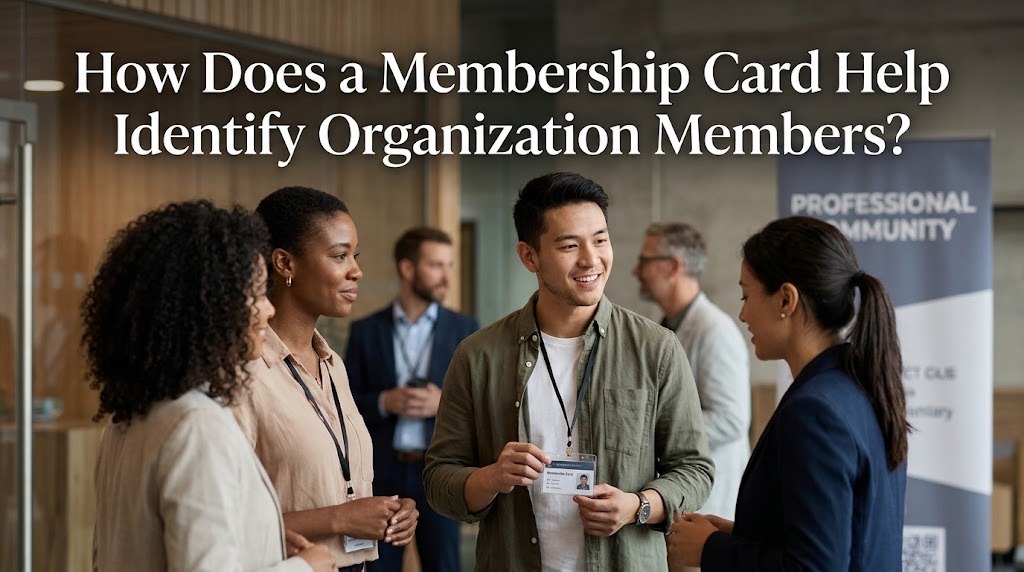
A membership card is an official identification document that helps organizations recognize individuals who have registered as members. It contains important information that distinguishes one member from another, making identification easier and more organized. Membership cards are commonly used by professional associations, educational institutions, student organizations, sports clubs, social communities, and other groups.
In organizations with many members, identifying individuals manually can be time-consuming and sometimes lead to administrative errors. A membership card provides a practical solution because it displays specific information that can be used to verify a person's identity and membership status. Besides simplifying identification, it also supports administrative efficiency, security, and better organizational management.
PROVIDING OFFICIAL MEMBER IDENTIFICATION
One of the main ways a membership card helps identify organization members is by serving as an official identification document. Each registered member receives a card containing personal information that confirms their connection to the organization. This allows administrators to recognize individuals without having to repeatedly check their registration documents.
Generally, a membership card includes the member's full name, membership identification number, photograph, organization name, and registration information. Some organizations also include additional details, such as membership categories or expiration dates. These elements help distinguish individual members and reduce confusion during organizational activities.
For example, a student association may issue membership cards to every registered student who joins the organization. When members attend meetings or participate in internal programs, administrators can use these cards to confirm their identities. This makes the identification process more systematic and reliable.
MAKING MEMBER VERIFICATION EASIER
Membership cards also simplify the process of verifying membership status. Administrators can check the information displayed on a card to determine whether someone is officially registered as a member. This is particularly useful for organizations that have hundreds or thousands of registered individuals.
Some organizations use unique membership numbers to make verification more accurate. These numbers are connected to member records stored in administrative databases. When a member presents a card, administrators can compare the displayed information with the organization's official records.
In addition, membership cards can include QR codes or barcodes that allow information to be checked using digital devices. This technology can reduce manual data entry and speed up identification during meetings, events, and registration activities.
However, simply presenting a card does not always guarantee that a membership is active. Organizations should verify the information against their official database, especially when membership validity or authorization needs to be confirmed.
DISTINGUISHING MEMBERS FROM NON-MEMBERS
Another important function of a membership card is helping organizations differentiate registered members from non-members. In many organizational activities, certain facilities, services, and programs are available only to officially registered individuals. Membership cards make it easier to identify who has permission to access these activities.
For example, a professional organization may organize a special seminar for its registered members. Before allowing participants to enter, the organizing committee can ask them to present their membership cards. This procedure helps prevent unauthorized individuals from participating in activities intended exclusively for members.
The same system can be applied in educational institutions, sports clubs, and community organizations. Administrators can use membership cards to manage attendance, control access to specific facilities, and ensure that organizational rules are followed.
With a clear identification system, organizations can maintain better control over their activities. It also reduces the possibility of misunderstandings between members, visitors, and administrative staff.
SUPPORTING ACCURATE MEMBERSHIP DATA MANAGEMENT
Membership cards contribute to better membership data management because each card is generally connected to an individual member's administrative record. The identification number printed on the card can be used as a reference when storing, searching, or updating member information.
Organizations can use this system to maintain records containing names, addresses, contact details, registration dates, and membership status. When information needs to be updated, administrators can locate the correct record using the member's identification number.
An organized database also helps prevent duplicate registrations and incorrect identification. For example, two members may have similar names, but their membership numbers remain different. This makes it easier for administrators to distinguish between individuals with similar personal information.
Furthermore, digital membership systems can connect identification cards with centralized databases. This allows organizations to retrieve information more efficiently and monitor membership changes without depending entirely on paper documents.
IMPROVING SECURITY DURING ORGANIZATIONAL ACTIVITIES
Membership cards can help improve organizational security by ensuring that only authorized individuals can access certain areas or activities. Cards containing photographs, unique identification numbers, and verification features make it easier to check whether the person presenting a card is its legitimate owner.
For example, an organization may require members to show their cards before entering an office, attending an internal meeting, or using restricted facilities. This procedure helps administrators monitor access and reduce the risk of unauthorized entry.
Some organizations also use digital verification systems to improve identification accuracy. QR codes and electronic membership records can help administrators confirm whether a card is valid and belongs to an active member.
However, membership cards should be supported by proper security procedures. Members should avoid lending their cards to other people, while administrators should immediately deactivate or replace cards that have been reported lost or misused. Personal information stored in membership databases must also be protected against unauthorized access.
BUILDING ORGANIZATIONAL IDENTITY AND MEMBER RECOGNITION
Beyond administrative purposes, membership cards help create a stronger organizational identity. The card usually displays the organization's name, logo, colors, and other visual elements that represent the group. These features make it easier to recognize members when they participate in internal or external activities.
Having an official membership card can also strengthen a member's sense of belonging. Individuals may feel more connected to an organization when they receive formal recognition of their participation. This can encourage them to become more involved in meetings, programs, and other organizational activities.
For example, members of a community association can use their cards when participating in social programs or representing the organization at public events. The cards provide a simple way to demonstrate their official affiliation.
Consistent membership identification also helps organizations maintain a professional image. When every member has a standardized identification card, organizational activities become more organized, and members can be recognized more easily by administrators and other participants.
CONCLUSION
A membership card helps identify organization members through official identification, membership verification, administrative data management, and security procedures. By displaying important personal information and unique membership numbers, it allows organizations to distinguish registered members from non-members more efficiently.
In addition, membership cards support organizational identity and create a stronger sense of belonging among members. Whether physical or digital, they remain useful tools for improving identification accuracy and administrative efficiency. Therefore, every organization should consider implementing a reliable membership card system that meets its members' needs and protects their personal information.
Recent Posts

Bagaimana Sistem SKS pada Program Kuliah... 22.11.2026/49 View

How Does Technology Make Daily Evaluation... 21.11.2026/76 View

Apa Strategi Menghadapi Kesenjangan antara Kompetensi... 21.11.2026/78 View

Mengapa Inventaris Aset Penting bagi Kelancaran... 21.11.2026/74 View

When Should Musicians Join a Record... 21.11.2026/78 View
