

How Does a Vice Principal Manage the School Curriculum and Learning Activities?
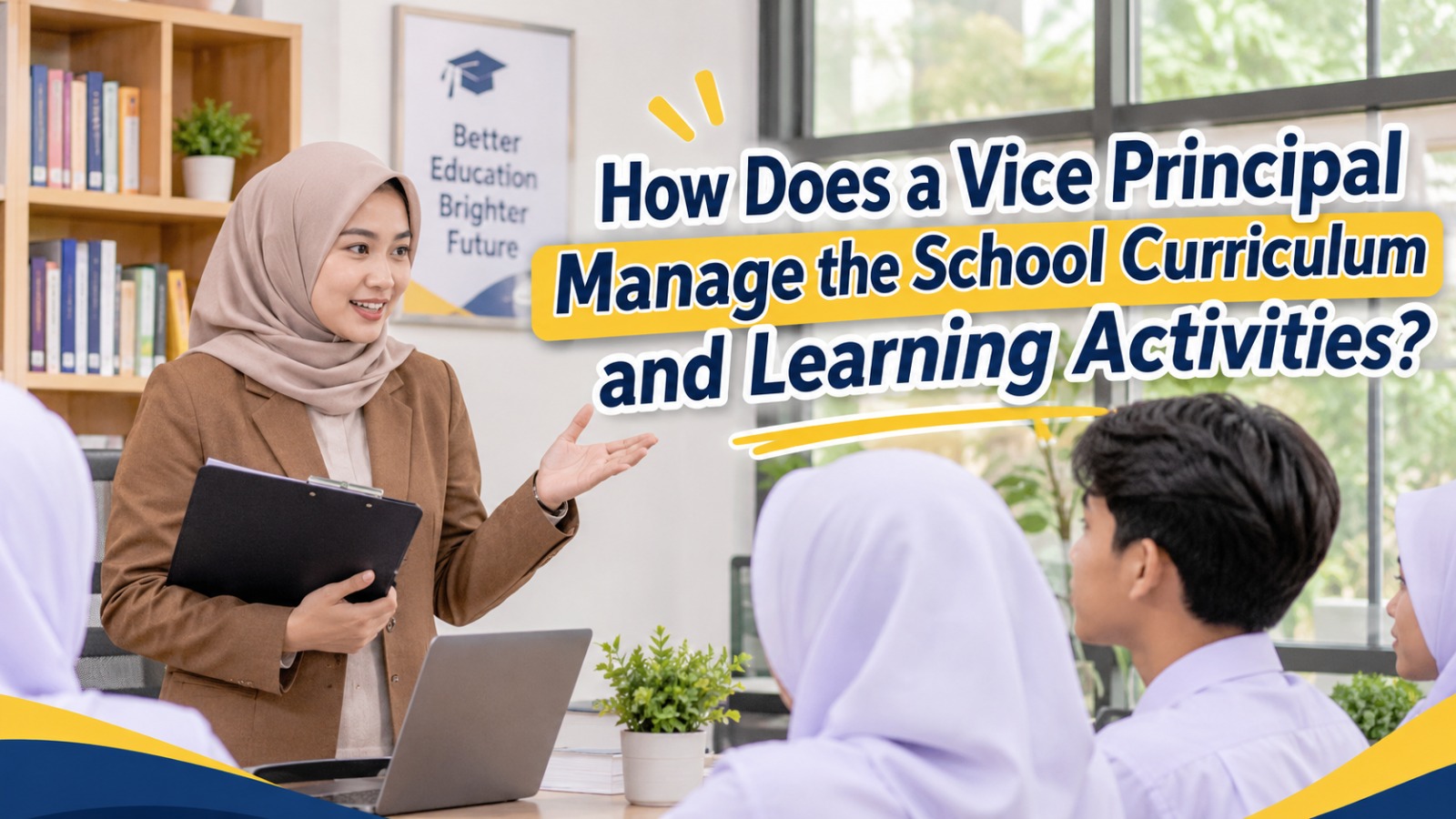
A vice principal plays an important role in managing the school curriculum and ensuring that learning activities run effectively. This responsibility involves coordinating teachers, monitoring classroom activities, organizing academic programs, and evaluating educational outcomes. A well-managed curriculum helps schools provide structured learning experiences that match students' needs and educational standards. The vice principal also works closely with the principal and teachers to ensure that teaching plans are implemented properly. Through effective coordination, supervision, and evaluation, a vice principal can help improve the quality of education and create a more organized learning environment.
PLANNING AND ORGANIZING THE SCHOOL CURRICULUM
One of the main responsibilities of a vice principal is planning and organizing the school curriculum according to applicable educational standards. Curriculum planning helps determine the subjects, learning objectives, teaching materials, and competencies that students need to achieve. A vice principal works with teachers and the principal to ensure that the curriculum is appropriate for students' educational levels and learning needs. This process also involves reviewing academic requirements and preparing a structured learning schedule.
In addition, curriculum planning requires careful consideration of available resources and school conditions. A vice principal needs to ensure that teachers have sufficient learning materials, appropriate teaching guidelines, and clear responsibilities. Regular discussions with teachers can help identify curriculum-related difficulties before they affect classroom activities. With proper planning, schools can maintain an organized educational program and provide students with meaningful learning experiences.
COORDINATING TEACHERS AND TEACHING SCHEDULES
A vice principal is responsible for helping coordinate teachers and organize teaching schedules to ensure that learning activities operate smoothly. This includes arranging class schedules, distributing teaching responsibilities, and coordinating subject assignments according to teachers' qualifications and availability. Effective scheduling helps prevent overlapping lessons, unnecessary gaps, and conflicts between academic activities. It also ensures that every subject receives appropriate learning time.
Furthermore, a vice principal needs to maintain communication with teachers to address scheduling problems and changes in school activities. For example, adjustments may be necessary when teachers attend training, students participate in competitions, or schools organize special educational programs. The vice principal should communicate these changes clearly so that teachers and students can prepare accordingly. Through good coordination, schools can maintain continuity in teaching activities and reduce disruptions to the learning process.
SUPERVISING CLASSROOM ACTIVITIES AND TEACHING IMPLEMENTATION
Monitoring classroom activities is another important responsibility of a vice principal. Supervision helps ensure that teachers implement the curriculum according to their lesson plans and established learning objectives. A vice principal may conduct classroom observations, review teaching documents, and discuss instructional challenges with teachers. These activities provide valuable information about how effectively lessons are delivered.
However, classroom supervision should not only focus on checking teachers' performance. It should also provide constructive feedback and professional guidance to improve teaching quality. For example, a vice principal may recommend more interactive learning methods, better classroom management strategies, or the use of appropriate digital resources. Teachers can use this feedback to improve their instructional approaches and respond to students' learning needs. Regular supervision helps maintain educational standards while encouraging continuous professional development.
SUPPORTING EFFECTIVE AND INNOVATIVE LEARNING ACTIVITIES
A vice principal also helps teachers develop learning activities that encourage students to participate actively. Learning should not depend entirely on explanations from teachers because students need opportunities to explore ideas, ask questions, and solve problems. Therefore, the vice principal can encourage the use of interactive learning methods, including group discussions, practical projects, presentations, experiments, and collaborative assignments.
In addition, innovative learning activities can make lessons more relevant to students' everyday experiences. For example, teachers can use case studies, educational videos, simulations, and digital learning platforms to explain difficult concepts. A vice principal can support these activities by helping schools provide suitable facilities and learning resources. The effectiveness of each method should also be evaluated based on students' understanding and participation. With appropriate support, learning activities can become more engaging, meaningful, and effective.
MONITORING STUDENT LEARNING PROGRESS AND ACADEMIC ACHIEVEMENT
Managing the curriculum also requires monitoring students' learning progress. A vice principal can work with teachers to review assessment results, attendance records, classroom participation, and academic achievement. These records help schools identify students who perform well and those who need additional learning support. Learning progress evaluation is important because it allows schools to understand whether teaching programs are meeting their intended objectives.
When students experience learning difficulties, the vice principal can coordinate with teachers to develop appropriate solutions. These may include remedial lessons, additional tutoring, academic counseling, or alternative learning strategies. Students who demonstrate strong academic abilities can also receive opportunities to participate in competitions and enrichment programs. Regular communication with parents can provide additional information about students' progress and challenges. By monitoring learning outcomes consistently, schools can make better decisions to improve educational quality.
EVALUATING CURRICULUM IMPLEMENTATION AND DEVELOPING SCHOOL PROGRAMS
The final important responsibility is evaluating how effectively the school curriculum and learning activities are implemented. A vice principal needs to review whether teaching programs follow the planned schedule, achieve learning objectives, and meet students' educational needs. Evaluation can involve examining academic reports, collecting teacher feedback, reviewing classroom observations, and analyzing assessment results. These findings help identify strengths and weaknesses in the school's educational programs.
Furthermore, evaluation results can become the foundation for continuous school improvement. If certain learning activities do not produce the expected outcomes, the vice principal can work with teachers to identify the problems and develop better strategies. Schools may need to improve teaching materials, adjust learning schedules, organize teacher training, or provide additional educational facilities. Collaboration with the principal, teachers, students, and parents is essential to ensure that improvements are implemented effectively. Through regular evaluation and careful planning, a vice principal can help the school maintain curriculum quality and achieve long-term educational goals.
CONCLUSION
A vice principal manages the school curriculum and learning activities through curriculum planning, teacher coordination, classroom supervision, and academic evaluation. These responsibilities ensure that educational programs are organized, teaching activities run smoothly, and students receive appropriate learning support. The vice principal also encourages innovative teaching methods and monitors student progress to identify opportunities for improvement.
Successful curriculum management requires effective communication, strong leadership, careful planning, and teamwork. A vice principal cannot improve educational quality alone but must collaborate with the principal, teachers, students, and parents. Through consistent supervision and continuous evaluation, schools can create better learning experiences, improve academic achievement, and provide education that meets students' needs.
Recent Posts

Bagaimana Sistem SKS pada Program Kuliah... 22.11.2026/21 View

How Does Technology Make Daily Evaluation... 21.11.2026/63 View

Apa Strategi Menghadapi Kesenjangan antara Kompetensi... 21.11.2026/65 View

Mengapa Inventaris Aset Penting bagi Kelancaran... 21.11.2026/62 View

When Should Musicians Join a Record... 21.11.2026/60 View
