

How Does a Vice Principal of Curriculum Handle Class Scheduling Problems?
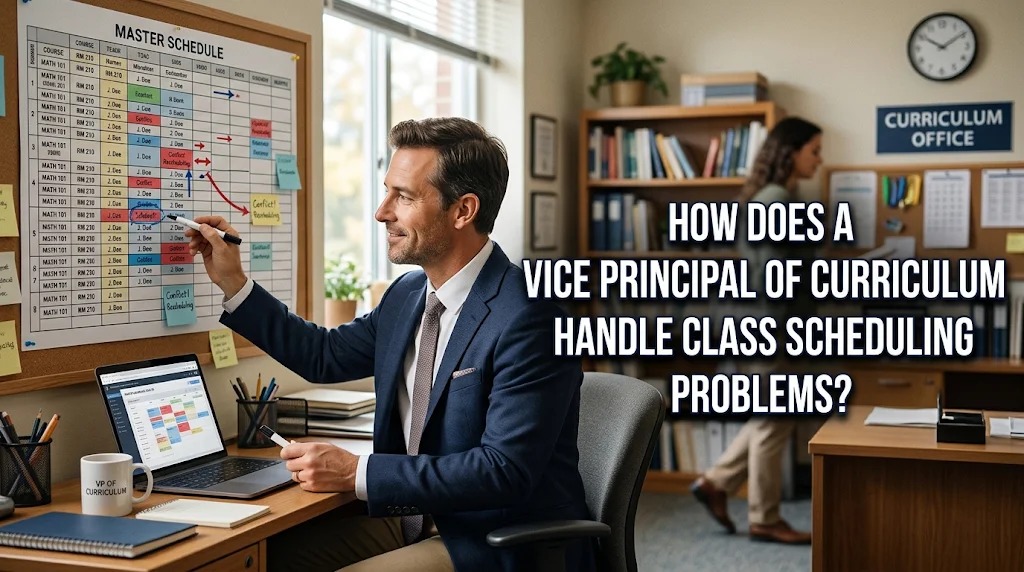
Creating a class schedule is an important responsibility in school management because it determines how teaching and learning activities are organized. However, preparing a schedule that meets every academic requirement is not always easy. Schools may face several challenges, such as overlapping teaching hours, limited classroom availability, teacher absences, changes in academic activities, and uneven workloads. These problems can affect the smooth implementation of the learning process if they are not handled properly.
A Vice Principal of Curriculum plays an important role in identifying and resolving these scheduling difficulties. This position requires careful planning, effective communication, and coordination with teachers and other school personnel. By understanding the causes of scheduling problems and considering the needs of everyone involved, the Vice Principal of Curriculum can develop practical solutions that help maintain an organized and effective learning environment.
IDENTIFYING THE MAIN CAUSES OF CLASS SCHEDULING PROBLEMS
The first step in handling class scheduling problems is identifying the factors that cause them. One common issue is a conflict in teaching hours, which occurs when two or more classes require the same teacher at the same time. This situation can happen when the number of available teachers is limited or when several subjects require similar time allocations.
Another challenge involves classroom and facility availability. Some schools have specialized rooms, such as science laboratories, computer laboratories, or language rooms, that must be shared by several classes. If their use is not properly coordinated, overlapping activities may occur and disrupt the learning schedule.
The Vice Principal of Curriculum needs to collect accurate information before making adjustments. This includes reviewing teacher assignments, class requirements, available facilities, and the school's academic calendar. Understanding the actual causes helps prevent temporary solutions that may create additional problems in other parts of the schedule.
COORDINATING WITH TEACHERS AND SCHOOL STAFF
Effective communication is essential when resolving scheduling difficulties. The Vice Principal of Curriculum should communicate with teachers to understand their teaching responsibilities, availability, and potential scheduling conflicts. Teachers can provide important information about classroom needs, subject requirements, and other academic responsibilities that may affect their schedules.
Coordination can be conducted through staff meetings, individual discussions, or internal communication platforms. During these discussions, the Vice Principal of Curriculum can identify conflicting schedules and consider possible adjustments. This process also gives teachers an opportunity to explain their concerns and contribute suggestions.
Administrative staff and other school departments may also be involved, especially when scheduling changes affect classroom assignments, school facilities, or administrative activities. Collaboration between the Vice Principal of Curriculum, teachers, and school staff helps ensure that decisions are based on accurate information and the needs of the school community.
ADJUSTING TEACHING HOURS AND TEACHER WORKLOADS
After identifying the scheduling problems, the Vice Principal of Curriculum needs to determine appropriate adjustments. One possible solution is rearranging teaching hours to prevent overlapping assignments. For example, a teacher who is scheduled to teach two different classes at the same time may be assigned to one class during another available period.
Teacher workloads must also be considered when making changes. The school needs to distribute teaching responsibilities fairly while following applicable regulations and institutional policies. Assignments should take into account teachers' subject expertise, required teaching hours, and other responsibilities.
However, schedule adjustments should not be made without considering their effects on other classes. Changing one teacher's schedule may create new conflicts involving another teacher, classroom, or subject. Therefore, careful schedule revision and workload management are necessary to ensure that the revised timetable remains practical and balanced.
USING TECHNOLOGY TO MANAGE AND REVIEW CLASS SCHEDULES
Technology can help the Vice Principal of Curriculum manage scheduling information more efficiently. Digital spreadsheets and school scheduling applications allow staff to organize teaching hours, teacher assignments, classroom availability, and academic activities in one place. These tools can also make it easier to identify overlapping schedules and update information when changes occur.
Using digital systems can reduce repetitive administrative work and improve the accuracy of scheduling records. For example, a timetable stored in a shared digital document can be reviewed by authorized school staff, allowing relevant information to be updated more efficiently. Schools can also use scheduling software with conflict-detection features to support the preparation of more organized timetables.
Nevertheless, technology should support rather than replace careful decision-making. The Vice Principal of Curriculum still needs to verify the information, consider teachers' circumstances, and ensure that every adjustment meets academic requirements. Combining digital tools with effective coordination can make class scheduling more accurate, flexible, and manageable.
MONITORING SCHEDULE IMPLEMENTATION AND PREVENTING FUTURE PROBLEMS
Resolving scheduling problems does not end when the revised timetable is distributed. The Vice Principal of Curriculum also needs to monitor its implementation to determine whether the changes work effectively. This can be done by collecting feedback from teachers, checking classroom usage, and reviewing whether teaching activities follow the established schedule.
If new conflicts appear, the school should respond through appropriate coordination and adjustments. For example, unexpected teacher absences or changes in school activities may require temporary schedule modifications. Clear communication about these changes is important so that teachers and students understand the updated arrangements.
Preventive measures are equally important for reducing similar problems in the future. The Vice Principal of Curriculum can maintain updated teacher availability records, review classroom capacity, prepare alternative arrangements, and evaluate scheduling procedures before each academic period. Regular monitoring helps the school build a more reliable class scheduling system and maintain continuity in teaching and learning activities.
CONCLUSION
A Vice Principal of Curriculum handles class scheduling problems through several coordinated steps, including identifying the causes of conflicts, communicating with teachers and school staff, adjusting teaching hours, managing workloads, and using technology to organize scheduling information. These responsibilities require accuracy, flexibility, and careful consideration of academic requirements.
Monitoring the implementation of revised schedules is also necessary to ensure that solutions work effectively and do not create new difficulties. By applying systematic planning and maintaining good communication, the Vice Principal of Curriculum can minimize scheduling conflicts and support a more organized learning environment. Effective class scheduling ultimately helps teachers carry out their responsibilities and allows students to participate in learning activities according to a clear timetable.
Recent Posts

Bagaimana Sistem SKS pada Program Kuliah... 22.11.2026/11 View

How Does Technology Make Daily Evaluation... 21.11.2026/63 View

Apa Strategi Menghadapi Kesenjangan antara Kompetensi... 21.11.2026/64 View

Mengapa Inventaris Aset Penting bagi Kelancaran... 21.11.2026/61 View

When Should Musicians Join a Record... 21.11.2026/59 View
