

How Does a Vice Principal of Curriculum Support the Implementation of the Independent Curriculum?
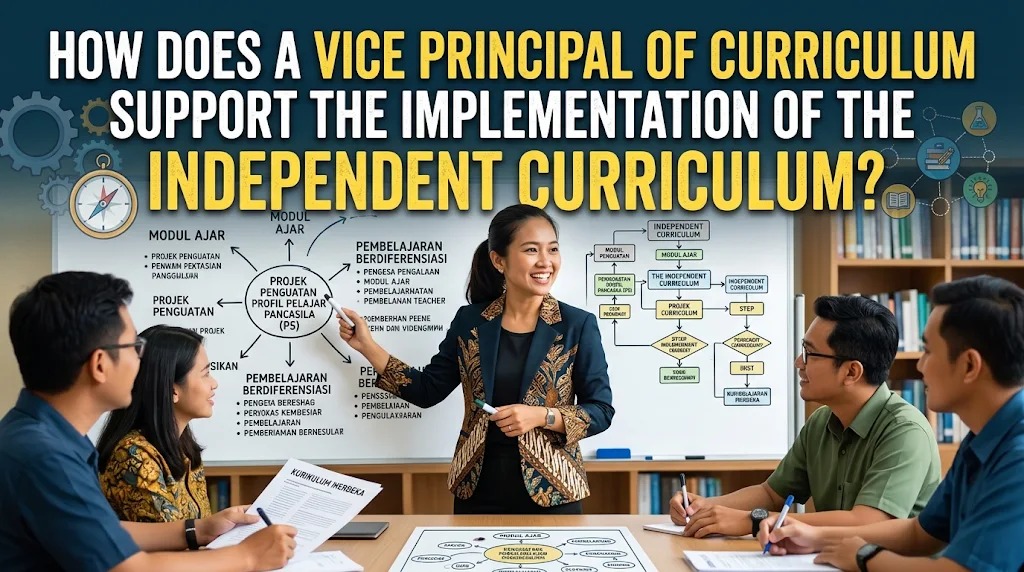
The implementation of the Independent Curriculum (Kurikulum Merdeka) requires schools to make adjustments to their learning programs, teaching strategies, and assessment methods. This curriculum emphasizes flexible learning, student needs, character development, and the achievement of essential competencies. To implement it effectively, schools need coordination among the principal, teachers, and other educational staff. One of the key people involved in this process is the Vice Principal of Curriculum.
The Vice Principal of Curriculum supports implementation by coordinating academic planning, helping teachers understand curriculum requirements, organizing professional development, and monitoring learning activities. This role is important because curriculum policies must be translated into practical classroom experiences. Through effective coordination and continuous evaluation, schools can create learning activities that are more relevant to students' abilities, interests, and educational needs.
COORDINATING SCHOOL CURRICULUM PLANNING
One of the first responsibilities of the Vice Principal of Curriculum is coordinating the school's preparation for implementing the Independent Curriculum. This process involves understanding the applicable curriculum guidelines and adjusting academic programs to the school's conditions. The school needs to consider student characteristics, available resources, teacher readiness, and educational objectives before developing its learning plans.
The Vice Principal of Curriculum can work with the principal and teachers to review the curriculum structure, organize learning periods, and determine academic priorities. This coordination helps ensure that each subject has a clear learning direction and that school activities are arranged according to the established requirements. Teachers can also discuss how curriculum objectives should be translated into classroom activities.
In addition, the Vice Principal of Curriculum needs to ensure that academic planning is consistent across different classes and subjects. Regular discussions can help identify implementation challenges before they affect the learning process. Well-coordinated curriculum planning provides a foundation for schools to implement the Independent Curriculum in an organized and realistic way.
GUIDING TEACHERS IN PREPARING LEARNING PLANS
Teachers need to understand the learning objectives and instructional approaches associated with the Independent Curriculum. The Vice Principal of Curriculum can support them by organizing discussions, providing relevant information, and coordinating the preparation of teaching documents. These may include learning objectives, teaching modules, learning materials, and assessment instruments according to current guidelines.
Teachers also need to understand how to adjust learning activities to different student abilities and learning needs. For example, a teacher may use group discussions, practical projects, or individual assignments to help students understand a particular topic. The Vice Principal of Curriculum can encourage teachers to select methods that are appropriate for their subjects and classroom conditions.
Support should not be limited to administrative requirements. Teachers also need opportunities to exchange experiences and discuss difficulties they encounter during implementation. Through teacher guidance and instructional planning, the Vice Principal of Curriculum can help educators develop learning activities that are more purposeful and student-centered.
ORGANIZING TEACHER TRAINING AND PROFESSIONAL DEVELOPMENT
Successful implementation of the Independent Curriculum depends heavily on teacher readiness. Educators may need to develop new skills in designing learning activities, applying assessment methods, and using teaching resources effectively. Therefore, the Vice Principal of Curriculum can organize professional development programs to strengthen teachers' understanding and practical abilities.
These programs may include workshops, seminars, training sessions, and subject-based learning communities. Teachers can use these activities to discuss curriculum guidelines, share classroom experiences, and learn from one another. Training can also introduce approaches such as differentiated instruction and project-based learning when they are relevant to the learning objectives.
The Vice Principal of Curriculum should consider the actual needs of teachers when planning professional development. For instance, teachers who need support in assessment can participate in sessions focused on evaluating student progress. Continuous teacher development helps educators become more confident in applying curriculum principles and adapting their teaching methods.
MONITORING LEARNING ACTIVITIES AND STUDENT PROGRESS
Monitoring is necessary to determine whether the Independent Curriculum is being implemented according to school plans. The Vice Principal of Curriculum can coordinate classroom observations, review teaching documents, and discuss learning activities with teachers. These activities provide information about how curriculum objectives are being translated into classroom practice.
Student progress should also be considered when evaluating implementation. Teachers can use formative and summative assessments, classroom discussions, projects, and other appropriate methods to understand students' development. The results can help identify learning difficulties and determine whether additional support is needed.
Monitoring should focus on improvement rather than merely checking administrative completeness. The Vice Principal of Curriculum can use findings from observations and teacher discussions to recommend adjustments to learning strategies or academic programs. Learning activity monitoring helps schools maintain the quality of curriculum implementation while responding to students' needs.
EVALUATING IMPLEMENTATION AND COORDINATING IMPROVEMENTS
Evaluation allows schools to determine whether their implementation of the Independent Curriculum is achieving its intended objectives. The Vice Principal of Curriculum can coordinate regular evaluations involving teachers and school leaders. These discussions may examine the effectiveness of learning plans, teaching methods, assessment practices, and the availability of learning resources.
Feedback from teachers and information about student progress can reveal areas that require improvement. For example, a school may discover that certain learning activities need more time or that teachers require additional resources to support project-based learning. Such findings can become the basis for revising academic plans and improving classroom practices.
The results of evaluation should lead to clear follow-up actions. The school may organize additional training, improve learning materials, adjust schedules, or strengthen coordination between teachers. Continuous curriculum evaluation helps ensure that implementation remains responsive to changing needs and supports long-term improvements in educational quality.
CONCLUSION
A Vice Principal of Curriculum supports the implementation of the Independent Curriculum through curriculum planning, teacher guidance, professional development, learning monitoring, and program evaluation. These responsibilities help schools translate curriculum guidelines into organized teaching activities that reflect student needs and educational objectives. Effective coordination also allows teachers to understand their roles and receive support when facing implementation challenges.
The success of the Independent Curriculum requires cooperation among school leaders, teachers, and other educational stakeholders. Programs should be evaluated regularly so that schools can identify weaknesses and make appropriate improvements. Through effective curriculum management and continuous teacher support, the Vice Principal of Curriculum can contribute to meaningful learning experiences and help schools maintain the quality of education.
Recent Posts

Bagaimana Sistem SKS pada Program Kuliah... 22.11.2026/7 View

How Does Technology Make Daily Evaluation... 21.11.2026/63 View

Apa Strategi Menghadapi Kesenjangan antara Kompetensi... 21.11.2026/64 View

Mengapa Inventaris Aset Penting bagi Kelancaran... 21.11.2026/61 View

When Should Musicians Join a Record... 21.11.2026/59 View
