

How Does a Vice Principal of Public Relations Handle Public Complaints and Feedback?
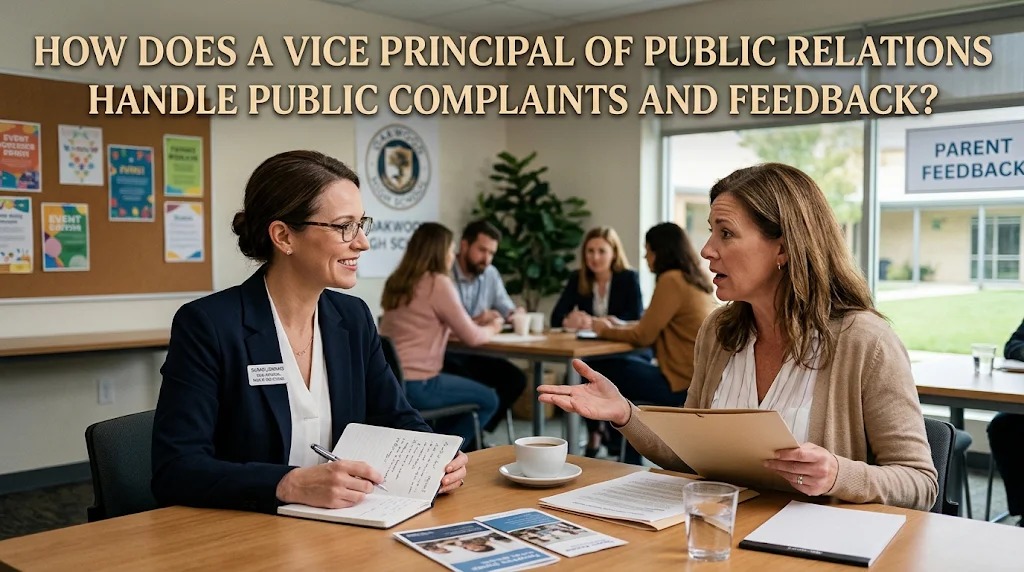
A Vice Principal of Public Relations has an important responsibility in maintaining good relationships between a school and the surrounding community. One of the most challenging parts of this role is handling public complaints and feedback from parents, students, teachers, and other stakeholders. Complaints may involve school services, communication problems, educational policies, facilities, student activities, or administrative procedures.
Handling these concerns requires patience, professionalism, transparency, and effective communication. A Vice Principal of Public Relations must ensure that every complaint receives proper attention and that appropriate solutions are provided. By managing feedback effectively, schools can improve their services, strengthen public trust, and create a more positive educational environment.
UNDERSTANDING AND IDENTIFYING PUBLIC COMPLAINTS
The first step in handling public complaints is understanding the problems reported by the community. A Vice Principal of Public Relations must listen carefully to complaints from parents, students, teachers, and other parties without immediately making assumptions. Each complaint should be treated seriously, regardless of how simple or complicated the issue may seem. This approach helps people feel respected and encourages them to communicate their concerns openly.
Complaints can be received through direct meetings, telephone calls, official messaging platforms, emails, suggestion boxes, or social media. The vice principal should identify the main issue, determine who is involved, and understand the possible causes. Clear identification makes it easier to decide which school department or staff member should handle the problem.
LISTENING TO FEEDBACK AND RESPONDING PROFESSIONALLY
Effective communication is essential when responding to public complaints. A Vice Principal of Public Relations should give complainants enough time to explain their concerns without interrupting or responding emotionally. Maintaining a calm attitude helps prevent misunderstandings and creates a more constructive discussion. The school representative should also use polite, clear, and respectful language throughout the communication process.
When responding, the vice principal should acknowledge the complaint and explain that the school will review the matter appropriately. If the problem requires further investigation, the complainant should receive an honest explanation rather than an unsupported promise. Responses should also protect the privacy of students, teachers, parents, and other individuals involved. Professional communication can help maintain trust even when the school cannot immediately provide a complete solution.
INVESTIGATING COMPLAINTS AND COORDINATING WITH RELEVANT PARTIES
After understanding a complaint, the Vice Principal of Public Relations needs to coordinate with the relevant school departments to investigate the issue. For example, complaints about teaching activities may require discussions with the academic department, while problems involving school facilities may need coordination with administrative or maintenance staff. The investigation should be based on accurate information rather than assumptions or personal opinions.
The vice principal should collect relevant details, review available records, and listen to different parties when necessary. This process helps the school understand the situation from several perspectives before deciding on an appropriate response. If the issue involves serious misconduct, safety concerns, or matters beyond the vice principal's authority, it should be referred to the principal or the appropriate authority. Proper coordination ensures that complaints are handled fairly and responsibly.
PROVIDING SOLUTIONS AND FOLLOWING UP ON COMPLAINTS
Once the problem has been investigated, the school should determine a suitable solution based on its policies, available resources, and the circumstances of the complaint. The Vice Principal of Public Relations helps coordinate the implementation of the agreed solution and communicates the outcome to the complainant. Solutions may include correcting administrative errors, improving school services, clarifying information, or arranging meetings between the parties involved.
Following up is equally important because resolving a complaint does not always end with providing an initial response. The vice principal should check whether the agreed solution has been implemented and whether the complainant considers the matter adequately addressed. If the problem remains unresolved, further evaluation or additional action may be necessary. Consistent follow-up demonstrates that the school takes public concerns seriously.
USING PUBLIC FEEDBACK TO IMPROVE SCHOOL QUALITY
Public complaints and feedback should not only be viewed as problems but also as opportunities to improve school quality. A Vice Principal of Public Relations can collect and review feedback to identify recurring issues that require attention. For example, repeated complaints about delayed announcements may indicate that the school needs a more effective communication system. Feedback about facilities may also help school management determine which improvements should receive priority.
The results of feedback evaluations can be discussed with the principal and relevant departments as part of school development planning. Schools can also provide regular feedback channels, such as surveys, parent meetings, and suggestion forms, to encourage constructive participation. By using this information responsibly, the school can improve its services, strengthen relationships with stakeholders, and prevent similar problems from happening again.
CONCLUSION
A Vice Principal of Public Relations handles public complaints and feedback through active listening, professional communication, careful investigation, coordination, and consistent follow-up. Every complaint should be treated fairly and addressed according to the school's authority and procedures. Feedback also provides valuable information for identifying weaknesses and improving educational services. Through transparent and responsible complaint management, schools can strengthen public trust and build better relationships with parents, students, teachers, and the wider community.
Recent Posts

How Does Technology Make Daily Evaluation... 21.11.2026/63 View

Apa Strategi Menghadapi Kesenjangan antara Kompetensi... 21.11.2026/64 View

Mengapa Inventaris Aset Penting bagi Kelancaran... 21.11.2026/60 View

When Should Musicians Join a Record... 21.11.2026/59 View

Daily Evaluation or Daily Planning Which... 21.11.2026/67 View
