

How Does a Vice Principal of Public Relations Manage School Information and Publicity?
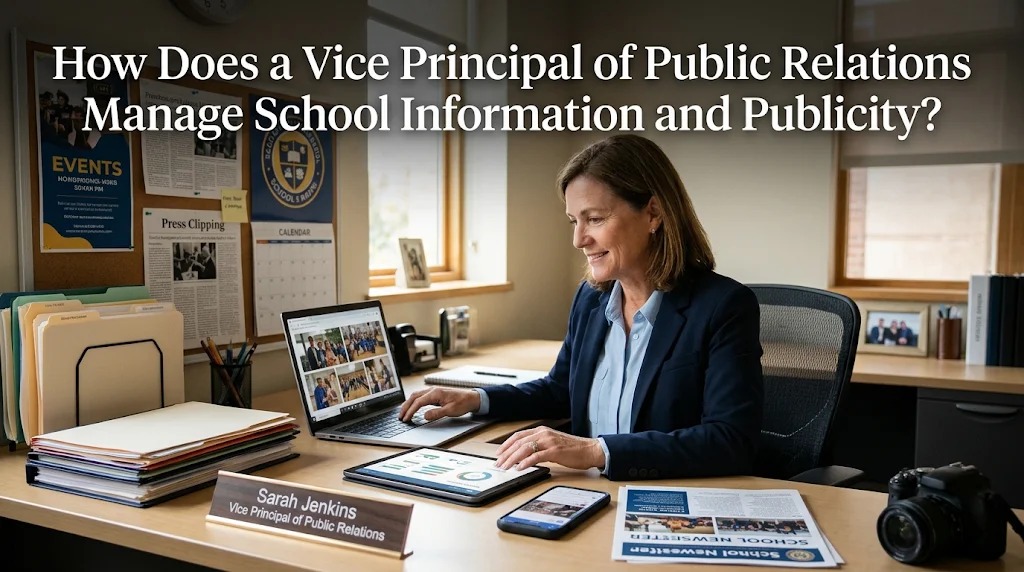
A Vice Principal of Public Relations plays an important role in managing how information about a school is collected, communicated, and shared with the public. This responsibility ensures that students, parents, teachers, and community members receive accurate and relevant information about school activities and achievements. Effective information management also helps maintain the school's reputation and build public trust. Through organized communication and appropriate publicity strategies, the vice principal can introduce school programs, strengthen relationships, and create a positive image of the educational institution.
UNDERSTANDING SCHOOL INFORMATION AND PUBLICITY MANAGEMENT
Managing school information and publicity involves organizing and distributing information about the school's activities, programs, achievements, and policies. A Vice Principal of Public Relations is responsible for ensuring that important information reaches the intended audience through appropriate communication channels. This includes parents, students, teachers, alumni, educational partners, and the wider community.
The process requires careful planning because information shared by the school can influence public perceptions and trust. The vice principal must ensure that every announcement is clear, accurate, relevant, and consistent with school policies. By managing information professionally, the school can maintain transparency and establish effective communication with its stakeholders.
COLLECTING AND VERIFYING SCHOOL INFORMATION
One of the main responsibilities is collecting information from different departments and activities within the school. The vice principal coordinates with teachers, administrative employees, student organizations, and event committees to obtain updates about academic programs, competitions, extracurricular activities, and institutional achievements. This information becomes the foundation for school announcements, publications, and promotional materials.
Before information is shared publicly, its accuracy must be checked. The vice principal needs to confirm important details such as dates, locations, participant names, achievements, and event descriptions. This verification process helps prevent misinformation and misunderstandings. Accurate information also demonstrates that the school values professionalism and responsibility in its communication.
USING DIGITAL MEDIA AND COMMUNICATION CHANNELS
Digital media has become an important tool for sharing school information with the public. A Vice Principal of Public Relations may coordinate the use of official websites, social media accounts, messaging platforms, and digital newsletters to distribute announcements and educational updates. These channels allow schools to communicate more quickly and reach audiences beyond their immediate surroundings.
However, each communication channel requires appropriate content and management. For example, social media can be used to share school activities and student achievements, while official websites can provide institutional information, announcements, and educational resources. The vice principal should also ensure that published content follows school guidelines and respects personal privacy. Consistent digital communication can increase public engagement and improve the school's visibility.
PREPARING PUBLICITY MATERIALS AND PROMOTIONAL CONTENT
Another important responsibility is preparing publicity materials that introduce the school's programs, achievements, and educational opportunities. These materials may include brochures, posters, newsletters, press releases, photographs, videos, and social media content. The vice principal usually coordinates with relevant staff members to ensure that the materials communicate the school's message effectively.
Good publicity should be informative, attractive, and based on factual information. It should explain the school's activities and achievements without exaggerating results or making misleading claims. The vice principal must also ensure that promotional materials use appropriate language and represent the institution professionally. Through well-organized publicity, schools can increase public awareness and attract interest from prospective students, parents, and educational partners.
HANDLING PUBLIC RESPONSES AND MAINTAINING THE SCHOOL'S REPUTATION
Managing school publicity does not end after information has been published. A Vice Principal of Public Relations must also pay attention to public responses, questions, suggestions, and complaints. Feedback from parents and community members can help the school identify communication problems and improve its services. The vice principal may coordinate with the principal and relevant departments to provide appropriate responses.
When negative information or misunderstandings appear, the school needs to respond calmly, professionally, and transparently. The vice principal helps ensure that explanations are based on verified facts and approved institutional information. They must also understand when an issue requires consultation with the principal or other responsible authorities. Responsible communication can reduce misunderstandings and help protect the school's long-term reputation.
CONCLUSION
A Vice Principal of Public Relations manages school information and publicity through information collection, verification, digital communication, promotional content preparation, and public response management. These responsibilities help ensure that the school communicates accurately and maintains a positive relationship with its stakeholders. Effective information management also supports transparency, public trust, and institutional reputation. By using appropriate communication strategies, the vice principal can strengthen the school's public image and support its overall educational development.
Recent Posts

How Does Technology Make Daily Evaluation... 21.11.2026/63 View

Apa Strategi Menghadapi Kesenjangan antara Kompetensi... 21.11.2026/64 View

Mengapa Inventaris Aset Penting bagi Kelancaran... 21.11.2026/60 View

When Should Musicians Join a Record... 21.11.2026/59 View

Daily Evaluation or Daily Planning Which... 21.11.2026/67 View
