

How Does Academic Citation Help Prevent Plagiarism?
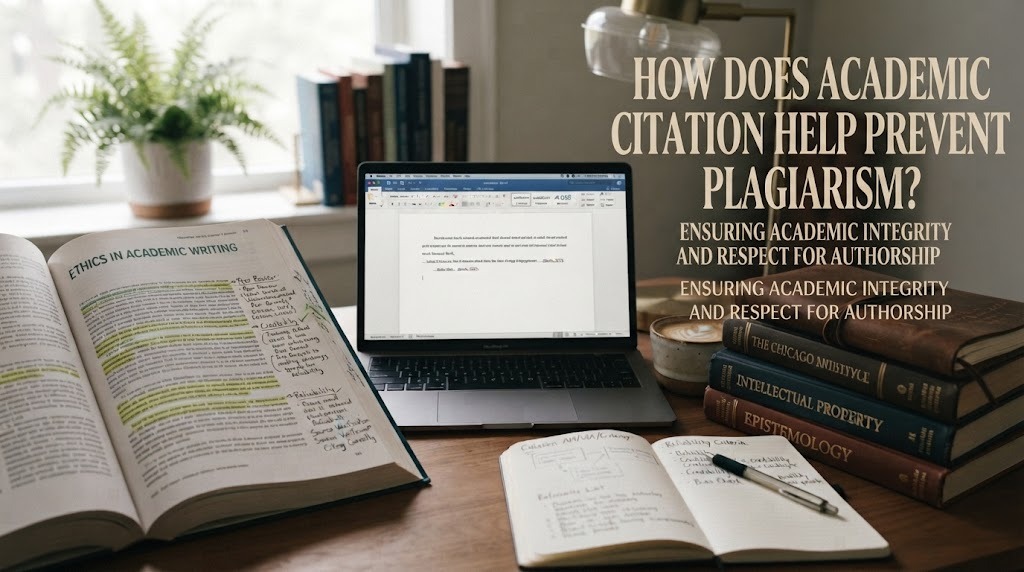
Academic citation is an important part of academic writing because it shows where information, ideas, or arguments come from. When students or researchers use information from other sources, they need to give proper credit to the original author. Without citation, using another person's ideas may be considered plagiarism. Proper citation helps readers identify the sources used to support a piece of writing. Therefore, understanding the connection between academic citation and plagiarism prevention is essential for students, researchers, and academic writers.
WHAT IS ACADEMIC CITATION?
Academic citation is the practice of acknowledging the sources used in an academic work. A citation can refer to a book, journal article, website, research report, or another reliable source. It usually includes important information such as the author's name, publication year, title, and other details required by a particular citation style. Common citation styles include APA, MLA, and Chicago. The purpose of citation is to make it clear which information comes from the writer and which information comes from another source.
Citation can appear in different forms depending on the requirements of an academic institution. In-text citations are placed within the main text, while a reference list or bibliography provides complete information about the sources at the end of the work. These two parts usually work together to help readers locate the original source. A writer should use the citation style required by their school, university, or publisher. Following the correct format makes academic writing more organized and credible.
WHAT IS PLAGIARISM?
Plagiarism is the act of presenting another person's words, ideas, research, or other intellectual work as if it were your own. It can happen when a writer copies sentences without providing a citation. Plagiarism can also occur when someone changes only a few words from an original source but does not acknowledge the source. Using another person's ideas without proper credit is also a form of plagiarism. Because academic work depends on honesty and originality, plagiarism is considered a serious academic issue.
Plagiarism is not always intentional. A student may accidentally plagiarize because they do not understand how to paraphrase, quote, or cite sources correctly. Poor note-taking can also make it difficult to remember which ideas came from personal thinking and which came from research. Learning basic citation practices can reduce these mistakes. Writers should always check their work carefully before submitting an academic assignment.
HOW DOES ACADEMIC CITATION HELP PREVENT PLAGIARISM?
Academic citation helps prevent plagiarism by clearly showing where borrowed information comes from. When a writer uses an idea from another author and includes a citation, the reader can see that the idea is not being presented as the writer's original discovery. This creates a clear distinction between the writer's own contribution and information obtained from other sources. Citation therefore provides credit to the original author while allowing the writer to use valuable research. It is one of the most important practices for maintaining academic integrity.
Citation is especially important when a writer uses direct quotations, paraphrases, statistics, facts, or research findings. A direct quotation should normally be identified as borrowed wording and accompanied by an appropriate citation. A paraphrased idea should also be cited even when the wording has been completely changed. Simply rewriting a source does not make the underlying idea original. By citing these materials properly, writers can use existing knowledge without falsely claiming ownership.
WHY IS GIVING CREDIT TO SOURCES IMPORTANT?
Giving credit to sources demonstrates respect for the original author's work. Researchers and writers spend significant time developing ideas, collecting information, and producing academic materials. When their work is used by someone else, proper acknowledgment recognizes their contribution. It also helps readers understand the background of the information presented in an academic paper. As a result, citation supports both academic honesty and responsible research.
Proper credit also helps create a transparent relationship between the writer and the reader. Readers can check the cited sources if they want to learn more about a particular topic. This makes the academic discussion easier to verify and understand. Without citations, readers may not know which claims are based on previous research. Therefore, giving credit is not only about avoiding plagiarism but also about improving the quality of academic communication.
HOW SHOULD WRITERS CITE PARAPHRASED INFORMATION?
Paraphrasing means expressing information from a source using your own words while keeping the original meaning. Even though the wording is changed, the underlying idea still belongs to the original source. Therefore, paraphrased information normally requires a citation. A good paraphrase should involve genuine understanding of the source rather than simply replacing several words with synonyms. The writer should also make sure that the paraphrase accurately represents the original author's meaning.
For example, a writer may read a research article and explain its findings in a shorter and clearer way. The writer can use their own sentence structure and vocabulary, but they should still identify the original source. This practice allows writers to combine information from different sources while maintaining academic integrity. It also helps prevent accidental plagiarism caused by copying the structure of the original sentence. Good paraphrasing combined with proper citation makes academic writing more original and trustworthy.
HOW DO DIRECT QUOTATIONS RELATE TO PLAGIARISM?
A direct quotation uses the exact words from an original source. Because the wording belongs to another author, the writer must clearly identify the quoted material and provide an appropriate citation. Depending on the required citation style, quotation marks or another quotation format may be necessary. The citation should provide enough information for readers to identify the original source. Using exact words without proper acknowledgment can be considered plagiarism.
Direct quotations should be used carefully and only when the original wording is especially important. Academic writers should not fill an entire paper with quotations because the main purpose is to demonstrate their own understanding and analysis. Instead, quotations can be combined with original explanation and analysis. After introducing a quotation, writers should explain how it supports their argument. This approach makes the academic work more meaningful and demonstrates independent thinking.
HOW CAN STUDENTS AVOID PLAGIARISM THROUGH CITATION?
Students can reduce the risk of plagiarism by recording source information while conducting research. They should note the author's name, publication details, page numbers when relevant, and other information needed for the citation style they are using. Keeping clear research notes helps students distinguish between their own ideas and information taken from sources. Students should also cite information whenever they use another person's ideas or words. Developing these habits from the beginning can make academic writing much easier.
Students should also learn the basic rules of the citation style required by their institution. Before submitting an assignment, they can check whether every borrowed idea has an appropriate citation. They should also compare the in-text citations with the reference list to make sure the information is consistent. Citation management tools can help organize references, although students should still review the results for accuracy. These simple steps can significantly reduce accidental plagiarism.
COMMON CITATION MISTAKES THAT MAY LEAD TO PLAGIARISM
One common mistake is forgetting to cite a source after using someone else's idea. Another mistake is copying a sentence and changing only a few words without providing a citation. Writers may also cite a source in the text but forget to include it in the reference list. In some cases, incorrect citation information can make it difficult for readers to identify the original source. These mistakes can weaken the credibility of academic writing and may create plagiarism concerns.
Another problem is inconsistent use of citation styles. For example, a writer may follow APA rules in one section but use a different format in another section. Writers should carefully follow the required style throughout the entire assignment. They should also review quotations and paraphrases before submitting their work. Careful proofreading and source checking can help identify citation problems before they become academic integrity issues.
CONCLUSION
Academic citation plays an important role in preventing plagiarism because it clearly identifies information and ideas obtained from other sources. By citing sources properly, writers give credit to original authors and avoid presenting borrowed material as their own. Citation is necessary for direct quotations, paraphrased ideas, research findings, and other information taken from external sources. Learning how to cite correctly can also improve the credibility, transparency, and quality of academic writing.
Preventing plagiarism requires more than simply adding references at the end of an assignment. Writers need to understand how to quote, paraphrase, and cite sources correctly throughout their work. Good research notes, consistent citation practices, and careful proofreading can help reduce accidental plagiarism. Ultimately, proper citation supports academic integrity and encourages responsible use of knowledge.
Recent Posts

Bagaimana Sistem SKS pada Program Kuliah... 22.11.2026/38 View

How Does Technology Make Daily Evaluation... 21.11.2026/71 View

Apa Strategi Menghadapi Kesenjangan antara Kompetensi... 21.11.2026/73 View

Mengapa Inventaris Aset Penting bagi Kelancaran... 21.11.2026/69 View

When Should Musicians Join a Record... 21.11.2026/73 View
