

How Does an Extended Family Influence Children's Social Development?
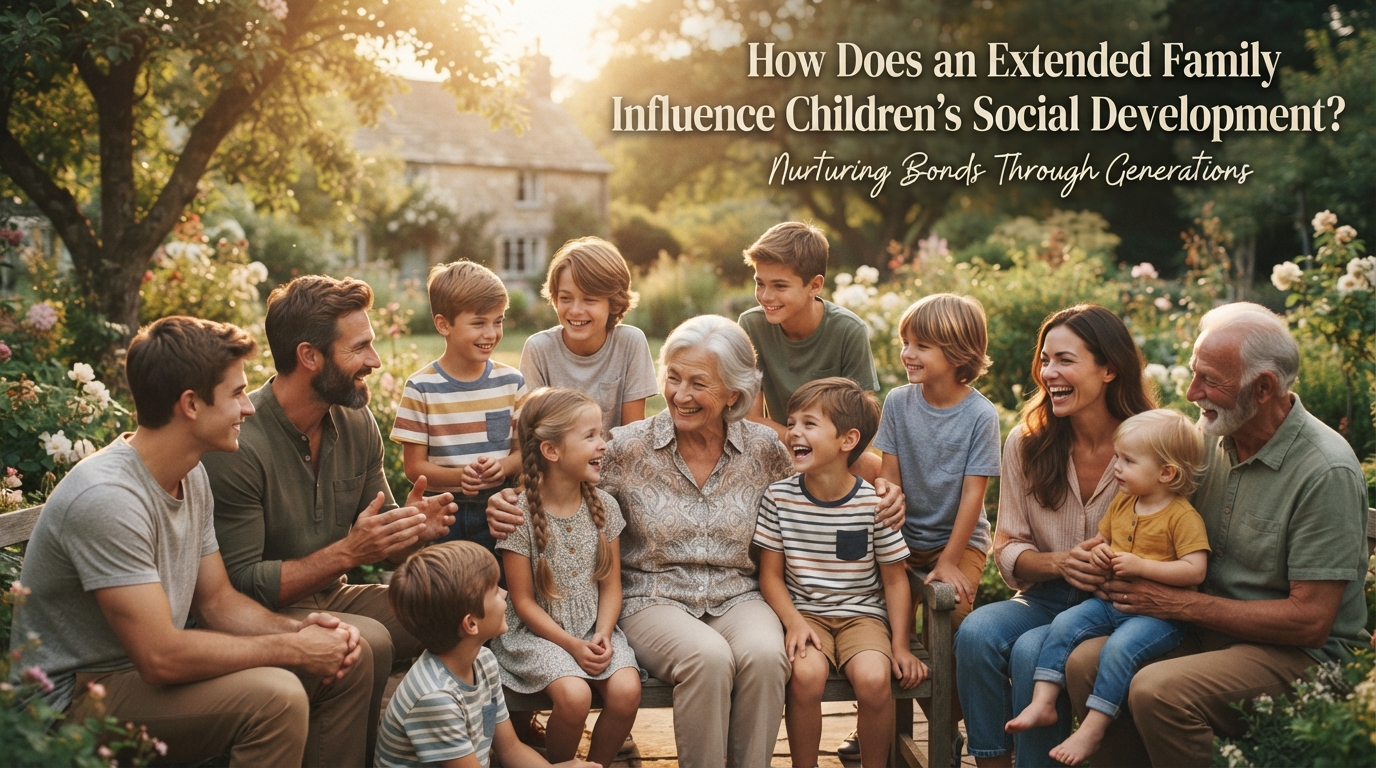
An extended family plays an important role in shaping children's social development because it provides opportunities to interact with different people from an early age. Unlike a nuclear family, which generally consists of parents and their children, an extended family includes grandparents, uncles, aunts, cousins, and other relatives. Growing up in this environment allows children to experience various relationships, personalities, and ways of communicating.
The involvement of extended family members can influence how children develop communication skills, emotional awareness, social confidence, empathy, and respect for others. Through everyday interactions and shared activities, children learn how to build relationships, cooperate, and respond to different social situations. A supportive extended family can therefore become an important environment for developing positive social behavior.
DEVELOPING COMMUNICATION SKILLS
One of the most significant influences of an extended family is helping children develop communication skills. When children regularly interact with grandparents, cousins, aunts, and uncles, they learn how to express their thoughts and feelings in different situations. They also become familiar with listening to others, asking questions, and responding appropriately during conversations. These experiences help children communicate more comfortably with people of different ages.
Family gatherings and everyday conversations provide opportunities to practice verbal and nonverbal communication. For example, children may learn to speak politely with older relatives and communicate more casually with cousins of similar ages. They can also observe how adults discuss problems and express their opinions respectfully. These experiences help prepare children for social interactions at school and in their communities.
BUILDING EMPATHY AND UNDERSTANDING OTHERS
An extended family provides children with opportunities to develop empathy and understanding toward people with different needs and experiences. By interacting with relatives of various ages and backgrounds, children learn that everyone has different feelings, opinions, and circumstances. They gradually understand the importance of considering other people's perspectives instead of focusing only on their own needs.
For example, children may learn to be patient when helping elderly grandparents or show concern when a cousin feels disappointed. These simple experiences encourage kindness and emotional awareness. Relatives can strengthen this learning by explaining why certain actions may affect other people's feelings. Developing empathy helps children build healthier relationships and become more considerate individuals.
IMPROVING SOCIAL CONFIDENCE AND INTERACTION
Growing up around several family members can help children develop social confidence. Regular interaction with relatives gives them opportunities to start conversations, participate in group activities, and express their opinions. A familiar and supportive family environment can make children feel more comfortable when communicating with others.
Children who receive positive encouragement from relatives may become more confident when meeting new people. For instance, participating in family celebrations can help them practice introducing themselves, joining conversations, and cooperating with other children. These experiences can make social situations outside the home feel less intimidating. However, children should also receive opportunities to interact with people beyond their family to develop broader social experiences.
LEARNING COOPERATION AND TEAMWORK
An extended family can teach children the importance of cooperation and teamwork through shared activities and household responsibilities. Children may participate in preparing meals, organizing family gatherings, playing group games, or helping relatives with simple tasks. These activities encourage them to work with others toward common goals.
Through cooperation, children learn how to share responsibilities, take turns, follow agreements, and appreciate other people's contributions. They also discover that successful teamwork requires communication and patience. When disagreements occur during group activities, adults can guide children toward finding fair solutions. These lessons help children develop social skills that are useful in school, friendships, and future workplaces.
TEACHING RESPECT AND POSITIVE SOCIAL VALUES
Extended family members can become important examples when teaching children respect and positive social values. Through daily interactions, children observe how relatives treat older people, communicate with younger family members, and respond to different opinions. These experiences help them understand the importance of politeness, honesty, responsibility, and consideration.
Grandparents may teach children to appreciate family traditions, while parents, aunts, and uncles can reinforce the importance of respecting other people's boundaries. Children also learn that respect involves listening carefully and accepting that others may have different perspectives. When adults consistently demonstrate positive behavior, children have practical examples to follow. These values can influence how they interact with people in wider society.
HELPING CHILDREN MANAGE EMOTIONS AND CONFLICTS
Social development involves learning how to recognize and manage emotions during interactions with others. Extended family members can help children develop emotional regulation and conflict resolution skills by guiding them through everyday disagreements. For example, children may experience conflicts when sharing toys, playing games, or discussing different opinions with cousins.
Adults can teach children to express their feelings calmly, listen to other perspectives, and avoid hurtful behavior. They can also encourage children to apologize when they make mistakes and find peaceful solutions to disagreements. These experiences help children understand that conflicts are a normal part of relationships and can be resolved through respectful communication. Learning these skills supports healthier social interactions as children grow older.
STRENGTHENING A SENSE OF BELONGING AND FAMILY IDENTITY
Being part of an extended family can help children develop a strong sense of belonging and family identity. Regular interaction with relatives allows them to understand their family background, traditions, and shared experiences. Feeling accepted and valued within the family can provide emotional security and encourage children to build positive relationships.
Family celebrations, storytelling, and shared activities also help children recognize their connection to different generations. They learn that they are part of a larger family network where members can support and appreciate one another. This sense of belonging may encourage children to develop stronger social connections beyond their immediate household. It can also help them understand the importance of maintaining meaningful relationships throughout life.
EXPOSING CHILDREN TO DIFFERENT PERSPECTIVES AND EXPERIENCES
An extended family often brings together people with different educational backgrounds, occupations, interests, and lifestyles. This variety gives children opportunities to learn about different perspectives and experiences. They can discover new ideas through conversations with relatives who have different knowledge and life experiences.
For example, an uncle may introduce a child to technology, while a grandparent may share traditional knowledge and personal stories. These interactions encourage curiosity, open-mindedness, and the ability to appreciate differences. Children can also learn that people may solve problems in different ways depending on their experiences. Exposure to diverse perspectives helps prepare them to interact respectfully with a wider community.
PROVIDING A SUPPORTIVE ENVIRONMENT FOR SOCIAL GROWTH
A supportive extended family can create a positive environment where children feel comfortable learning and developing social skills. Relatives can encourage participation in conversations, group activities, and family responsibilities without putting unnecessary pressure on children. Positive encouragement and emotional support help children become more willing to explore new social experiences.
However, family influence is not always positive automatically. Conflicting parenting styles, excessive criticism, favoritism, or unhealthy communication can negatively affect children's social experiences. Therefore, adults should establish clear boundaries, demonstrate respectful behavior, and coordinate their guidance. A healthy family environment should allow children to develop their individuality while learning how to respect others.
CONCLUSION
An extended family can significantly influence children's social development by providing opportunities to practice communication, develop empathy, build confidence, and learn cooperation. Interactions with grandparents, aunts, uncles, cousins, and other relatives also help children understand different perspectives, manage emotions, and develop positive social values.
However, these benefits depend on the quality of family relationships and the behavior demonstrated by adults. Good communication, positive role models, emotional support, and mutual respect are essential for creating a healthy social environment. When extended family members provide consistent and supportive guidance, children have better opportunities to develop the social skills needed to build meaningful relationships throughout their lives.
Recent Posts

How Does Technology Make Daily Evaluation... 21.11.2026/57 View

Apa Strategi Menghadapi Kesenjangan antara Kompetensi... 21.11.2026/59 View

Mengapa Inventaris Aset Penting bagi Kelancaran... 21.11.2026/55 View

When Should Musicians Join a Record... 21.11.2026/54 View

Daily Evaluation or Daily Planning Which... 21.11.2026/61 View
