

How Does an Extended Family Shape Children's Character and Personality?
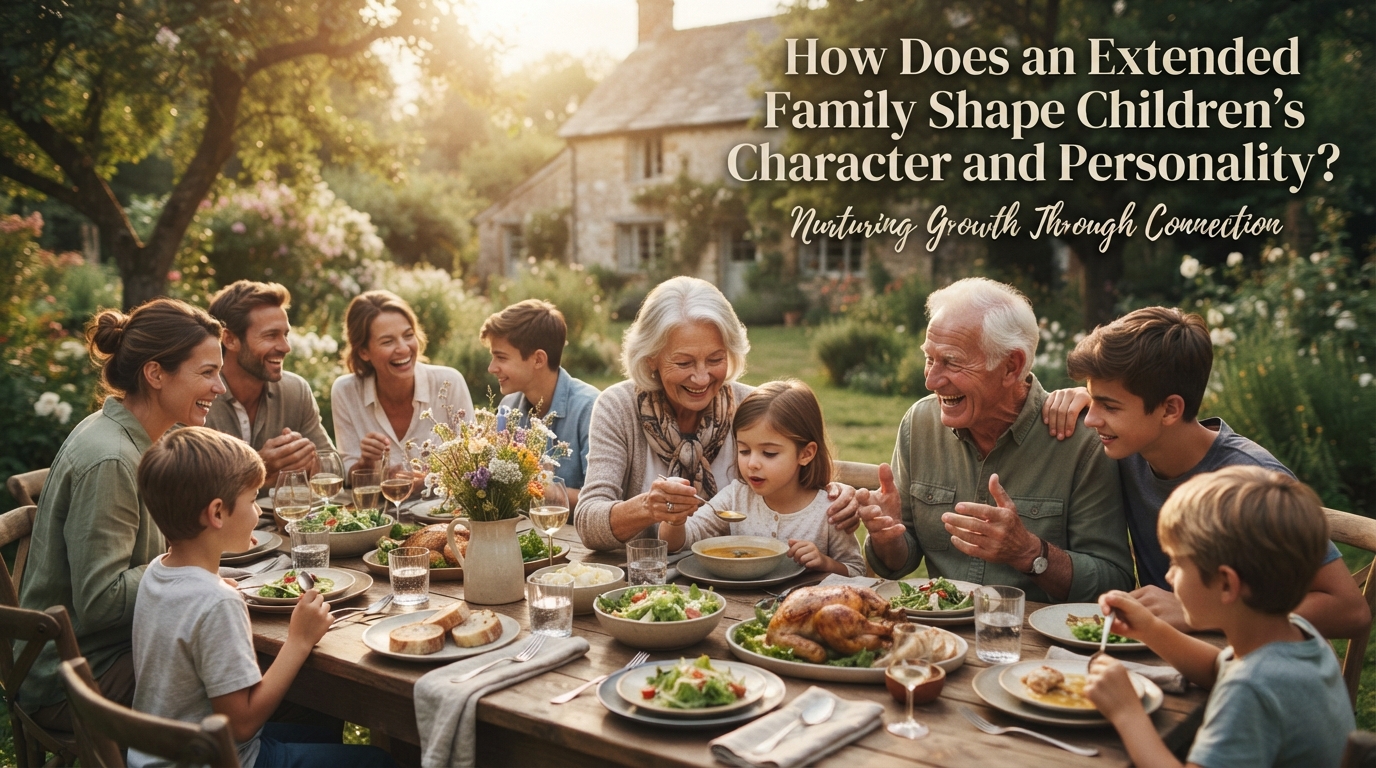
An extended family plays an important role in shaping children's character and personality because it provides a wider social environment where they can learn, interact, and develop different abilities. Unlike a nuclear family, an extended family includes grandparents, uncles, aunts, cousins, and other relatives who may be involved in children's daily lives. Through these relationships, children gain experiences that influence how they communicate, behave, understand others, and respond to different situations.
Growing up in an extended family allows children to interact with people from different generations, personalities, and backgrounds. These interactions can teach important values such as respect, honesty, patience, empathy, and responsibility. Children may also receive guidance, emotional support, and positive examples from relatives beyond their parents. Therefore, an extended family can contribute significantly to children's social, emotional, and personal development.
TEACHING RESPECT AND GOOD MANNERS
One of the main ways an extended family shapes children's character is by teaching respect and good manners. Children regularly interact with grandparents, aunts, uncles, and other relatives who may have different ages and experiences. Through these interactions, they learn how to speak politely, listen to others, and appreciate different opinions. Older family members can also demonstrate appropriate behavior through their everyday actions.
For example, children may learn to greet relatives, help older family members, and use respectful language when communicating. These simple habits gradually become part of their daily behavior. When parents and other relatives consistently demonstrate respectful attitudes, children are more likely to understand the importance of treating people well both inside and outside the family.
DEVELOPING EMPATHY AND EMOTIONAL INTELLIGENCE
An extended family provides opportunities for children to develop empathy and emotional intelligence. By interacting with relatives who have different feelings, needs, and experiences, children learn to recognize and understand other people's emotions. They may also become more aware of how their words and actions affect those around them. These experiences help children develop sensitivity and consideration toward others.
Emotional support from relatives can also help children understand and manage their own feelings. When grandparents or other trusted family members listen to their concerns, children may feel more comfortable expressing emotions. They can gradually learn how to respond to disappointment, frustration, and happiness in healthier ways. These abilities are important for developing balanced emotional relationships as they grow older.
BUILDING CONFIDENCE AND SELF-ESTEEM
A supportive extended family can help children develop confidence and positive self-esteem. When relatives recognize children's efforts, appreciate their achievements, and encourage their interests, children may feel more valued. Positive attention can motivate them to explore new activities and develop their abilities. Having several trusted family members can also provide additional sources of encouragement.
For example, an uncle may encourage a child to participate in sports, while a grandparent may appreciate the child's artistic interests. These experiences can help children discover their strengths and become more confident in expressing themselves. However, encouragement should be balanced with constructive guidance so that children can learn from mistakes without feeling discouraged.
TEACHING RESPONSIBILITY AND INDEPENDENCE
Extended family relationships can help children understand the importance of responsibility and independence. When children participate in simple household activities, help younger relatives, or take care of their belongings, they learn that everyone has responsibilities. These activities encourage them to become more disciplined and aware of their roles within the family. Relatives can also guide children in completing tasks independently according to their age and abilities.
Furthermore, children may learn how to make decisions and solve everyday problems through interactions with different family members. Older relatives can provide advice while allowing children to practice making appropriate choices. This balance helps children develop independence without losing the importance of cooperation. Over time, these experiences can prepare them to handle responsibilities at school, work, and in society.
IMPROVING COMMUNICATION AND SOCIAL SKILLS
An extended family creates a wider environment for children to practice communication and social skills. Interacting with grandparents, cousins, aunts, and uncles exposes children to different communication styles and personalities. They learn how to start conversations, listen carefully, express their opinions, and respond appropriately. These abilities can make it easier for them to build friendships and interact with other people.
Family gatherings and shared activities also provide opportunities to practice cooperation and teamwork. Children may learn how to share toys, take turns, participate in group activities, and resolve small disagreements. Through these experiences, they become more familiar with social expectations and appropriate behavior. These skills are valuable for building healthy relationships throughout their lives.
SHAPING HONESTY AND STRONG MORAL VALUES
Extended family members can contribute to children's moral development by demonstrating honesty, fairness, kindness, and integrity. Parents and older relatives often teach these values through everyday conversations and personal examples. For instance, children may observe how family members keep promises, admit mistakes, and treat others fairly. Such experiences help them understand the importance of making responsible choices.
Family stories and shared experiences can also provide valuable lessons about right and wrong. Grandparents may explain the importance of honesty, while parents and other relatives reinforce these lessons through daily guidance. However, children need consistent examples because conflicting behavior can make moral lessons difficult to understand. When family members practice the values they teach, children have stronger examples to follow.
INFLUENCING PERSONALITY THROUGH DIFFERENT ROLE MODELS
An extended family introduces children to different role models who may influence their interests, attitudes, and behavior. Each relative has unique experiences, abilities, and personality traits that children can observe. For example, a disciplined grandparent may demonstrate patience, while an enthusiastic aunt may encourage creativity and curiosity. These different examples allow children to discover various ways of approaching life.
Children may also develop interests by observing the activities of their relatives. They might become interested in reading, sports, cooking, music, or other hobbies after spending time with family members. However, children do not necessarily develop the same personalities as their relatives. Their individual characteristics are also influenced by genetics, parenting, education, friendships, personal experiences, and their surrounding environment.
PRESERVING CULTURAL IDENTITY AND FAMILY TRADITIONS
An extended family helps shape children's personalities by introducing them to cultural identity and family traditions. Older generations often share stories about family history, traditional celebrations, local customs, and cultural practices. Through these experiences, children gain a better understanding of their background and develop an appreciation for their family's heritage. This knowledge can strengthen their sense of identity and belonging.
Participating in traditional activities also teaches children cooperation, respect, and appreciation for different generations. For example, preparing traditional meals, attending family celebrations, or visiting relatives can create meaningful learning experiences. These activities help children understand that family traditions are not only about celebrations but also about maintaining relationships and shared values.
CREATING A SUPPORTIVE ENVIRONMENT FOR PERSONAL GROWTH
A healthy extended family can provide a supportive environment for personal growth. Children who receive encouragement, guidance, and appropriate attention from several trusted relatives may have more opportunities to explore their interests and develop their abilities. Different family members can offer different forms of assistance, depending on their knowledge and experiences. This support can help children feel more secure when facing new challenges.
However, a positive environment requires cooperation between parents and other relatives. Family members should maintain consistent expectations, avoid excessive criticism, and respect the parents' role in making important decisions about their children. Children also need opportunities to express their opinions and develop their own identities. With balanced guidance and emotional support, an extended family can contribute positively to their overall development.
CONCLUSION
An extended family can significantly shape children's character and personality through everyday interactions, positive role models, emotional support, and shared experiences. It helps children develop important qualities such as respect, empathy, confidence, responsibility, honesty, and communication skills. Relationships with different generations also provide opportunities to learn cultural values, understand different perspectives, and build a strong sense of belonging.
However, the influence of an extended family depends on the quality of its relationships and the examples provided by its members. Healthy communication, consistent guidance, and respect for children's individual needs are essential for positive development. Ultimately, a supportive extended family can become an important foundation for helping children grow into responsible, confident, and caring individuals.
Recent Posts

How Does Technology Make Daily Evaluation... 21.11.2026/57 View

Apa Strategi Menghadapi Kesenjangan antara Kompetensi... 21.11.2026/59 View

Mengapa Inventaris Aset Penting bagi Kelancaran... 21.11.2026/55 View

When Should Musicians Join a Record... 21.11.2026/54 View

Daily Evaluation or Daily Planning Which... 21.11.2026/61 View
