

How Does Basic Research Contribute to Advances in Healthcare?
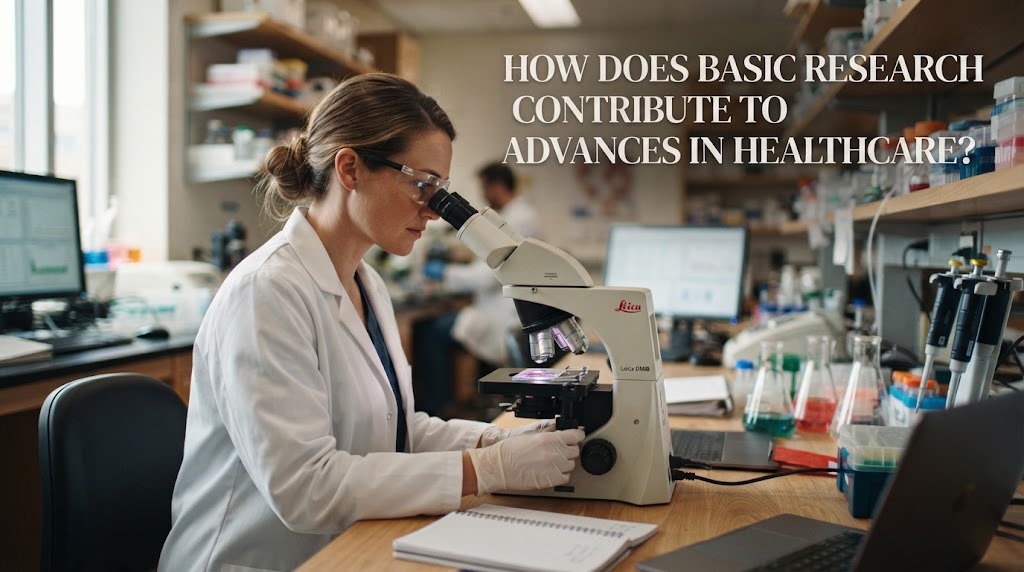
Basic research plays an important role in improving healthcare by helping scientists understand how the human body works, why diseases develop, and how different treatments affect biological processes. Although basic research does not always produce immediate medical solutions, it provides the scientific knowledge needed to develop new diagnostic methods, medicines, and healthcare technologies. Many medical breakthroughs begin with fundamental discoveries in biology, chemistry, genetics, and other scientific fields. By expanding scientific understanding, basic research creates opportunities to improve disease prevention, diagnosis, treatment, and patient care.
UNDERSTANDING DISEASES THROUGH BASIC RESEARCH
Basic research helps scientists understand the causes and mechanisms of diseases. Researchers study cells, genes, proteins, microorganisms, and other biological processes to discover how health conditions develop and affect the human body. This knowledge allows scientists to identify changes that may contribute to infections, genetic disorders, cancer, and other illnesses. A deeper understanding of these processes provides a foundation for developing more effective approaches to healthcare.
For example, research into how viruses enter and reproduce inside human cells can help scientists identify potential targets for antiviral treatments. Similarly, studies of how cancer cells grow and interact with surrounding tissues can reveal important information about tumor development. These discoveries may not immediately result in new treatments, but they help researchers identify promising directions for future medical investigations. As scientific knowledge grows, healthcare professionals gain better opportunities to prevent, recognize, and manage diseases.
SUPPORTING THE DEVELOPMENT OF NEW MEDICINES
Basic research is essential for discovering how substances interact with the human body. Scientists investigate biological pathways, chemical compounds, and molecular structures to understand which processes may be influenced by potential medicines. These findings can help researchers identify promising drug targets and explain how certain compounds might affect disease mechanisms. Without this foundational knowledge, developing medicines would be more difficult and less scientifically informed.
The development of a new medicine usually involves several stages, including laboratory research, preclinical testing, and clinical trials to evaluate safety and effectiveness. Basic research contributes to the early scientific understanding that guides these later stages. For instance, discoveries about how the immune system functions have supported the development of treatments that help the body respond to particular diseases. However, a promising laboratory finding does not automatically become a safe or effective medicine, so extensive testing and regulatory evaluation remain necessary.
IMPROVING MEDICAL DIAGNOSIS AND EARLY DETECTION
Basic research helps improve medical diagnosis by identifying biological markers and understanding changes associated with diseases. Scientists study blood components, genes, proteins, and cellular activity to discover measurable signs that may indicate a health condition. These findings can support the development of laboratory tests and other diagnostic methods. Earlier and more accurate detection may allow patients to receive appropriate care sooner.
Research into genetics and molecular biology has also expanded the scientific basis for identifying certain inherited conditions and understanding differences between diseases. For example, knowledge about specific genetic changes can help doctors determine whether additional testing or specialized treatment may be appropriate. Nevertheless, diagnostic tools must be carefully evaluated to establish their accuracy, reliability, and suitability for different populations. Basic research provides the foundation for these improvements by explaining the biological processes that diagnostic methods aim to detect.
ADVANCING VACCINES AND DISEASE PREVENTION
Basic research contributes to disease prevention by helping scientists understand pathogens and the human immune system. Researchers investigate how bacteria, viruses, and other infectious agents cause illness and how the body recognizes and responds to them. This knowledge helps identify potential targets for vaccines and supports the development of strategies to prevent infections. It also provides important scientific information for responding to emerging infectious diseases.
Studies of immune responses have contributed to the development of different vaccine technologies. For example, fundamental research into messenger RNA and how cells use genetic instructions helped establish scientific principles later used in mRNA vaccines. These vaccines demonstrate how discoveries made through basic science can contribute to practical healthcare applications. Continued research is necessary to improve vaccine safety, effectiveness, accessibility, and responses to changing pathogens.
SUPPORTING PERSONALIZED MEDICINE
Basic research has helped advance personalized medicine, an approach that considers differences between patients when making healthcare decisions. Scientists study genetic variation, molecular biology, and the ways individuals respond differently to diseases and treatments. These investigations can reveal why a medicine works well for one patient but produces limited benefits or significant side effects in another. Such knowledge can help healthcare professionals make more informed treatment decisions.
Genomic research, for example, has contributed to identifying genetic changes that influence the effectiveness of certain cancer treatments. In some cases, doctors can use molecular test results to determine whether a patient may benefit from a specific therapy. However, personalized medicine also requires clinical evidence, careful interpretation, and consideration of factors such as age, overall health, and medical history. Basic research provides the scientific foundation that makes these more individualized approaches possible.
DEVELOPING MEDICAL TECHNOLOGY AND TREATMENT METHODS
Advances in healthcare depend not only on medicines but also on technologies used to diagnose, monitor, and treat patients. Basic research in physics, engineering, chemistry, and materials science has contributed to the development of medical imaging, laboratory instruments, monitoring devices, and other healthcare tools. Understanding how light, sound waves, magnetic fields, and electronic signals behave allows scientists and engineers to create technologies that reveal information about the human body. These innovations can improve the accuracy and efficiency of medical procedures.
Research into biological materials and tissue regeneration has also expanded opportunities in areas such as wound healing and regenerative medicine. Scientists investigate how cells grow, communicate, and interact with different materials to understand how damaged tissues might be repaired. Although some approaches remain experimental, this research may support future treatments for injuries and certain medical conditions. Continued testing is essential to determine whether these technologies are safe, effective, and suitable for clinical use.
THE IMPORTANCE OF COLLABORATION IN HEALTHCARE RESEARCH
Healthcare advances often require collaboration between scientists, doctors, universities, hospitals, research institutions, and pharmaceutical companies. Basic researchers may discover a biological mechanism, while clinical researchers investigate how that discovery relates to patients. Engineers and technology specialists can contribute by developing equipment or analytical tools that support further testing. Cooperation between these groups helps connect scientific knowledge with practical healthcare needs.
Universities and research institutions play an important role by providing laboratories, training, and opportunities for scientific collaboration. Governments and funding organizations also support research that may improve public health over the long term. Sharing reliable findings allows researchers to build on previous discoveries, verify results, and identify new research questions. Through collaboration, promising scientific knowledge has a better opportunity to contribute to safer and more effective healthcare.
CHALLENGES IN TRANSLATING BASIC RESEARCH INTO HEALTHCARE
Despite its benefits, basic research does not always lead directly to successful medical treatments. Scientific discoveries may require years of additional investigation before they can be applied in hospitals or clinics. Researchers must evaluate potential risks, conduct appropriate clinical trials, and demonstrate that new approaches offer meaningful benefits. These stages can require substantial funding, specialized facilities, and cooperation among many professionals.
Another challenge is ensuring that healthcare innovations are accessible to the people who need them. A new medicine or diagnostic technology may be expensive or difficult to provide in areas with limited healthcare facilities. Researchers, healthcare providers, policymakers, and funding organizations must therefore consider affordability, availability, and patient needs alongside scientific progress. Continued investment in basic and applied research can help address these challenges and create opportunities for broader improvements in healthcare.
CONCLUSION
Basic research contributes to advances in healthcare by expanding knowledge about diseases, supporting the development of medicines and vaccines, improving diagnostic methods, and creating the scientific foundation for new medical technologies. It also helps researchers understand genetic differences and biological processes that may lead to more personalized approaches to treatment. Although these discoveries do not always produce immediate clinical benefits, they can support important medical advances over time.
Continued investment in scientific research, collaboration between institutions, and careful evaluation of new discoveries are essential for translating knowledge into better patient care. By supporting basic research, society invests in future medical possibilities, stronger disease prevention, and improved health outcomes. Ultimately, basic research remains a vital foundation for making healthcare more effective, evidence-based, and responsive to human needs.
Recent Posts

Bagaimana Sistem SKS pada Program Kuliah... 22.11.2026/43 View

How Does Technology Make Daily Evaluation... 21.11.2026/72 View

Apa Strategi Menghadapi Kesenjangan antara Kompetensi... 21.11.2026/74 View

Mengapa Inventaris Aset Penting bagi Kelancaran... 21.11.2026/70 View

When Should Musicians Join a Record... 21.11.2026/74 View
