

How Does Big Data Help Businesses Understand Consumer Behavior?
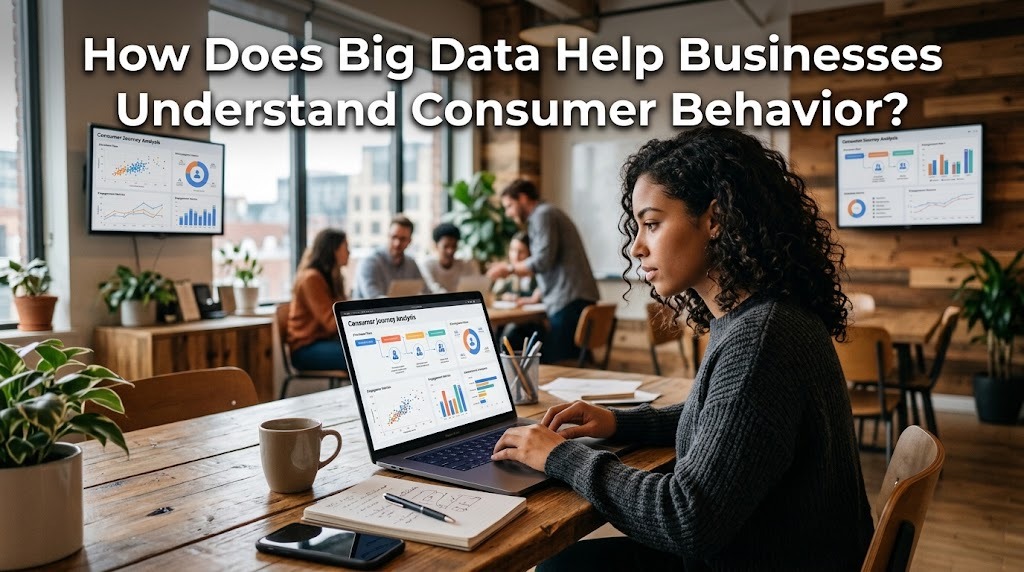
Big data helps businesses understand consumer behavior by analyzing customer preferences, purchasing habits, online activities, and feedback. In the digital era, consumers interact with businesses through websites, social media, mobile applications, and online shopping platforms. Each interaction can provide useful information about what customers need, what influences their decisions, and which products they prefer.
By using big data analytics, companies can transform this information into valuable insights for improving products, developing marketing strategies, and creating better customer experiences. Instead of relying only on assumptions, businesses can make decisions based on patterns found in customer data. This approach allows organizations to respond to changing expectations, build stronger relationships, and improve their competitiveness.
UNDERSTANDING CONSUMER BEHAVIOR THROUGH BIG DATA
Consumer behavior refers to the way people choose, purchase, use, and evaluate products or services. It is influenced by various factors, including personal preferences, income, lifestyle, social trends, product quality, and price. Understanding these factors helps businesses determine why customers choose certain products and what motivates them to make purchasing decisions.
Big data allows companies to examine consumer behavior on a larger scale by collecting and analyzing information from multiple sources. These sources may include transaction records, website visits, product reviews, customer surveys, and social media interactions. When combined responsibly, the information can reveal patterns that are difficult to identify through individual observations. Businesses can use these findings to understand customer needs and develop strategies that better match their target audiences.
IDENTIFYING CUSTOMER PREFERENCES AND BUYING HABITS
One of the main benefits of big data is its ability to identify customer preferences and purchasing habits. Businesses can analyze which products customers buy most frequently, which categories receive the most attention, and how purchasing decisions change over time. This information helps companies understand the products and services that appeal to different customer groups.
For example, an online clothing store may discover that customers frequently purchase lightweight clothing during warmer months and prefer discounted products during major shopping events. The company can use these insights to plan promotions, manage inventory, and recommend relevant products. By understanding purchasing patterns, businesses can improve the shopping experience and reduce the likelihood of offering products that do not match customer demand.
ANALYZING CUSTOMER INTERACTIONS ACROSS DIGITAL PLATFORMS
Consumers leave digital signals whenever they interact with online businesses. These signals include the pages they visit, the products they view, the advertisements they click, and the time they spend exploring a website. Big data analytics helps businesses examine these interactions to understand what attracts attention and where customers encounter difficulties.
For instance, an online retailer may notice that many visitors view a product but leave the website before completing a purchase. This pattern could indicate high delivery costs, unclear product information, a complicated checkout process, or other obstacles. The business can investigate the possible causes and make improvements based on further evidence. However, website activity alone does not explain every customer's motivation, so companies should combine behavioral data with surveys, customer feedback, and other relevant information.
CREATING PERSONALIZED CUSTOMER EXPERIENCES
Big data helps businesses provide personalized experiences by identifying differences in customer preferences, interests, and purchasing histories. Instead of presenting identical recommendations to every customer, companies can use analytical insights to suggest products, services, and content that are more relevant to individual needs. This approach is widely used in online retail, digital entertainment, and other customer-focused industries.
For example, an online bookstore may recommend books based on a customer's previous purchases and browsing history. A streaming platform may suggest movies that match a viewer's interests. These recommendations can make it easier for customers to discover suitable options and can encourage continued engagement. Nevertheless, personalization should remain useful and respectful of privacy, with clear information about data collection and appropriate protection of personal information.
PREDICTING FUTURE CUSTOMER NEEDS
Big data can help businesses estimate future consumer behavior by identifying patterns in historical and current information. Predictive analytics uses statistical methods and, in some cases, machine learning to estimate which products customers may want, when demand might increase, and which customers may stop using a service. These estimates allow businesses to prepare for possible changes instead of responding only after they occur.
For example, a supermarket can examine previous sales, seasonal trends, and local purchasing patterns to estimate demand for particular products. A subscription service may analyze customer engagement to identify signs that users are considering cancellation. Businesses can then adjust inventory, improve services, or offer relevant support. However, predictions are not guaranteed outcomes because consumer preferences can change unexpectedly due to economic conditions, personal circumstances, or new market trends.
IMPROVING MARKETING AND CUSTOMER SEGMENTATION
Customer segmentation is the process of dividing consumers into groups based on shared characteristics, needs, or behaviors. Big data makes this process more detailed by allowing businesses to examine purchasing frequency, preferred products, customer engagement, and responses to promotions. These insights help marketers understand which messages and offers may be appropriate for different audiences.
For example, a fitness business may identify customers interested in beginner training, advanced exercise programs, or home workouts. It can then develop marketing campaigns that address each group's interests. Companies can also measure how customers respond to advertisements and compare campaign performance across different segments. This helps businesses allocate marketing resources more effectively, although they should avoid relying on inaccurate assumptions or using sensitive personal information in inappropriate ways.
UNDERSTANDING CUSTOMER SATISFACTION AND FEEDBACK
Customer satisfaction is an important factor in maintaining business relationships and encouraging repeat purchases. Big data allows companies to analyze reviews, survey responses, customer service conversations, and social media comments to identify common opinions about their products or services. Text analysis and sentiment analysis can help categorize feedback as positive, negative, or neutral, although automated interpretations may not always capture context correctly.
For example, a restaurant may discover repeated complaints about delivery delays, while a software company may identify frequent requests for a particular feature. These findings help businesses prioritize improvements and address recurring problems. Monitoring feedback over time also allows organizations to evaluate whether changes have improved customer experiences. By listening to customers and responding to their concerns, businesses can strengthen trust and develop products that better meet market expectations.
SUPPORTING CUSTOMER RETENTION AND LOYALTY
Big data can help businesses understand why customers continue purchasing from a company or decide to switch to competitors. Companies can examine purchasing frequency, customer service history, engagement levels, and changes in spending to identify possible signs of declining interest. These patterns may help businesses recognize customers who need additional support or a better service experience.
For example, a telecommunications provider may identify customers who frequently contact customer service about unresolved issues. The company can investigate these cases and work to improve the service before customers decide to leave. Businesses may also use loyalty program data to understand which rewards customers value most. However, retention strategies should focus on improving customer value rather than pressuring people with excessive messages or irrelevant offers.
CHALLENGES OF USING BIG DATA TO UNDERSTAND CONSUMERS
Although big data provides valuable insights, businesses must address several challenges to use it effectively. Data may be incomplete, outdated, duplicated, or collected from sources that do not accurately represent the entire customer population. These problems can lead to misleading conclusions and ineffective business decisions. Companies therefore need reliable data management practices and regular checks to maintain information quality.
Privacy and security are also essential considerations. Businesses must handle customer information responsibly, comply with applicable data protection requirements, and protect sensitive records against unauthorized access. They should explain how personal data is used and collect only information that is appropriate for their stated purposes. Companies must also recognize that correlation does not always mean causation, meaning two behaviors may occur together without one directly causing the other. Combining sound analytical methods with human judgment helps businesses interpret consumer behavior more accurately.
CONCLUSION
Big data helps businesses understand consumer behavior by revealing customer preferences, purchasing habits, online interactions, satisfaction levels, and changing needs. Through data analytics, organizations can personalize experiences, improve marketing campaigns, predict demand, and strengthen customer retention. These insights help companies make more informed decisions and respond to customers with greater relevance.
However, successful use of big data requires accurate information, appropriate analytical methods, and responsible data protection practices. Businesses should combine data analysis with direct customer feedback and human judgment rather than assuming that every pattern explains consumer motivation. When applied carefully, big data can help organizations build stronger customer relationships, improve products and services, and develop more effective business strategies.
Recent Posts

Bagaimana Sistem SKS pada Program Kuliah... 22.11.2026/45 View

How Does Technology Make Daily Evaluation... 21.11.2026/73 View

Apa Strategi Menghadapi Kesenjangan antara Kompetensi... 21.11.2026/75 View

Mengapa Inventaris Aset Penting bagi Kelancaran... 21.11.2026/71 View

When Should Musicians Join a Record... 21.11.2026/75 View
