

How Does Big Data Improve Healthcare Services and Patient Outcomes?
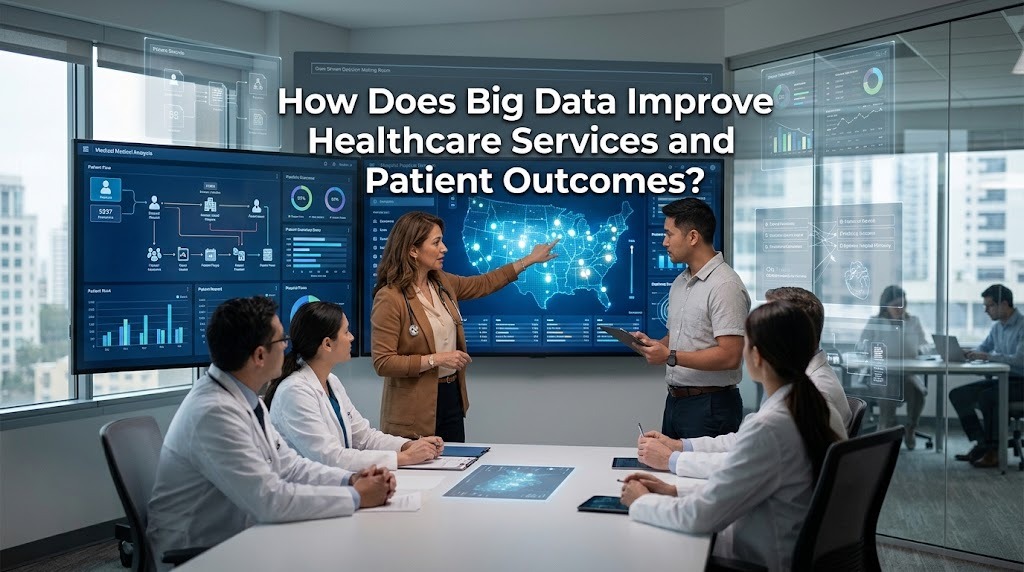
Big data is transforming healthcare by helping medical professionals make better decisions, improve patient care, and use healthcare resources more efficiently. Hospitals, clinics, laboratories, and public health organizations can analyze large amounts of information to identify health trends, detect diseases earlier, and develop more personalized treatments. These insights support better healthcare services and can contribute to improved patient outcomes.
As digital technology continues to develop, big data is becoming an important part of modern healthcare. However, its benefits depend on accurate information, responsible data management, and strong privacy protection.
WHAT IS BIG DATA IN HEALTHCARE?
Big data in healthcare refers to the collection and analysis of large amounts of medical and health-related information. These data can come from electronic health records, laboratory results, medical imaging, wearable devices, insurance claims, and public health reports. Because the information is often too complex to analyze manually, healthcare organizations use advanced analytical tools to identify useful patterns and relationships.
For example, a hospital can analyze patient records to discover which conditions frequently lead to readmission. Medical teams can use these findings to improve treatment plans and follow-up care. Big data can also help researchers understand how diseases develop and how different treatments affect patients. By turning raw information into useful insights, healthcare providers can make more informed decisions.
HOW BIG DATA SUPPORTS EARLY DISEASE DETECTION
One of the most important benefits of big data is its ability to support earlier disease detection. By analyzing medical histories, laboratory results, imaging data, and other health indicators, analytical systems can help identify patterns associated with certain diseases. These patterns may alert healthcare professionals to patients who need additional examinations or closer monitoring.
Early detection is especially valuable for conditions such as cardiovascular disease, diabetes, and certain types of cancer. For example, analyzing a patient's health history and test results may help clinicians recognize warning signs before a condition becomes more serious. However, data-based predictions are not definitive diagnoses. Medical professionals must evaluate the findings alongside clinical examinations and other relevant evidence.
HOW BIG DATA IMPROVES PERSONALIZED TREATMENT
Big data helps healthcare providers develop treatment plans that better match individual patient needs. Every patient has different medical conditions, genetic characteristics, lifestyles, and responses to medication. By examining information from multiple patients and comparing it with an individual's clinical profile, healthcare professionals may gain insights into which treatment options are more suitable.
Personalized treatment can be particularly useful in cancer care, where the effectiveness of certain therapies may depend on the characteristics of a tumor. Data analysis can also help doctors monitor how patients respond to medication and identify when treatment adjustments may be necessary. Although big data can support more targeted care, treatment decisions should still consider medical guidelines, patient preferences, and professional judgment.
HOW BIG DATA ENHANCES HOSPITAL EFFICIENCY
Hospitals manage many activities simultaneously, including patient admissions, staff scheduling, equipment use, laboratory testing, and medication distribution. Big data helps administrators analyze these operations and identify areas that need improvement. By understanding patterns in patient demand, hospitals can plan staffing levels, manage beds, and allocate medical equipment more effectively.
For example, historical admission data can help hospitals anticipate periods of high demand and prepare additional resources. Analyzing appointment schedules may also reveal common causes of delays or missed visits. Better planning can reduce waiting times, prevent resource shortages, and improve the patient experience. These improvements can also help healthcare organizations control operational costs without unnecessarily compromising care quality.
HOW BIG DATA IMPROVES PATIENT MONITORING
Big data enables healthcare professionals to monitor patients using information collected over time. Wearable devices, remote monitoring equipment, and digital health applications can record measurements such as heart rate, physical activity, blood pressure, and blood glucose levels. When these measurements are analyzed alongside medical records, they can provide a more complete picture of a patient's health.
Remote monitoring is particularly useful for people with chronic conditions who need regular observation outside the hospital. For example, changes in blood glucose readings may help a healthcare team identify a potential problem and contact the patient when appropriate. Continuous monitoring can also support follow-up care after surgery or hospital discharge. Nevertheless, digital alerts must be interpreted carefully because inaccurate readings or false alarms can lead to unnecessary concern.
HOW BIG DATA SUPPORTS MEDICAL RESEARCH
Medical research often requires information from large numbers of patients to understand diseases, evaluate treatments, and identify potential risk factors. Big data allows researchers to analyze extensive datasets and investigate patterns that may not be apparent in smaller studies. It can support clinical research, public health analysis, and the development of new medical technologies.
For example, researchers can compare treatment outcomes across different patient groups to investigate whether a particular therapy is associated with better results. Big data can also help identify potential participants for clinical trials and monitor treatment safety. However, researchers must account for limitations such as incomplete records, differences between patient populations, and possible bias in the data. Reliable findings still require appropriate research methods and careful scientific evaluation.
HOW BIG DATA HELPS PREVENT DISEASE OUTBREAKS
Public health organizations can use big data to track disease patterns and identify unusual increases in reported cases. Information from hospitals, laboratories, public health surveillance systems, and other reliable sources can help authorities understand where health risks are emerging. This information supports decisions about testing, vaccination programs, public communication, and the distribution of medical supplies.
During an infectious disease outbreak, timely data analysis can help identify affected communities and monitor changes in transmission patterns. Healthcare organizations can use these insights to prepare facilities and direct resources toward areas with greater needs. However, disease surveillance depends on accurate reporting, appropriate data sharing, and careful interpretation. Data patterns alone do not always explain why an outbreak occurs, so additional investigation is often necessary.
THE ROLE OF ARTIFICIAL INTELLIGENCE IN HEALTHCARE BIG DATA
Artificial intelligence and machine learning can help healthcare organizations analyze complex datasets more quickly. These technologies can identify patterns in medical images, patient records, laboratory results, and other clinical information. When properly developed and evaluated, AI-based tools may assist healthcare professionals with risk assessment, diagnostic support, and treatment planning.
For example, an AI system may help flag unusual patterns in medical images for a radiologist to review. Predictive models can also estimate which patients may face a higher risk of complications, allowing medical teams to prioritize further assessment. However, AI systems can produce incorrect results, especially when their training data do not represent the patients being treated. Human oversight, clinical validation, and continuous performance monitoring remain essential.
CHALLENGES OF USING BIG DATA IN HEALTHCARE
Although big data offers significant benefits, healthcare organizations must address several challenges before they can use it effectively. One major concern is patient privacy because medical information can contain highly sensitive details. Unauthorized access, data breaches, and inappropriate sharing can harm patients and reduce public trust in healthcare services.
Data quality is another important issue. Records may be incomplete, outdated, inconsistent, or stored in systems that cannot easily communicate with one another. If analytical tools rely on poor-quality information, their conclusions may be misleading. Healthcare organizations therefore need secure systems, clear data governance policies, compatible technologies, and staff training. They must also follow applicable privacy laws and ensure that data use is transparent and appropriate.
HOW BIG DATA IMPROVES PATIENT OUTCOMES
Patient outcomes refer to the results of healthcare services, including recovery, symptom improvement, complication rates, quality of life, and the ability to manage long-term conditions. Big data can help healthcare providers evaluate these results and identify which approaches are associated with better care. By comparing outcomes across treatments, patient groups, and healthcare facilities, organizations can identify opportunities to improve clinical practices.
For example, hospitals can examine readmission rates to determine whether patients receive adequate support after discharge. They can also analyze complication patterns to identify areas where additional training or changes in clinical procedures may be needed. When these insights lead to evidence-based improvements, patients may benefit from safer care, more appropriate treatment, and better continuity of services. However, improved outcomes cannot be guaranteed by data analysis alone because they also depend on clinical expertise, patient circumstances, and access to healthcare.
THE FUTURE OF BIG DATA IN HEALTHCARE
The future of big data in healthcare will likely involve greater integration of electronic health records, wearable devices, telemedicine platforms, and AI-supported analytical systems. These technologies may help healthcare providers understand patient needs more comprehensively and coordinate services across different care settings. Better data integration could also make it easier to monitor long-term health trends and evaluate the effectiveness of healthcare programs.
At the same time, future development must prioritize patient rights, data security, and equitable access to technology. Healthcare organizations need to ensure that analytical systems work reliably for people from different backgrounds and do not reinforce existing inequalities. Collaboration among medical professionals, researchers, technology developers, and policymakers will be important for achieving these goals. The most effective use of big data will combine technological innovation with responsible medical practice.
CONCLUSION
Big data improves healthcare services by supporting early disease detection, personalized treatment, patient monitoring, hospital efficiency, and medical research. It also helps public health organizations identify disease trends and plan responses to emerging health risks. These applications can contribute to better patient outcomes when the information is accurate and the findings are used appropriately.
However, big data is not a replacement for medical professionals or sound clinical judgment. Healthcare organizations must protect patient privacy, address data quality problems, and evaluate analytical tools carefully. By combining reliable data with professional expertise and responsible technology, healthcare providers can deliver safer, more efficient, and more patient-centered services.
Recent Posts

Bagaimana Sistem SKS pada Program Kuliah... 22.11.2026/45 View

How Does Technology Make Daily Evaluation... 21.11.2026/73 View

Apa Strategi Menghadapi Kesenjangan antara Kompetensi... 21.11.2026/75 View

Mengapa Inventaris Aset Penting bagi Kelancaran... 21.11.2026/71 View

When Should Musicians Join a Record... 21.11.2026/75 View
