

How Does Building Debris Affect Soil Quality?
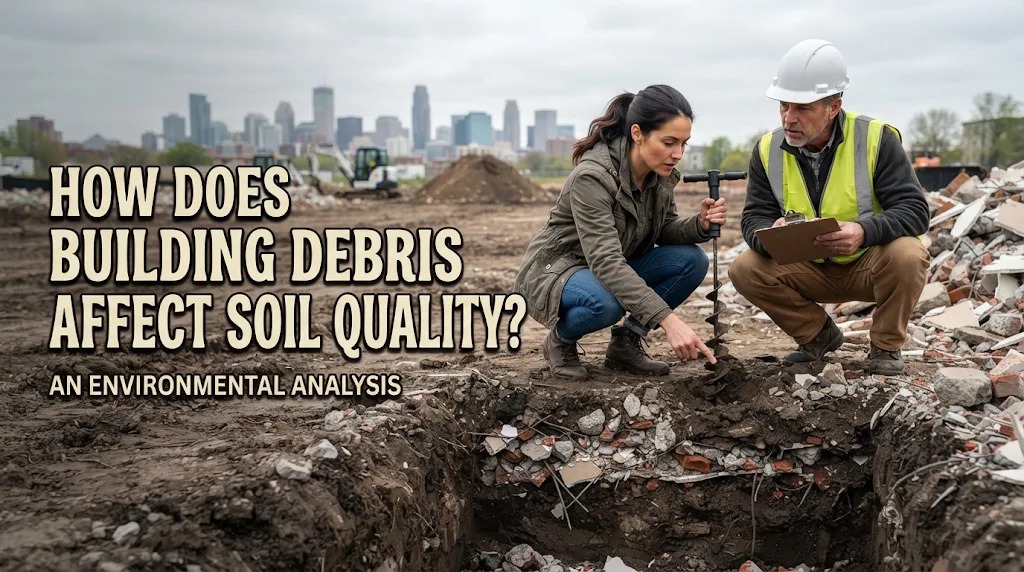
Building debris can significantly affect soil quality by changing its physical structure, chemical composition, and biological activity. Construction activities often produce waste materials such as concrete, bricks, wood, metal, plastic, and other discarded materials. When these materials are dumped carelessly or mixed directly with soil, they can reduce soil fertility and interfere with natural environmental processes. Understanding these effects is important for preventing land degradation and maintaining healthy soil conditions around construction areas.
CHANGES IN SOIL STRUCTURE
Building debris can damage the natural structure of soil by introducing solid materials that interfere with its composition. Large pieces of concrete, bricks, and other construction waste can create uneven soil layers and reduce the space available for plant roots. Heavy construction debris can also increase soil compaction, making it more difficult for water and air to move through the ground. These conditions may limit root development and affect plant growth. Over time, poor soil structure can reduce the land's ability to support healthy vegetation.
REDUCED SOIL FERTILITY
Construction waste can reduce soil fertility by disrupting the natural balance of nutrients required for plant growth. When debris covers the ground, organic materials and beneficial microorganisms may become less accessible to plant roots. Some construction materials can also alter soil pH, making the environment unsuitable for certain plants. In addition, removing or disturbing the topsoil during construction can eliminate nutrient-rich layers. These changes can make previously productive land less suitable for agriculture and landscaping.
CHEMICAL CONTAMINATION
Certain building materials contain substances that may contaminate soil when improperly discarded. Paint residues, solvents, treated wood, adhesives, and other chemical products can release harmful compounds into the surrounding environment. Some construction debris may also contain heavy metals that remain in the soil for extended periods. These pollutants can affect soil organisms and potentially enter plants through their roots. Proper identification, separation, and disposal of potentially hazardous construction materials are essential to prevent contamination.
DISRUPTION OF SOIL MICROORGANISMS
Healthy soil contains microorganisms that support nutrient cycling, organic matter decomposition, and plant development. Construction debris can disturb these biological processes by changing soil conditions and introducing potentially harmful substances. Chemical contamination and excessive soil compaction may reduce the activity of beneficial bacteria, fungi, and other organisms. When microbial populations decline, the natural decomposition of organic materials can become less efficient. This can weaken the soil ecosystem and reduce its ability to maintain long-term fertility.
REDUCED WATER ABSORPTION AND DRAINAGE
Building debris can interfere with the movement of water through soil. Materials such as concrete fragments, plastic, and compacted construction waste may block natural drainage pathways or create uneven ground surfaces. As a result, some areas may experience water accumulation, while others may absorb less water than necessary. Poor drainage can increase surface runoff and contribute to soil erosion. These conditions may also affect nearby vegetation and increase the risk of localized flooding.
NEGATIVE EFFECTS ON PLANT GROWTH
Poor soil conditions caused by construction debris can make it difficult for plants to grow properly. Compacted soil limits root expansion, while chemical contamination may interfere with nutrient absorption. Changes in soil moisture and pH can also affect seed germination and plant development. In heavily affected areas, vegetation may become weak, grow slowly, or fail to survive. Restoring soil quality is therefore important before using construction sites for gardening, agriculture, or landscaping.
PREVENTION AND SOIL RESTORATION
The negative effects of building debris can be reduced through responsible construction waste management. Construction companies should separate waste materials, provide designated storage areas, and prevent hazardous substances from entering the soil. Debris should be collected and transported to appropriate recycling or disposal facilities. After construction activities are completed, affected land may require debris removal, soil testing, decompaction, and the addition of suitable organic matter. These measures help restore soil conditions and support environmental sustainability.
CONCLUSION
Building debris can affect soil quality by damaging soil structure, reducing fertility, causing chemical contamination, and disrupting beneficial microorganisms. It can also interfere with water absorption, drainage, and plant growth. These problems demonstrate the importance of proper construction waste management and responsible land restoration. By preventing uncontrolled debris disposal and applying suitable soil recovery methods, construction companies can minimize environmental damage and maintain healthier land conditions.
Recent Posts

How Does Technology Make Daily Evaluation... 21.11.2026/58 View

Apa Strategi Menghadapi Kesenjangan antara Kompetensi... 21.11.2026/60 View

Mengapa Inventaris Aset Penting bagi Kelancaran... 21.11.2026/56 View

When Should Musicians Join a Record... 21.11.2026/55 View

Daily Evaluation or Daily Planning Which... 21.11.2026/63 View
