

How Does Business Logistics Management Improve the Efficiency of Product Distribution?
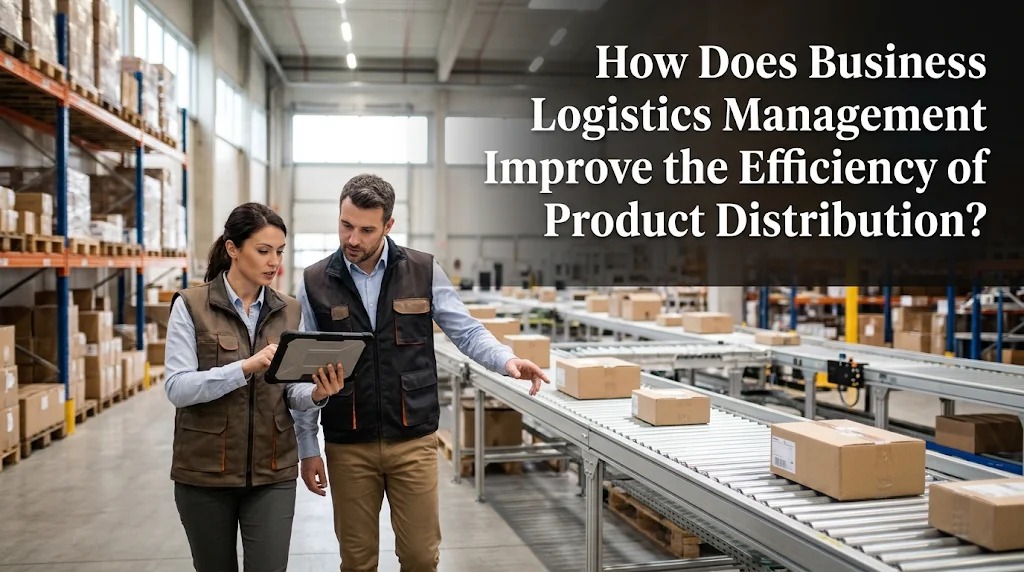
Business logistics management plays an important role in ensuring that products move efficiently from manufacturers to customers. In modern business operations, companies must manage various distribution activities, including transportation, warehousing, inventory control, and order processing. Proper logistics management helps businesses deliver products on time, reduce unnecessary expenses, and maintain product quality throughout the distribution process.
As customer expectations continue to increase, businesses need effective distribution systems to remain competitive. Customers expect products to arrive quickly, safely, and according to their orders. Therefore, companies must develop well-organized logistics strategies to improve operational performance and provide better customer experiences. Understanding how business logistics management works can help companies create more efficient and reliable product distribution systems.
UNDERSTANDING BUSINESS LOGISTICS MANAGEMENT
Business logistics management refers to the process of planning, implementing, and controlling the movement and storage of goods from their original location to the final customer. This process involves several activities, such as purchasing materials, managing inventory, storing products, processing orders, and arranging transportation. Each activity must work together to ensure that products reach their destinations efficiently. When logistics operations are properly managed, businesses can reduce delays and avoid unnecessary operational problems.
Furthermore, logistics management helps companies coordinate different departments involved in product distribution. For example, warehouse employees must communicate with transportation teams to ensure that products are prepared and delivered according to schedule. Businesses also need accurate information about product availability and customer demand. Through effective coordination, companies can improve workflow, maintain consistent distribution activities, and ensure that customers receive their orders in good condition.
IMPROVING TRANSPORTATION AND DELIVERY PROCESSES
Transportation management is one of the most important factors in improving product distribution efficiency. Companies must choose suitable transportation methods based on product characteristics, delivery destinations, shipping costs, and customer requirements. For example, trucks may be suitable for domestic deliveries, while ships are often used to transport large quantities of goods across international markets. Selecting the right transportation method helps businesses balance delivery speed and operational expenses.
In addition, companies can improve delivery performance by planning efficient routes and monitoring transportation activities. Route optimization helps drivers avoid unnecessary distances, heavy traffic, and other obstacles that may cause delays. Businesses can also cooperate with reliable shipping providers to maintain consistent delivery schedules. By improving transportation planning, companies can reduce fuel consumption, minimize shipping costs, and provide faster services to customers.
OPTIMIZING INVENTORY AND WAREHOUSE MANAGEMENT
Inventory management helps businesses maintain the appropriate quantity of products needed to meet customer demand. Companies must avoid excessive stock because it can increase storage expenses and create financial pressure. However, insufficient inventory may cause product shortages, delayed orders, and lost sales opportunities. Therefore, businesses need accurate inventory records and regular stock monitoring to maintain a balanced supply of products.
Meanwhile, effective warehouse management ensures that products are stored, organized, and prepared for distribution properly. Companies can arrange products based on categories, demand levels, and delivery priorities to make warehouse activities more efficient. Using inventory management software and barcode systems can also reduce recording errors and simplify product tracking. When inventory and warehouse operations are well organized, businesses can process customer orders faster and reduce the possibility of distribution mistakes.
USING DIGITAL TECHNOLOGY TO ENHANCE DISTRIBUTION EFFICIENCY
Digital technology has significantly changed how companies manage logistics and distribute products. Modern businesses can use logistics management systems to monitor inventory, organize transportation schedules, process orders, and coordinate deliveries through integrated platforms. These systems provide more accurate operational information and help employees make decisions based on updated data. As a result, companies can identify potential problems earlier and improve the efficiency of their distribution activities.
Another useful innovation is the implementation of real-time tracking systems. This technology allows businesses and customers to monitor the movement of products during transportation. Companies can identify delivery delays, check shipment conditions when supported by tracking devices, and provide customers with more accurate delivery information. Additionally, technologies such as artificial intelligence and data analytics can help predict customer demand, optimize delivery routes, and identify distribution patterns. By adopting appropriate digital solutions, businesses can improve accuracy, productivity, and overall logistics performance.
STRENGTHENING CUSTOMER SATISFACTION THROUGH EFFECTIVE LOGISTICS
Effective logistics management directly influences customer satisfaction because product distribution determines how quickly and reliably customers receive their purchases. Customers generally expect their orders to arrive within the promised delivery period and in proper condition. When businesses consistently meet these expectations, they can build customer trust and encourage repeat purchases. On the other hand, frequent delivery problems may damage a company's reputation and reduce customer loyalty.
Companies can strengthen customer satisfaction by providing reliable delivery services, accurate order information, and responsive customer support. They should also establish clear procedures for handling damaged products, incorrect orders, and delivery complaints. Regularly evaluating logistics performance can help businesses identify weaknesses and develop better distribution strategies. Through continuous improvement, companies can create a more dependable distribution system while strengthening their position in the market.
CONCLUSION
Business logistics management is essential for improving the efficiency of product distribution and supporting successful company operations. By managing transportation, inventory, warehousing, and order processing effectively, businesses can reduce operational costs and deliver products more reliably. Digital technology also provides valuable support through real-time tracking, data analysis, and automated logistics processes.
Furthermore, efficient distribution allows companies to meet customer expectations, maintain product availability, and improve service quality. Businesses should continuously evaluate their logistics strategies to respond to changing market demands and operational challenges. With proper planning, coordination, and technological support, effective logistics management can become an important factor in achieving long-term business growth and competitiveness.
Recent Posts

How Does Technology Make Daily Evaluation... 21.11.2026/62 View

Apa Strategi Menghadapi Kesenjangan antara Kompetensi... 21.11.2026/63 View

Mengapa Inventaris Aset Penting bagi Kelancaran... 21.11.2026/59 View

When Should Musicians Join a Record... 21.11.2026/58 View

Daily Evaluation or Daily Planning Which... 21.11.2026/66 View
