

How Does Character Education Support Positive Personality Development?
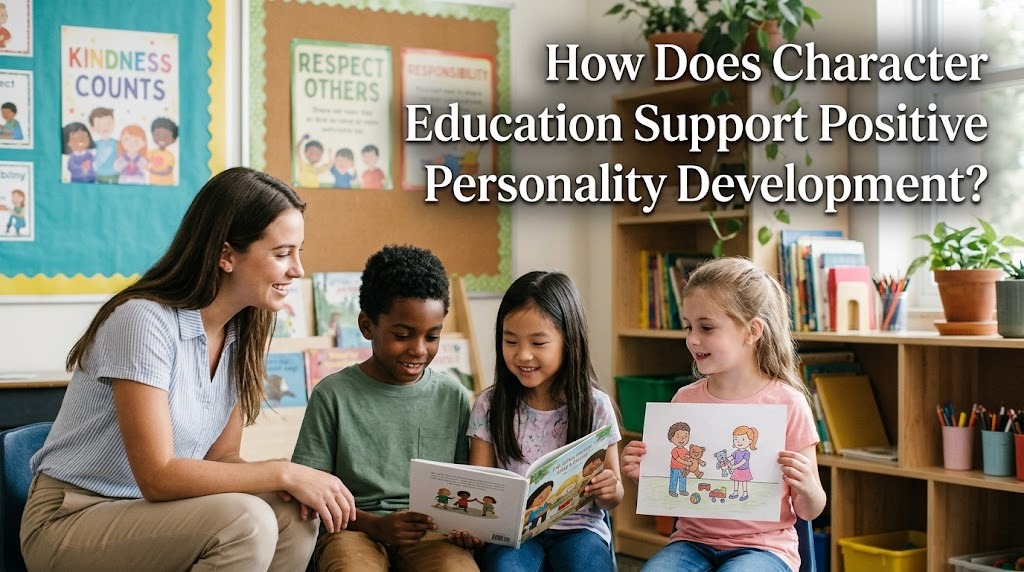
Character education plays an important role in helping individuals develop positive personalities and become responsible members of society. It teaches essential values such as honesty, discipline, respect, empathy, responsibility, and cooperation. These values influence how people think, make decisions, interact with others, and respond to different situations in everyday life.
Positive personality development does not happen automatically. It requires guidance, good examples, consistent habits, and meaningful experiences from childhood through adulthood. Character education provides a foundation for developing these qualities by helping individuals understand the difference between right and wrong and encouraging them to apply positive values in their daily behavior. Therefore, character education is important not only in schools but also in families and communities.
WHAT IS CHARACTER EDUCATION?
Character education is a learning process that focuses on developing positive values, attitudes, and behaviors. Its main purpose is to help individuals become honest, responsible, respectful, disciplined, and caring toward others. Unlike education that focuses mainly on academic knowledge, character education also emphasizes moral development and the ability to make good decisions.
Character education can be introduced through various activities, including classroom discussions, group projects, daily routines, and interactions with other people. Children can learn about honesty by telling the truth, responsibility by completing their tasks, and cooperation by working with classmates. These experiences help them understand that good character is not simply about knowing positive values but also about practicing them consistently.
WHY IS CHARACTER EDUCATION IMPORTANT FOR PERSONALITY DEVELOPMENT?
Character education is important because it helps individuals build personality traits that support healthy relationships and responsible behavior. Values such as honesty, discipline, patience, and respect can influence how someone responds to challenges and interacts with people from different backgrounds. By learning these values from an early age, individuals can develop a stronger understanding of their responsibilities and the consequences of their actions.
Character education also helps individuals build a positive self-image and develop better control over their behavior. For example, someone who understands the importance of discipline may become more consistent in managing time and completing responsibilities. Similarly, individuals who practice empathy may become more considerate of other people's feelings. These qualities contribute to personality development and help individuals become more mature in their personal and social lives.
HOW DOES CHARACTER EDUCATION BUILD POSITIVE VALUES?
Character education helps individuals understand and practice important values that guide their everyday behavior. Honesty teaches people to communicate truthfully, while responsibility encourages them to complete their obligations and accept the consequences of their decisions. Respect helps individuals appreciate differences, and tolerance encourages them to maintain positive relationships with people who have different opinions or backgrounds.
These values become more meaningful when they are practiced through daily activities. For instance, students can demonstrate honesty by avoiding cheating during examinations and show responsibility by completing assignments on time. Teachers and parents can strengthen these habits by providing guidance and positive examples. Through consistent practice, positive values can gradually become part of an individual's personality and influence their behavior in different situations.
WHAT IS THE ROLE OF SCHOOLS IN CHARACTER EDUCATION?
Schools have an important role in character education because they provide an environment where students interact with teachers, classmates, and people with different backgrounds. Through classroom activities and school rules, students learn about discipline, cooperation, respect, and responsibility. These experiences help them understand how their behavior affects other people and the surrounding environment.
Teachers also serve as role models who can demonstrate positive character through their actions. When teachers treat students fairly, communicate respectfully, and show responsibility, students can learn to apply similar attitudes in their own lives. In addition, group discussions, teamwork, extracurricular activities, and community projects provide opportunities to practice positive values. Therefore, schools should integrate character education into everyday learning rather than treating it as a lesson that only involves memorizing moral principles.
HOW DO PARENTS SUPPORT CHARACTER EDUCATION AT HOME?
Parents are among the first people who introduce children to basic values and appropriate behavior. At home, children learn about honesty, kindness, discipline, and responsibility through everyday interactions with family members. The way parents communicate, solve problems, and treat other people can influence how children understand and practice these values.
Parents can support character education by establishing clear expectations and encouraging positive habits. For example, asking children to organize their belongings, help with simple household activities, and speak politely can teach responsibility and respect. Parents should also explain why certain behaviors are important instead of relying only on punishment. When children receive consistent guidance, affection, and positive examples, they have better opportunities to develop healthy personality traits.
HOW DOES CHARACTER EDUCATION DEVELOP EMOTIONAL INTELLIGENCE?
Character education supports emotional intelligence by teaching individuals to recognize, understand, and manage their emotions. Emotional intelligence is important because it helps people respond to difficult situations without allowing temporary feelings to control their actions. Through values such as patience, empathy, and self-control, individuals can learn to manage frustration and communicate their feelings appropriately.
Empathy is another important part of emotional development. It encourages individuals to understand other people's feelings and consider different perspectives before making decisions. For example, students who practice empathy may become more willing to support classmates who experience difficulties. As these habits develop, individuals can build stronger relationships, reduce unnecessary conflicts, and become more emotionally mature.
CAN CHARACTER EDUCATION IMPROVE SOCIAL SKILLS AND CONFIDENCE?
Character education can improve social skills by teaching individuals how to communicate respectfully, cooperate, listen to others, and resolve disagreements. These abilities are important for building healthy relationships in schools, workplaces, and communities. Individuals who understand the importance of respect and tolerance are generally better prepared to interact with people who have different opinions and personalities.
Character education can also support self-confidence by encouraging individuals to recognize their strengths and take responsibility for their decisions. When students are given opportunities to express their opinions, participate in group activities, and complete meaningful responsibilities, they can develop a stronger sense of independence. Confidence supported by positive values can help individuals communicate more effectively without ignoring the feelings or rights of others.
WHAT ARE THE BEST WAYS TO APPLY CHARACTER EDUCATION IN EVERYDAY LIFE?
Character education becomes more effective when positive values are applied consistently in everyday activities. Individuals can start by practicing simple habits, such as telling the truth, arriving on time, respecting other people, keeping promises, and completing responsibilities. Although these actions may seem small, repeating them regularly can help develop positive behavioral patterns.
Families, schools, and communities should also work together to create environments that support good character. Students can participate in social activities, community services, teamwork, and environmental programs to practice cooperation and responsibility. Adults should provide constructive feedback and recognize positive behavior so individuals understand the importance of their actions. Through continuous guidance and real-life experiences, character education can become part of everyday life rather than remaining only a theoretical concept.
CONCLUSION
Character education supports positive personality development by teaching individuals important values such as honesty, discipline, empathy, respect, and responsibility. These values influence how people think, manage emotions, make decisions, and build relationships with others. Through consistent guidance from parents, teachers, and the surrounding community, individuals can gradually develop positive habits and stronger personal qualities.
Character education is not only about teaching people what is right and wrong but also encouraging them to apply good values in real situations. When practiced consistently from an early age, it can help individuals become more confident, independent, responsible, and respectful. Therefore, character education is an essential foundation for developing positive personalities and creating a better society.
Recent Posts

Bagaimana Sistem SKS pada Program Kuliah... 22.11.2026/45 View

How Does Technology Make Daily Evaluation... 21.11.2026/73 View

Apa Strategi Menghadapi Kesenjangan antara Kompetensi... 21.11.2026/75 View

Mengapa Inventaris Aset Penting bagi Kelancaran... 21.11.2026/71 View

When Should Musicians Join a Record... 21.11.2026/75 View
