

How Does Climate Change Affect Farmers' Productivity?
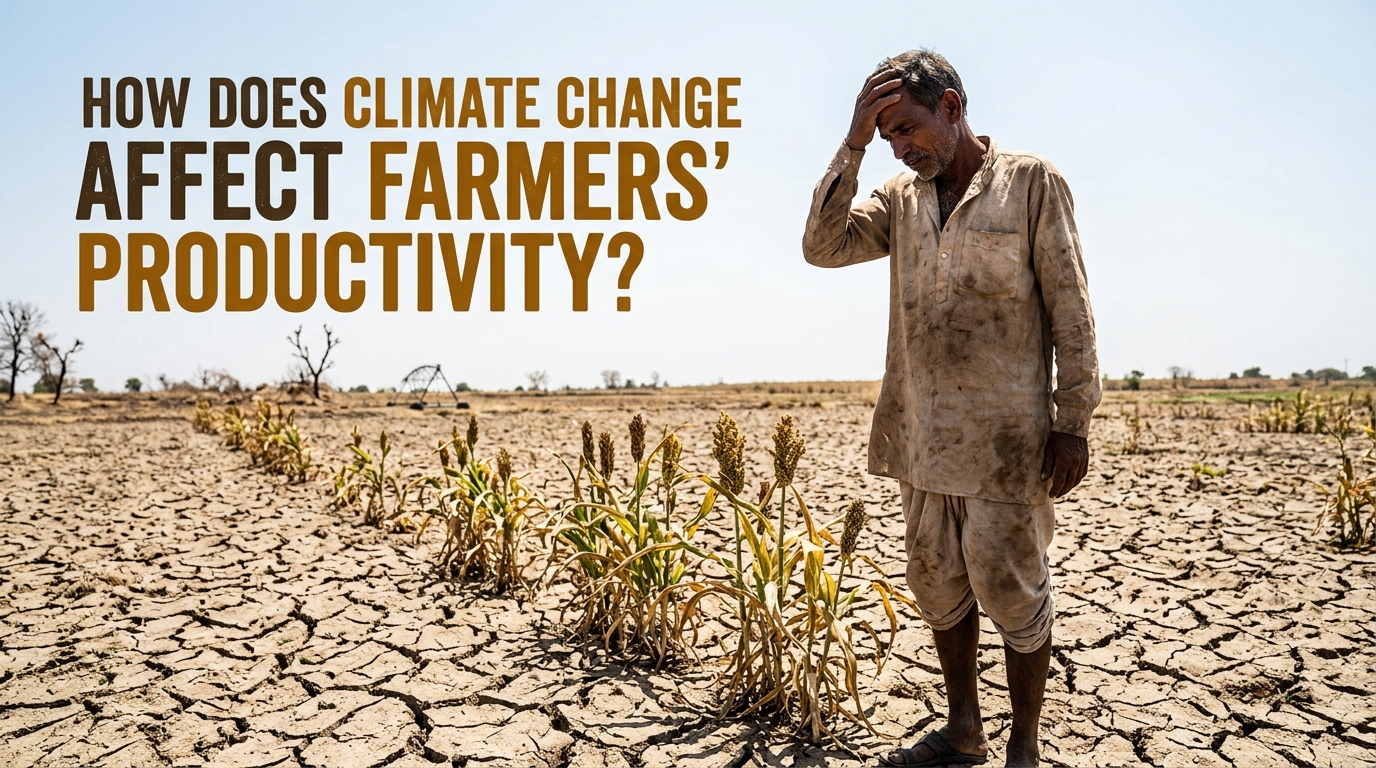
Climate change is becoming a major challenge for farmers around the world. Rising temperatures, changing rainfall patterns, prolonged droughts, and extreme weather events can affect crop growth, soil quality, water availability, and livestock health. These changes make agricultural production less predictable and can increase the difficulty of growing enough food to meet global demand.
Understanding how climate change affects farmers' productivity is important for protecting food supplies and supporting rural communities. Farmers depend on suitable temperatures, reliable water sources, healthy soil, and stable growing seasons to produce successful harvests. When these conditions change, crop yields may decline, production costs may increase, and farmers may face greater financial uncertainty. However, climate-smart farming practices and effective agricultural planning can help reduce these risks and improve long-term resilience.
HOW RISING TEMPERATURES AFFECT CROP GROWTH
Rising temperatures can influence how crops grow and develop throughout the growing season. Every crop has a temperature range in which it performs best, and excessive heat can interfere with photosynthesis, flowering, and grain formation. For example, heat stress during important growth stages can reduce the yield of crops such as wheat, rice, and maize. Higher temperatures can also cause plants to lose water more quickly, increasing their need for irrigation. As a result, farmers may experience lower harvests when heat becomes too intense or lasts for extended periods.
Warmer conditions can also change the timing of planting, flowering, and harvesting. Some crops may mature faster, leaving less time for them to develop grains, fruits, or seeds. In certain regions, warmer temperatures may allow longer growing seasons or support the cultivation of different crops, but these benefits depend on local conditions and water availability. Extreme heat can outweigh potential benefits when temperatures exceed the tolerance of crops. Farmers may need to adjust planting dates, choose heat-tolerant varieties, and improve soil moisture management to protect productivity.
THE IMPACT OF CHANGING RAINFALL AND DROUGHT
Changing rainfall patterns can make farming more difficult because crops require reliable water throughout their growing cycles. Some areas may experience longer dry periods, while others may receive heavier rainfall over shorter periods. Drought can reduce soil moisture, slow plant growth, and prevent crops from developing properly. When water shortages become severe, farmers may lose part or all of their harvest. Reduced water availability can also increase competition between agriculture, households, and other industries.
Heavy rainfall can create different problems for agricultural production. Excess water may flood fields, damage crops, wash away fertile topsoil, and prevent farm machinery from entering fields. Waterlogged soil can reduce oxygen available to plant roots and increase the risk of certain crop diseases. Farmers who rely on rain-fed agriculture are particularly vulnerable because they have limited control over water supplies. Improved irrigation, rainwater harvesting, and better drainage systems can help farmers manage changing rainfall conditions and reduce production losses.
HOW CLIMATE CHANGE AFFECTS SOIL QUALITY
Healthy soil is essential for agricultural productivity because it provides nutrients, supports plant roots, and stores water. Climate change can damage soil quality through increased erosion, extreme rainfall, prolonged drought, and rising temperatures. Heavy rain may wash away nutrient-rich topsoil, while dry conditions can leave soil more exposed to wind erosion. High temperatures can also accelerate the breakdown of organic matter in some environments, reducing soil carbon storage and potentially affecting fertility. These changes can make it harder for crops to obtain the nutrients and water they need.
Soil degradation can increase farmers' dependence on fertilizers, irrigation, and other agricultural inputs. However, these additional resources can raise production costs and may not fully compensate for damaged soil. Sustainable soil management can help protect farmland against climate-related pressures. Practices such as cover cropping, crop rotation, reduced tillage, mulching, and adding suitable organic matter can improve soil structure and reduce erosion. Maintaining healthy soil helps farmers preserve productivity while making agricultural systems more resilient to changing environmental conditions.
THE EFFECTS OF CLIMATE CHANGE ON PESTS AND CROP DISEASES
Climate change can alter the distribution and behavior of agricultural pests and disease-causing organisms. Warmer temperatures may allow some insects to survive through longer seasons or expand into areas that were previously too cold for them. Changes in rainfall and humidity can also influence the development of certain fungal diseases and other crop infections. When pests and diseases become more widespread, they can damage leaves, stems, roots, fruits, and grains. Crop losses from pests and diseases can reduce both the quantity and quality of agricultural products.
Farmers may respond by using additional pest control measures, increasing labor requirements and production expenses. However, the effects vary by crop, region, pest species, and local climate conditions. Integrated pest management can help reduce these risks by combining crop monitoring, biological controls, resistant varieties, and carefully targeted pesticide use. Early detection is especially valuable because it allows farmers to respond before infestations spread widely. Climate-informed pest management can protect harvests while reducing unnecessary chemical use and supporting healthier agricultural ecosystems.
CLIMATE CHANGE AND LIVESTOCK PRODUCTIVITY
Climate change affects livestock farming as well as crop production. Heat stress in animals can reduce feed intake, slow growth, lower milk production, and affect reproductive performance. Dairy cattle, poultry, pigs, and other livestock may be especially vulnerable when temperatures and humidity remain high. Animals may also require more water to regulate their body temperature, increasing pressure on water supplies during droughts. These conditions can reduce farm productivity and increase the cost of animal care.
Extreme weather can also damage livestock shelters, reduce pasture quality, and interrupt the supply of feed. Drought may limit the growth of grasses and other forage crops, forcing farmers to purchase more expensive animal feed. Floods can damage housing, contaminate water sources, and create additional animal health risks. Farmers can reduce these impacts by providing shade, improving ventilation, ensuring access to clean water, and selecting suitable livestock breeds. Better livestock management can help protect animal welfare and maintain production under increasingly variable weather conditions.
THE ECONOMIC IMPACT ON FARMERS
Climate change can create financial uncertainty by making harvests less predictable. When droughts, floods, or heat waves damage crops, farmers may earn less income while still needing to pay for seeds, fertilizer, labor, equipment, and loans. Repeated crop failures can make it harder for farming households to recover financially and invest in future production. Changes in crop quality may also affect market prices and reduce the value of harvested products. Lower yields and higher production costs can threaten the long-term stability of agricultural businesses.
Small-scale farmers may face particularly serious challenges when they have limited access to irrigation, credit, insurance, or modern agricultural information. Climate-related disruptions can also affect transportation, storage, and distribution, making it harder to sell produce at a profitable price. Financial support, crop insurance where available, and access to reliable weather forecasts can help farmers manage uncertainty. Governments and agricultural organizations can also support research, training, and climate-resilient infrastructure. Helping farmers adapt economically is important for maintaining food production and protecting rural livelihoods.
HOW FARMERS CAN ADAPT TO CLIMATE CHANGE
Farmers can use several strategies to reduce the effects of climate change on agricultural productivity. Climate-smart agriculture focuses on improving productivity, strengthening resilience, and reducing greenhouse gas emissions where possible. Farmers may choose drought-tolerant or heat-tolerant crop varieties, adjust planting dates, diversify crops, and improve irrigation efficiency. Planting different crops can reduce dependence on a single harvest and help spread production risks. These methods should be selected according to local climate conditions, soil types, available resources, and farming goals.
Technology and agricultural knowledge can further improve adaptation. Weather forecasting, soil moisture sensors, and efficient irrigation systems can help farmers make better decisions about planting and water use. Agroforestry, cover crops, and conservation practices can protect soil and support biodiversity on farmland. Agricultural extension services can provide practical training, while governments can improve access to finance and climate information. Combining local knowledge with scientific research can help farmers choose suitable solutions and prepare for changing conditions.
THE ROLE OF GOVERNMENTS AND AGRICULTURAL TECHNOLOGY
Governments and agricultural institutions play an important role in helping farmers respond to climate change. Investment in irrigation infrastructure, water storage, agricultural research, and reliable weather services can reduce exposure to climate risks. Governments can also support crop insurance programs, emergency assistance, and training that helps farmers adopt resilient farming methods. Improved roads, storage facilities, and distribution networks can limit losses when extreme weather disrupts harvests and transportation. Strong agricultural support systems can make adaptation more accessible, especially for small-scale farmers.
Agricultural technology can also help improve efficiency and resilience. Satellite monitoring, digital weather forecasts, and precision agriculture tools can help farmers identify crop stress, manage inputs, and use water more efficiently. Improved crop breeding can produce varieties that tolerate specific environmental stresses, although no variety is suitable for every region. Technology works best when farmers can afford it, understand how to use it, and receive reliable technical support. Combining innovation, public investment, and farmer education can strengthen agricultural productivity as climate conditions continue to change.
CONCLUSION
Climate change affects farmers' productivity by increasing heat stress, disrupting rainfall, reducing soil quality, changing pest and disease patterns, and threatening livestock health. These challenges can lower crop yields, increase production costs, and create financial uncertainty for farming communities. However, climate-smart agriculture, sustainable soil management, efficient irrigation, and improved weather information can help farmers prepare for changing conditions. Governments, researchers, and agricultural organizations also have an important role in providing technology, funding, and practical support. By investing in resilient farming systems, society can help protect farmers' livelihoods and strengthen long-term food security.
Recent Posts

Bagaimana Sistem SKS pada Program Kuliah... 22.11.2026/50 View

How Does Technology Make Daily Evaluation... 21.11.2026/80 View

Apa Strategi Menghadapi Kesenjangan antara Kompetensi... 21.11.2026/79 View

Mengapa Inventaris Aset Penting bagi Kelancaran... 21.11.2026/75 View

When Should Musicians Join a Record... 21.11.2026/80 View
