

How Does Climate Change Affect Food Availability?
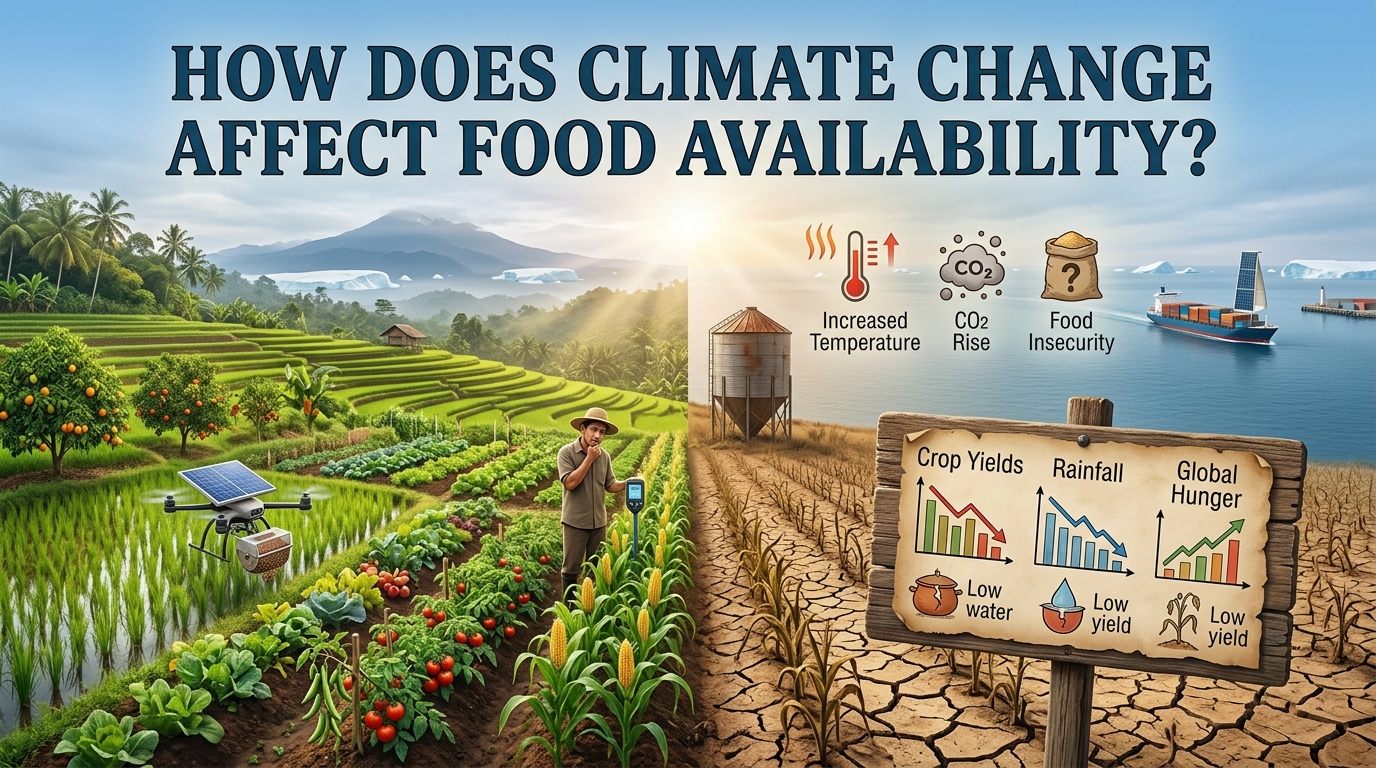
Climate change is becoming a major challenge for global food production and food availability. Rising temperatures, changing rainfall patterns, droughts, floods, and extreme weather events can make it harder for farmers to grow crops and raise livestock. These changes also affect fisheries, food transportation, and the cost of food in markets. Food availability depends on reliable production, healthy ecosystems, and stable supply chains, all of which can be affected by climate change. Understanding these impacts is essential for protecting food supplies and ensuring that people have enough nutritious food in the future.
HOW CLIMATE CHANGE AFFECTS FOOD PRODUCTION
Climate change affects food production by changing the environmental conditions needed to grow crops and raise animals. Higher temperatures can damage crops, shorten growing seasons, and reduce yields when plants experience excessive heat. Changes in rainfall can also leave farmland too dry or cause flooding that damages crops and soil. As a result, farmers may struggle to produce enough food to meet demand.
The effects vary depending on the crop, region, and local farming conditions. Some crops may benefit from warmer temperatures or higher carbon dioxide levels under certain circumstances, but these benefits can be limited by heat stress, water shortages, and nutrient availability. Extreme weather events can destroy entire harvests, making food supplies less predictable. Farmers may need to adjust planting schedules, choose suitable crop varieties, and improve farming methods to respond to changing conditions.
THE IMPACT OF DROUGHTS AND WATER SHORTAGES
Droughts and water shortages are important ways climate change can threaten food availability. Higher temperatures increase evaporation from soil and water sources, making some regions drier, particularly when rainfall is also reduced. Without sufficient water, crops cannot grow properly, and livestock may have less drinking water and fewer plants to eat. These conditions can reduce agricultural production and threaten farmers' livelihoods.
Water shortages can also affect irrigation systems and increase competition for limited water resources. Farmers may be forced to reduce the area they plant or switch to crops that require less water. In severe cases, repeated droughts can damage soil quality and make agricultural recovery more difficult. Efficient irrigation, rainwater storage, and responsible water management can help farmers maintain food production during dry periods.
HOW FLOODS AND EXTREME WEATHER DAMAGE CROPS
Floods, storms, and other extreme weather events can damage agricultural land and disrupt food production. Heavy rainfall may wash away fertile topsoil, drown plant roots, and destroy crops before harvest. Floodwater can also contaminate farmland and water supplies, creating additional challenges for farming communities. When roads and storage facilities are damaged, farmers may struggle to transport their remaining produce to markets.
Extreme weather can also damage agricultural equipment, livestock shelters, and food storage facilities. Repeated disasters may prevent farmers from planting crops at the right time, reducing production across several growing seasons. These disruptions can create shortages of certain foods and increase dependence on supplies from other regions. Climate-resilient infrastructure, better drainage, and early warning systems can help reduce agricultural losses.
THE EFFECT OF CLIMATE CHANGE ON LIVESTOCK AND FISHERIES
Climate change affects not only crops but also livestock and fisheries. High temperatures can cause heat stress in cattle, poultry, and other farm animals, reducing their productivity and, in severe cases, increasing mortality. Changes in rainfall can reduce the availability of pasture and animal feed. Farmers may also face higher costs when they need additional water, cooling systems, or alternative feed supplies.
Fisheries and aquaculture are also vulnerable to changes in ocean temperatures, water quality, and marine ecosystems. Warmer waters can shift fish populations toward cooler regions, making some species harder for fishing communities to find. Ocean acidification and declining oxygen levels can further affect certain marine organisms. These changes may reduce the availability of seafood in some areas and threaten the livelihoods of people who depend on fishing.
HOW CLIMATE CHANGE AFFECTS FOOD PRICES AND SUPPLY CHAINS
Climate change can influence food prices by reducing harvests and increasing the costs of producing and transporting food. When droughts or floods damage major crops, the supply of products such as rice, wheat, vegetables, and fruits may decline. If demand remains high while supply decreases, prices can rise. These price increases may make nutritious food less affordable for low-income households.
Food availability also depends on transportation, storage, and distribution systems. Extreme weather can close roads, damage ports, interrupt electricity supplies, and delay deliveries. Perishable foods may spoil when refrigeration systems fail or transport takes too long. Stronger supply chains, better storage facilities, and diverse sources of food can help reduce the risk of shortages and limit disruptions in local markets.
THE CONNECTION BETWEEN CLIMATE CHANGE AND FOOD SECURITY
Food security means that people have reliable access to sufficient, safe, and nutritious food. Climate change can threaten food security by reducing food production, disrupting distribution, and increasing prices. Even when enough food is available globally, some communities may struggle to obtain it because of poverty, conflict, weak infrastructure, or limited access to markets. Climate change can make these existing problems more difficult to manage.
The impacts are often greater for small-scale farmers, rural communities, and people who depend heavily on local agriculture or fishing. When harvests fail, families may lose both their food supplies and their main source of income. Children and other vulnerable groups may face a greater risk of poor nutrition when healthy food becomes expensive or difficult to find. Improving food access and supporting vulnerable communities are essential parts of adapting to climate change.
HOW FARMERS CAN ADAPT TO CLIMATE CHANGE
Farmers can use several strategies to protect food production from changing weather conditions. Climate-smart agriculture includes practices such as planting drought-tolerant crop varieties, adjusting planting dates, improving soil health, and using water more efficiently. Crop rotation and planting different types of crops can also reduce dependence on a single harvest. These approaches can help farmers manage risks and maintain more stable production.
Technology and reliable climate information can further support agricultural adaptation. Weather forecasts, soil moisture monitoring, and early warning systems help farmers make better decisions about planting, irrigation, and harvesting. Governments and agricultural organizations can provide training, access to improved seeds, and financial support to help farmers adopt suitable methods. Combining local knowledge with scientific information can strengthen agricultural resilience and protect future food supplies.
WAYS TO PROTECT FOOD AVAILABILITY IN A CHANGING CLIMATE
Protecting food availability requires cooperation among governments, farmers, businesses, and consumers. Governments can invest in climate-resilient infrastructure, support agricultural research, protect water resources, and improve emergency food distribution. Businesses can strengthen storage and transportation systems while reducing food losses during production and delivery. These measures help maintain supplies when extreme weather disrupts normal operations.
Individuals can also contribute by reducing food waste, planning meals, storing food properly, and choosing seasonal foods when practical. Communities can support local farmers, develop community gardens, and improve food-sharing programs. At the same time, reducing greenhouse gas emissions is essential for limiting future climate change and its effects on agriculture. Combining emission reductions with effective adaptation can help create a more reliable and sustainable food system.
CONCLUSION
Climate change affects food availability by disrupting crop production, reducing water supplies, damaging livestock and fisheries, and interrupting food supply chains. These impacts can lead to food shortages, higher prices, and greater food insecurity, especially among vulnerable communities. The severity of the effects depends on local climate conditions, farming methods, infrastructure, and the ability of communities to adapt.
Protecting food availability requires climate action, sustainable agriculture, and stronger food distribution systems. Farmers need access to suitable technology and resources, while governments and businesses must prepare for climate-related risks. Individuals can also help by reducing food waste and making responsible consumption choices. Through collective action, society can improve food security and build a more resilient food system for future generations.
Recent Posts

Bagaimana Sistem SKS pada Program Kuliah... 22.11.2026/49 View

How Does Technology Make Daily Evaluation... 21.11.2026/77 View

Apa Strategi Menghadapi Kesenjangan antara Kompetensi... 21.11.2026/78 View

Mengapa Inventaris Aset Penting bagi Kelancaran... 21.11.2026/74 View

When Should Musicians Join a Record... 21.11.2026/79 View
