

How Does Climate Change Affect Human Life?
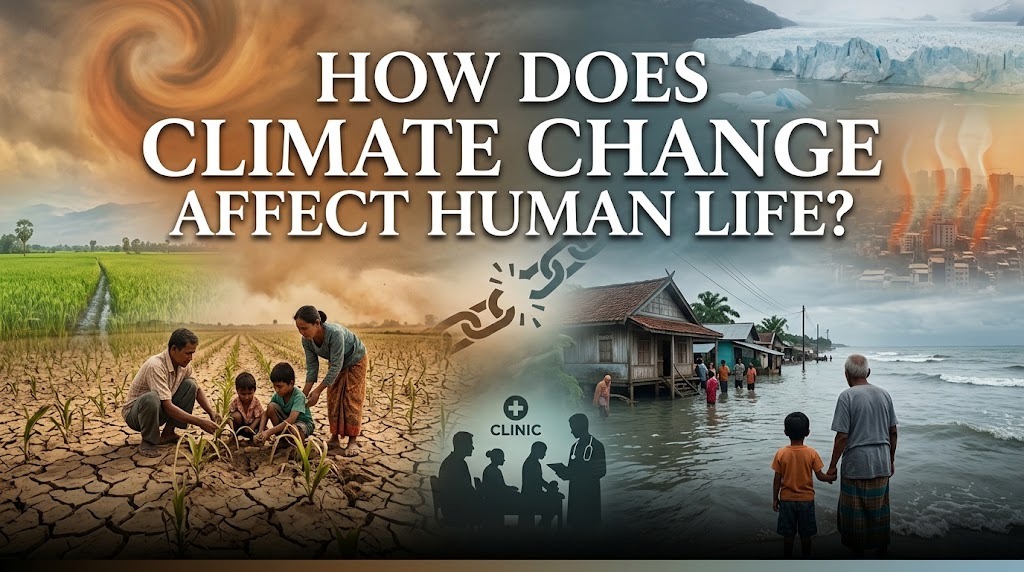
Climate change is a global issue that affects not only the environment but also human life. Rising temperatures, changing rainfall patterns, and more frequent extreme weather events can influence people's health, food supplies, water availability, and economic activities. These changes can make daily life more difficult, especially for communities that depend on agriculture or live in areas vulnerable to floods and droughts. Climate change affects people in different ways, depending on where they live, their income, and their access to essential services. Understanding these impacts can help individuals and communities prepare for risks and protect their future.
1. EFFECTS ON HUMAN HEALTH
Climate change can threaten human health in several ways. Rising temperatures increase the risk of heat exhaustion and heatstroke, particularly among older adults, young children, outdoor workers, and people with existing health problems. Higher temperatures and changing rainfall patterns can also affect the spread of diseases carried by mosquitoes, such as dengue, in some regions. In addition, wildfires and air pollution can worsen respiratory problems, while extreme weather events may cause injuries and emotional stress. Protecting public health requires early warnings, access to clean water, better healthcare services, and measures that reduce exposure to extreme heat.
2. IMPACT ON FOOD SUPPLY AND AGRICULTURE
Climate change affects food production by altering temperatures, rainfall, and growing seasons. Prolonged droughts can reduce water supplies for crops, while heavy rainfall and floods can destroy farmland and damage harvests. Extreme heat may also reduce crop yields and affect livestock health, making it harder for farmers to maintain stable production. These problems can lead to food shortages, higher prices, and greater financial pressure on farming communities. Adopting climate-resilient crops, improving irrigation systems, and using sustainable farming methods can help protect food supplies.
3. SHORTAGES OF CLEAN WATER
Access to clean water is essential for drinking, cooking, sanitation, and agriculture. However, climate change can increase water scarcity by causing longer droughts and changing rainfall patterns in many regions. Higher temperatures also increase evaporation, which can reduce water availability in reservoirs, rivers, and soil. Meanwhile, floods can contaminate drinking water with sewage, chemicals, and harmful microorganisms. Communities can respond by conserving water, protecting watersheds, improving water infrastructure, and developing reliable systems for storing and distributing clean water.
4. INCREASED NATURAL DISASTERS
Climate change increases the risks associated with several types of extreme weather. Heatwaves are becoming more frequent and intense in many regions, while heavier rainfall can increase the likelihood of flooding. Rising sea levels also increase coastal flooding and erosion, particularly during storms and high tides. The relationship between climate change and droughts varies by region, but higher temperatures can intensify drought conditions by increasing evaporation. These hazards can destroy homes, damage roads, interrupt electricity supplies, and force people to leave unsafe areas. Early warning systems, disaster preparedness, and stronger infrastructure can help reduce the damage.
5. ECONOMIC PROBLEMS AND LOSS OF INCOME
Climate change can create serious economic challenges for individuals, businesses, and governments. Farmers may lose income when crops fail, while fishing and tourism businesses can suffer when ecosystems and natural attractions are damaged. Extreme weather can also disrupt transportation, damage workplaces, and increase the cost of repairing buildings and infrastructure. Low-income households often face greater difficulties because they may have fewer resources to recover from disasters or adapt to changing conditions. Investing in resilient infrastructure, supporting affected workers, and developing sustainable industries can help reduce these economic risks.
6. IMPACT ON HOMES AND HUMAN SETTLEMENTS
Climate change can make some places less safe and comfortable to live in. Rising sea levels and coastal flooding threaten homes and communities located near shorelines, while floods and landslides can damage settlements in vulnerable areas. Prolonged heat can also make homes uncomfortable, especially where ventilation and cooling systems are limited. When disasters repeatedly damage houses or local infrastructure, families may be forced to relocate and rebuild their lives elsewhere. Better urban planning, stronger buildings, improved drainage, and the protection of natural barriers can help communities become more resilient.
7. EFFECTS ON MENTAL HEALTH AND DAILY LIFE
The effects of climate change are not limited to physical damage. Climate-related disasters can cause emotional distress, anxiety, grief, and uncertainty, especially when people lose loved ones, homes, or livelihoods. Repeated heatwaves, floods, and droughts can disrupt school activities, work schedules, transportation, and access to public services. People who are forced to move may also experience difficulties adjusting to new environments and rebuilding social connections. Providing mental health support, maintaining essential services, and strengthening community networks can help people cope with these challenges.
HOW CAN PEOPLE REDUCE THE IMPACTS OF CLIMATE CHANGE?
Although climate change presents serious challenges, individuals and communities can take steps to reduce its effects. People can save energy, use public transportation, reduce food waste, and choose reusable products to help lower greenhouse gas emissions. Communities can plant and protect trees, improve drainage systems, conserve water, and prepare emergency plans for extreme weather. Governments and businesses also play an important role by expanding renewable energy, improving public infrastructure, and supporting climate adaptation programs. Combining emission reductions with practical preparation can protect human health, reduce economic losses, and make communities more resilient to future climate risks.
CONCLUSION
Climate change affects human life in many ways, including health problems, food insecurity, water shortages, natural disasters, economic losses, and damage to homes. These impacts can disrupt daily activities and create greater challenges for vulnerable communities. However, the severity of the effects depends on local conditions, preparedness, and access to resources. Governments, businesses, and individuals must work together to reduce greenhouse gas emissions and prepare for climate-related risks. Taking action now can help protect human well-being and create a safer, more sustainable future.
Recent Posts

Bagaimana Sistem SKS pada Program Kuliah... 22.11.2026/47 View

How Does Technology Make Daily Evaluation... 21.11.2026/75 View

Apa Strategi Menghadapi Kesenjangan antara Kompetensi... 21.11.2026/77 View

Mengapa Inventaris Aset Penting bagi Kelancaran... 21.11.2026/73 View

When Should Musicians Join a Record... 21.11.2026/77 View
