

How Does Climate Change Affect Rainfall Patterns?
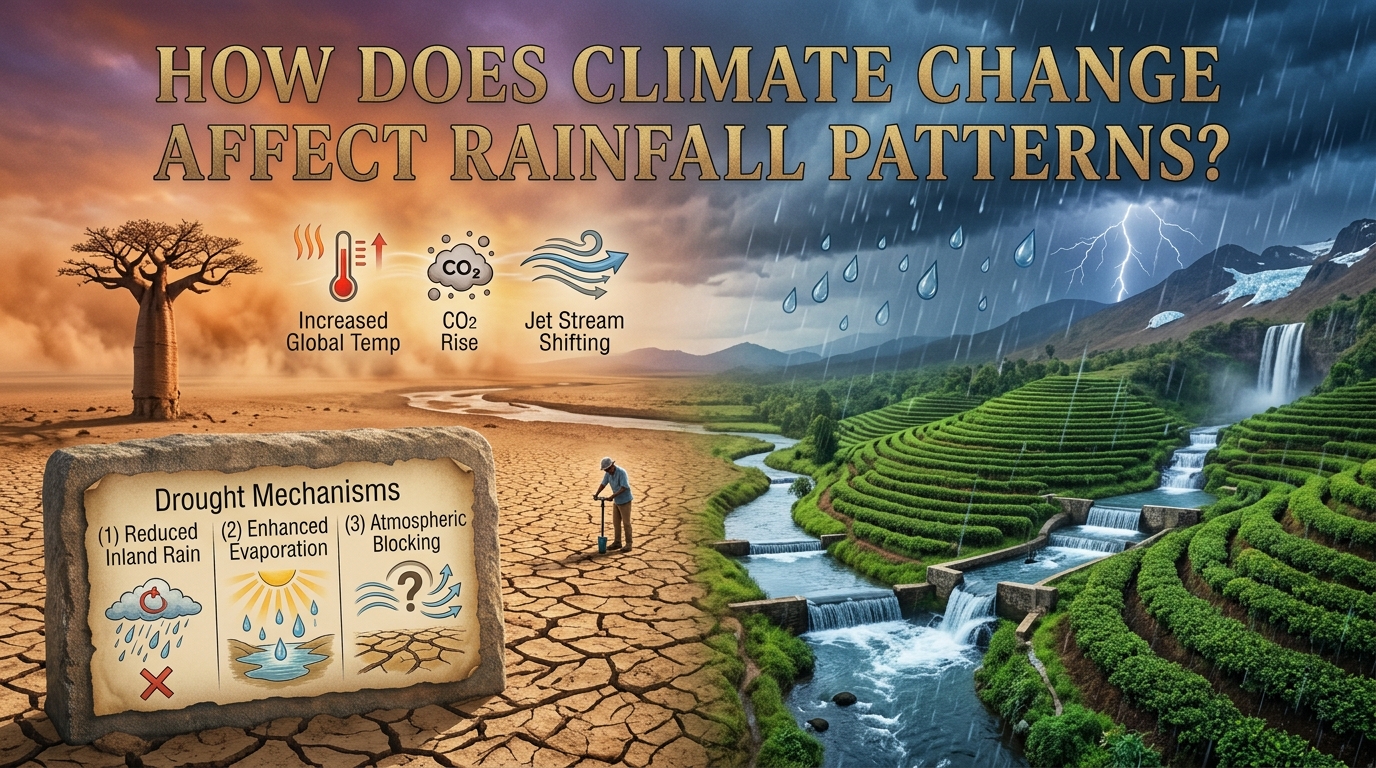
Climate change is changing rainfall patterns in many parts of the world. Rising global temperatures affect how water evaporates, forms clouds, and returns to the Earth's surface as precipitation. These changes can cause some regions to experience heavier rainfall, while others face longer dry periods and more frequent droughts. Rainfall patterns are essential for agriculture, freshwater supplies, and healthy ecosystems, so changes in precipitation can affect both people and the environment. Understanding how climate change influences rainfall helps communities prepare for floods, water shortages, and other climate-related challenges.
HOW CLIMATE CHANGE CHANGES THE WATER CYCLE
Climate change affects the water cycle by increasing global temperatures and changing the movement of water between the land, oceans, and atmosphere. When temperatures rise, more water evaporates from oceans, lakes, rivers, and soil. Plants also release more water vapor through a process called transpiration when conditions allow. These processes add moisture to the atmosphere and can influence where and when rainfall occurs.
Warmer air can hold more water vapor, which can provide additional moisture for precipitation when suitable weather conditions develop. However, more moisture in the atmosphere does not mean that every region receives more rain. Rainfall also depends on wind patterns, atmospheric circulation, geography, and the availability of moisture. Climate change can therefore intensify parts of the water cycle, increasing the potential for both heavy rainfall and dry conditions in different locations.
WHY SOME REGIONS EXPERIENCE HEAVIER RAINFALL
Heavier rainfall is one important effect of climate change in many regions. As the atmosphere warms, it can hold approximately 7% more water vapor per degree Celsius of warming, although the actual change in rainfall depends on local conditions. When storms develop, this additional moisture can contribute to more intense precipitation. As a result, some areas may experience heavier downpours over short periods.
Heavy rainfall can overwhelm drainage systems, raise river levels, and increase the risk of flooding. It can also damage roads, homes, crops, and other infrastructure. However, the effects vary depending on local geography, soil conditions, and how well communities manage excess water. Improved drainage, flood forecasting, and early warning systems can help reduce the damage caused by intense rainfall.
HOW CLIMATE CHANGE CONTRIBUTES TO LONGER DRY PERIODS
While some places experience heavier rainfall, other regions may face longer dry periods and increased drought risk. Climate change can alter atmospheric circulation and shift rainfall patterns, reducing precipitation in certain areas. Higher temperatures also increase evaporation from soil and water surfaces, making the land drier when rainfall is insufficient. These combined effects can worsen water shortages, especially in already dry regions.
Even in places where annual rainfall does not decrease significantly, changes in the timing of rain can create problems. For example, a region may receive most of its rainfall during a few intense storms but experience long periods without rain between them. This can make it harder for farmers to maintain crops and for reservoirs to provide a steady water supply. The timing and distribution of rainfall are just as important as the total amount of precipitation.
THE EFFECTS OF CLIMATE CHANGE ON SEASONAL RAINFALL
Seasonal rainfall patterns determine when wet and dry seasons begin, how long they last, and how much precipitation they bring. Climate change can shift these patterns by affecting atmospheric circulation, ocean temperatures, and regional weather systems. In some areas, the rainy season may begin earlier or later than usual. These changes can make traditional farming calendars and water management plans less reliable.
Changes in seasonal rainfall can have serious consequences for communities that depend on regular wet and dry seasons. Farmers may struggle to decide when to plant crops, while reservoirs may receive less water during important periods. Changes in rainfall timing can also affect natural vegetation, wildlife, and freshwater ecosystems. Accurate seasonal forecasts and flexible agricultural planning can help communities adapt to changing rainfall conditions.
HOW OCEAN TEMPERATURES INFLUENCE RAINFALL PATTERNS
The oceans play a major role in controlling global rainfall because they supply much of the water vapor that enters the atmosphere. Warmer ocean temperatures increase evaporation and can change the location and intensity of rainfall in nearby and distant regions. Ocean temperatures also influence atmospheric circulation, which helps determine where clouds form and storms develop. These effects can change rainfall patterns across entire continents.
Natural climate patterns, including El Niño and La Niña, can also affect rainfall in different parts of the world. For example, El Niño often changes rainfall distribution across the tropical Pacific and can contribute to drought in some regions and unusually wet conditions in others. Climate change can interact with these natural patterns, making rainfall conditions more difficult to predict in certain locations. Scientists study ocean temperatures and atmospheric conditions to improve rainfall forecasts and understand long-term changes.
THE IMPACT OF CHANGING RAINFALL ON AGRICULTURE
Agriculture depends heavily on reliable rainfall because crops need sufficient water during different stages of growth. When rainfall becomes unpredictable, farmers may face droughts, delayed planting seasons, or excessive water that damages crops. Heavy rain can wash away fertile topsoil, while prolonged dry conditions can reduce crop yields. These problems can increase farming costs and threaten food production.
Changes in rainfall can also affect livestock by reducing the availability of drinking water and pasture. Farmers may need to invest in irrigation, improve soil management, or choose crop varieties that tolerate drought or excessive moisture. Better weather information can help them adjust planting schedules and prepare for changing conditions. Sustainable farming practices and efficient water management can reduce the risks associated with unpredictable rainfall.
THE CONNECTION BETWEEN RAINFALL PATTERNS AND FLOODS
Climate change can increase the risk of flooding when rainfall becomes more intense or occurs over a short period. Heavy precipitation can cause flash floods, especially in urban areas with limited drainage or in landscapes where water runs off quickly. Rivers may also overflow when prolonged rainfall causes water levels to rise beyond their capacity. Flooding can damage homes, disrupt transportation, and contaminate drinking water.
However, rainfall is not the only factor that determines flood risk. Land use, deforestation, urban development, soil conditions, and drainage infrastructure also influence how water moves across the land. In coastal areas, rising sea levels can make rainfall-related flooding more severe when high tides or storm surges prevent water from draining effectively. Better urban planning, restored wetlands, and effective flood management can help communities reduce these risks.
HOW SCIENTISTS MONITOR CHANGING RAINFALL PATTERNS
Scientists use weather stations, rain gauges, satellites, and climate models to study rainfall patterns. Long-term rainfall records help researchers identify changes in precipitation, including shifts in seasonal timing and the frequency of heavy rainfall events. Satellite observations provide information about rainfall over large areas, including regions where ground-based measurements are limited. Together, these tools help scientists understand both local conditions and global trends.
Climate models allow researchers to examine how rainfall may change under different greenhouse gas emission scenarios. Although predictions are generally more reliable for some large-scale patterns than for specific local rainfall events, they provide valuable information for planning. Governments and communities can use these findings to improve water management, agricultural planning, and disaster preparedness. Reliable climate monitoring helps people prepare for changing rainfall conditions and reduce potential damage.
HOW TO ADAPT TO CHANGING RAINFALL PATTERNS
Adapting to changing rainfall patterns requires planning, reliable information, and responsible resource management. Governments can improve drainage systems, protect watersheds, restore forests, and develop early warning systems for floods and droughts. Farmers can use rainwater harvesting, efficient irrigation, and soil conservation methods to maintain water supplies. These measures can help reduce the impact of both excessive rainfall and prolonged dry periods.
Individuals can also contribute by conserving water, preventing pollution, and following official weather warnings during extreme conditions. At the same time, reducing greenhouse gas emissions is essential for limiting future global warming and its influence on the water cycle. Renewable energy, energy efficiency, and forest protection can all support climate action. Combining adaptation with emission reductions offers a stronger approach to protecting communities and natural ecosystems.
CONCLUSION
Climate change affects rainfall patterns by changing evaporation, atmospheric moisture, ocean conditions, and weather systems. These changes can cause heavier rainfall in some regions, longer dry periods in others, and shifts in the timing of wet and dry seasons. The consequences can include flooding, droughts, agricultural losses, and pressure on freshwater supplies.
Understanding changing rainfall patterns is essential for preparing for climate-related risks. Governments, farmers, scientists, and individuals can help by improving water management, strengthening early warning systems, and adopting sustainable practices. Reducing greenhouse gas emissions is also necessary to limit future climate impacts. Through informed planning and collective action, communities can become more resilient to changing rainfall conditions.
Recent Posts

Bagaimana Sistem SKS pada Program Kuliah... 22.11.2026/49 View

How Does Technology Make Daily Evaluation... 21.11.2026/77 View

Apa Strategi Menghadapi Kesenjangan antara Kompetensi... 21.11.2026/78 View

Mengapa Inventaris Aset Penting bagi Kelancaran... 21.11.2026/74 View

When Should Musicians Join a Record... 21.11.2026/79 View
