

How Does Climate Change Affect The Agricultural Sector?
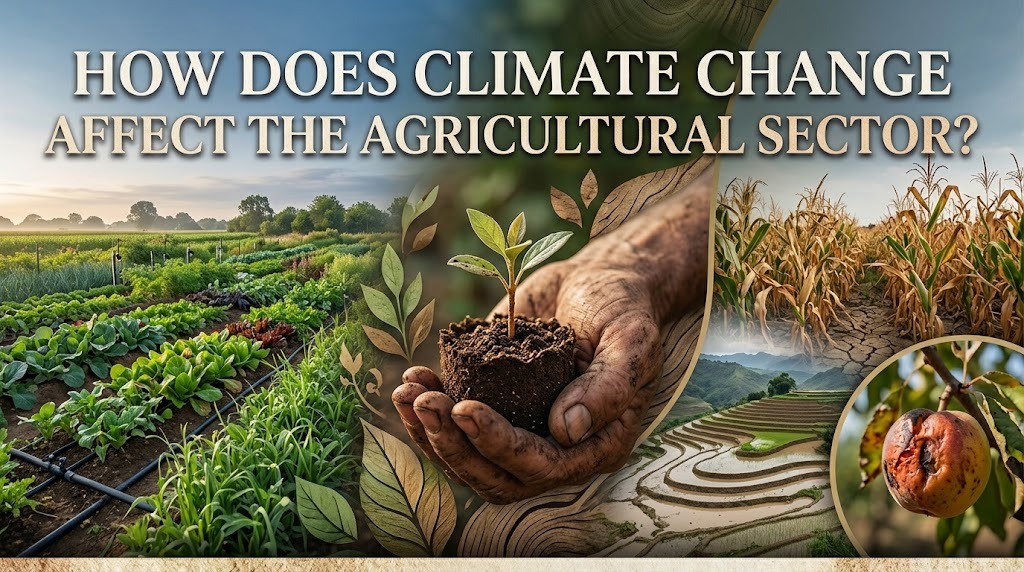
Climate change is one of the major challenges facing the agricultural sector worldwide. Changes in temperature, rainfall, and seasonal patterns can affect crop growth, livestock health, and food production. Farmers increasingly face risks from droughts, floods, heatwaves, and changing pest populations. These challenges can reduce harvests, increase production costs, and threaten the livelihoods of farming communities. Understanding how climate change affects agriculture is essential for protecting food supplies, supporting farmers, and developing more sustainable farming systems.
1. CHANGES IN TEMPERATURE AND CROP GROWTH
Rising temperatures can significantly affect crop growth and agricultural productivity. Every crop has a suitable temperature range, and excessive heat can interfere with flowering, pollination, and grain development. Crops such as wheat, rice, and maize may produce lower yields when exposed to extreme heat during important growth stages. Warmer conditions can also increase water loss from soil and plants, making it more difficult for crops to survive. Farmers can respond by selecting heat-tolerant crop varieties, adjusting planting schedules, and improving field management.
2. CHANGING RAINFALL PATTERNS AND WATER SHORTAGES
Climate change affects when, where, and how much rain falls. Irregular rainfall can make it difficult for farmers to plan planting and harvesting seasons. Long periods without rain can cause droughts, reduce soil moisture, and limit the water available for irrigation. In contrast, excessive rainfall can flood fields, damage crops, and wash valuable nutrients out of the soil. Improving irrigation systems, collecting rainwater, and using water-efficient farming methods can help farmers manage these challenges.
3. INCREASED FLOODS AND EXTREME WEATHER
Extreme weather events can cause serious damage to agricultural land and infrastructure. Floods may destroy crops, erode fertile soil, and damage irrigation channels, roads, and storage facilities. Strong winds and severe storms can flatten crops, damage greenhouses, and disrupt livestock operations. These events may also delay planting and harvesting, leading to lower production and financial losses. Farmers can reduce some risks by improving drainage, diversifying crops, protecting soil, and using reliable weather forecasts to plan their activities.
4. SPREAD OF PESTS AND PLANT DISEASES
Climate change can influence the spread and development of agricultural pests and diseases. Warmer temperatures and changing rainfall patterns may allow certain insects, fungi, and plant pathogens to survive in areas where they previously struggled. Pest populations can increase under favorable conditions, damaging leaves, roots, fruits, and grains. Farmers may then face higher costs for monitoring crops and controlling infestations. Integrated pest management, crop rotation, resistant crop varieties, and regular field inspections can help reduce damage while limiting unnecessary pesticide use.
5. IMPACT ON LIVESTOCK HEALTH AND PRODUCTIVITY
Livestock farming is also vulnerable to climate change. Extreme heat can cause heat stress in cattle, poultry, and other farm animals, reducing their feed intake, growth, milk production, and reproductive performance. Droughts can reduce the availability of pasture and drinking water, forcing farmers to spend more on animal feed. Changes in temperature and humidity may also influence the spread of certain livestock diseases and parasites. Providing shade, adequate ventilation, clean water, and suitable feeding systems can help protect animal health and maintain productivity.
6. SOIL DEGRADATION AND LOSS OF FERTILITY
Healthy soil is essential for successful agriculture because it supplies nutrients, stores water, and supports plant roots. However, climate change can increase soil erosion and degradation through intense rainfall, flooding, prolonged droughts, and high temperatures. Heavy rainfall can wash away fertile topsoil, while dry conditions may reduce soil moisture and make land more vulnerable to erosion. These changes can lower crop productivity and increase the need for soil management. Practices such as cover cropping, mulching, crop rotation, and adding suitable organic matter can help maintain soil fertility and improve its ability to retain water.
7. ECONOMIC LOSSES AND FOOD SECURITY
Climate change can create significant economic difficulties for farmers and the wider agricultural industry. Lower crop yields and livestock losses can reduce farm income while increasing spending on irrigation, seeds, animal feed, and pest control. When agricultural production declines, food prices may rise, especially when supplies are limited and distribution is disrupted. Small-scale farmers are often particularly vulnerable because they may have limited savings, insurance, or access to modern technology. Improving agricultural insurance, providing farmer training, and strengthening food storage and distribution systems can help communities manage these risks.
8. CLIMATE-SMART AGRICULTURE AS A SOLUTION
Climate-smart agriculture combines methods that improve productivity, help farmers adapt to climate change, and reduce greenhouse gas emissions where possible. Farmers can use drought-tolerant crops, efficient irrigation, weather information, and diversified planting systems to manage changing conditions. Agroforestry, which combines trees with crops or livestock, can provide shade, protect soil, and store carbon. Better fertilizer management and improved livestock practices can also reduce certain agricultural emissions. With appropriate training, investment, and access to technology, these methods can help farming communities become more resilient and sustainable.
CONCLUSION
Climate change affects the agricultural sector through rising temperatures, irregular rainfall, extreme weather, pests, soil degradation, and livestock stress. These challenges can reduce food production, increase farming costs, and threaten the income of agricultural communities. However, farmers can lower some risks by adopting climate-smart practices, protecting soil and water, and using reliable weather information. Governments and agricultural organizations also need to provide training, infrastructure, research, and financial support. Building climate-resilient agriculture is essential for protecting farmers' livelihoods and maintaining long-term food security.
Recent Posts

Bagaimana Sistem SKS pada Program Kuliah... 22.11.2026/47 View

How Does Technology Make Daily Evaluation... 21.11.2026/75 View

Apa Strategi Menghadapi Kesenjangan antara Kompetensi... 21.11.2026/77 View

Mengapa Inventaris Aset Penting bagi Kelancaran... 21.11.2026/73 View

When Should Musicians Join a Record... 21.11.2026/77 View
