

How Does Climate Change Affect The Preservation Of Archaeological Sites?
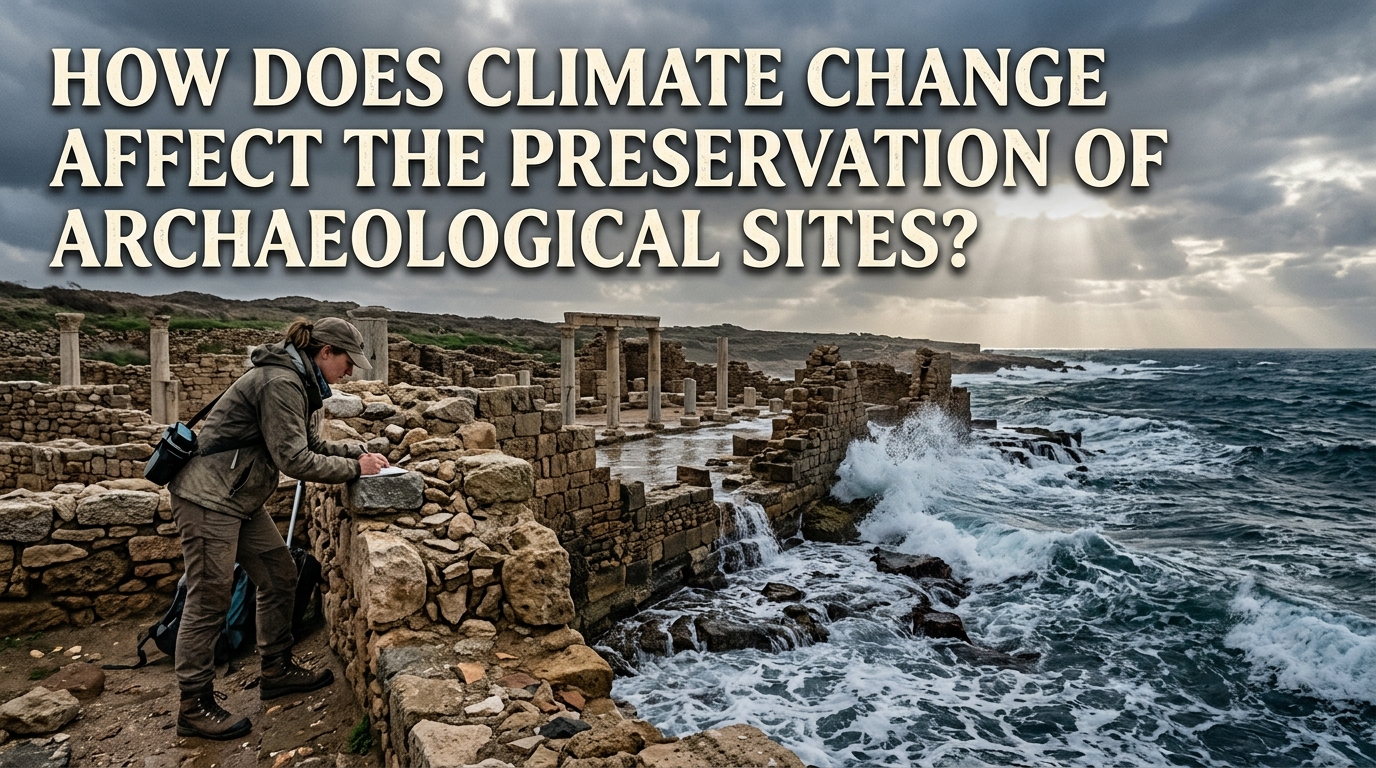
Climate change is becoming a major threat to archaeological sites around the world. Rising temperatures, changing rainfall patterns, rising sea levels, and more frequent extreme weather events can damage ancient buildings, buried artifacts, and historic landscapes. These places contain valuable evidence about how past civilizations lived, worked, and adapted to their environments.
Archaeological preservation is essential because once historical evidence is destroyed, it may be impossible to recover. Climate change can accelerate the deterioration of materials that have survived for centuries or even thousands of years. Understanding these threats helps archaeologists, conservation experts, and local communities develop effective strategies to protect cultural heritage for future generations.
HOW RISING TEMPERATURES DAMAGE ARCHAEOLOGICAL SITES
Rising temperatures can accelerate the deterioration of many archaeological materials. Repeated heating and cooling cause some stone, brick, and other building materials to expand and contract, potentially creating cracks over time. Higher temperatures can also increase the rate of certain chemical reactions that contribute to the decay of stone surfaces, metals, and other materials.
Temperature changes can affect the ground surrounding archaeological remains as well. In areas with permafrost, warming can thaw frozen soil that has preserved ancient organic materials, including wood, textiles, and animal remains. Once exposed to warmer conditions, these materials may decompose more rapidly. Temperature monitoring and appropriate conservation measures help specialists identify vulnerable sites and reduce further damage.
THE IMPACT OF RISING SEA LEVELS ON COASTAL HERITAGE
Rising sea levels threaten archaeological sites located near coastlines, islands, and estuaries. As sea levels increase, coastal erosion and flooding can destroy ancient settlements, burial grounds, ports, and historic buildings. Saltwater can also penetrate porous materials, leaving salt crystals that may weaken stone, brick, and plaster as moisture evaporates.
Repeated flooding creates additional problems by introducing sediment, pollutants, and moisture into archaeological deposits. Some underwater sites may remain preserved under suitable conditions, but changing currents, erosion, and increased human disturbance can expose them to damage. Coastal archaeological sites are particularly vulnerable because rising seas can gradually remove the land that protects them. Mapping at-risk locations and monitoring shoreline changes are important steps toward protecting these irreplaceable resources.
HOW EXTREME WEATHER EVENTS AFFECT HISTORICAL SITES
Climate change can increase the intensity or likelihood of certain extreme weather events in many regions, although the effects vary by location. Heavy rainfall and flooding can wash away archaeological deposits, weaken foundations, and cause ancient walls to collapse. Strong winds and storms may damage exposed structures, while landslides can bury or destroy sites located on unstable slopes.
Droughts can also create serious problems. Dry conditions may increase soil cracking, reduce the stability of some foundations, and make vegetation more vulnerable to wildfires. After a fire, the loss of protective plant cover can leave archaeological sites more exposed to erosion. Disaster risk assessments, drainage improvements, and emergency protection plans can help reduce damage when extreme weather occurs.
THE EFFECTS OF CHANGING RAINFALL AND HUMIDITY
Changes in rainfall patterns can alter the physical and chemical conditions surrounding archaeological materials. Prolonged wet periods may increase water infiltration, encourage biological growth, and weaken certain building materials. When water repeatedly enters porous stone or brick and later evaporates, salt deposits can form and contribute to surface deterioration.
On the other hand, prolonged drought can expose buried remains and change the moisture balance of archaeological deposits. Organic materials such as wood, leather, and plant remains may survive for long periods in stable, waterlogged environments with limited oxygen. If these deposits dry out, the materials can shrink, crack, or decompose more quickly. Maintaining suitable moisture conditions is therefore an important part of preserving fragile archaeological evidence.
HOW CLIMATE CHANGE AFFECTS BURIED ARTIFACTS
Artifacts buried underground are often protected by relatively stable conditions. Soil can shield objects from sunlight, sudden temperature changes, and physical disturbance. However, changing groundwater levels, increased flooding, soil erosion, and shifting moisture conditions can expose buried artifacts to harmful environments.
Different materials respond to these changes in different ways. Iron and other metals may corrode more rapidly when moisture and oxygen conditions change, while some ceramics can suffer damage from salt crystallization. Organic remains may decay if the conditions that previously preserved them are disrupted. Careful excavation, environmental testing, and controlled storage help archaeologists protect recovered artifacts and preserve information about their original context.
THE THREAT TO ARCHAEOLOGICAL SITES IN DRY REGIONS
Archaeological sites in deserts and other dry environments may appear protected from climate change, but they face several risks. Rising temperatures, stronger wind erosion in some locations, and changing patterns of rainfall can damage exposed structures and remove the soil covering buried remains. Sudden heavy rainfall can also cause flash floods that wash away ancient walls, roads, and settlement deposits.
Dry environments sometimes preserve organic materials because low moisture limits biological decomposition. However, changes in humidity and water availability can disturb these favorable conditions. Increased vegetation in some areas may also affect buried structures through root growth, while other areas may experience greater erosion when plant cover disappears. Protecting desert archaeology requires local climate monitoring and site-specific conservation strategies rather than assuming that dry conditions guarantee long-term preservation.
THE ROLE OF MODERN TECHNOLOGY IN SITE PRESERVATION
Modern technology helps archaeologists monitor environmental changes and identify sites that face the greatest risks. Satellite imagery and aerial photography can reveal shoreline erosion, changing vegetation, and landscape disturbances over time. Geographic information systems allow researchers to combine archaeological maps with climate data, elevation models, and flood-risk information.
Other technologies provide detailed records of vulnerable structures. Drones and three-dimensional scanning can document buildings before damage occurs, creating digital models that support future study and restoration. Sensors can measure temperature, humidity, and moisture levels at selected sites, helping conservation teams detect harmful changes early. Although technology cannot stop climate change, early detection and accurate documentation can improve preservation planning and support faster responses to emerging threats.
STRATEGIES FOR PROTECTING ARCHAEOLOGICAL HERITAGE
Protecting archaeological sites from climate change requires a combination of prevention, monitoring, and long-term planning. Archaeologists and conservation specialists can identify vulnerable locations, assess environmental risks, and prioritize sites where damage may be irreversible. Protective roofs, improved drainage, erosion barriers, and carefully designed water management systems may help at selected locations when they do not create additional problems.
Community involvement is equally important because local residents often have valuable knowledge of landscapes, seasonal changes, and historical places. Governments, museums, universities, and heritage organizations can work together to provide funding, technical expertise, and emergency support. In some cases, detailed digital documentation may be necessary when physical preservation becomes extremely difficult. Reducing greenhouse gas emissions is also essential for limiting future climate risks, while responsible site management can help communities adapt to changes already occurring.
WHY ARCHAEOLOGICAL PRESERVATION MATTERS FOR FUTURE GENERATIONS
Archaeological sites provide evidence of human creativity, technological development, trade, migration, and cultural traditions. They help researchers understand how earlier societies responded to environmental changes, including droughts, floods, and shifts in available resources. Losing these sites would mean losing important opportunities to learn from human history.
Preserving archaeological heritage also supports cultural identity, education, and responsible tourism. Many communities have strong connections to historic buildings, sacred places, and ancestral landscapes. Climate change adaptation and cultural heritage protection should therefore be considered together in environmental planning and development decisions. By protecting archaeological sites today, society can ensure that future generations continue to learn from the physical evidence of the past.
CONCLUSION
Climate change affects archaeological preservation through rising temperatures, sea-level rise, extreme weather, changing rainfall, and shifting soil conditions. These processes can damage ancient buildings, expose buried artifacts, and destroy archaeological evidence that has survived for centuries. The level of risk depends on each site's location, materials, environmental conditions, and existing conservation measures.
Addressing these challenges requires scientific monitoring, modern technology, effective conservation, and cooperation among communities and heritage organizations. While not every site can be protected in the same way, early planning can reduce avoidable damage and help researchers document vulnerable places. Preserving archaeological heritage is essential for protecting humanity's history and passing valuable knowledge to future generations.
Recent Posts

Bagaimana Sistem SKS pada Program Kuliah... 22.11.2026/50 View

How Does Technology Make Daily Evaluation... 21.11.2026/79 View

Apa Strategi Menghadapi Kesenjangan antara Kompetensi... 21.11.2026/79 View

Mengapa Inventaris Aset Penting bagi Kelancaran... 21.11.2026/75 View

When Should Musicians Join a Record... 21.11.2026/80 View
