

How Does Climate Change Increase Urban Flood Risks?
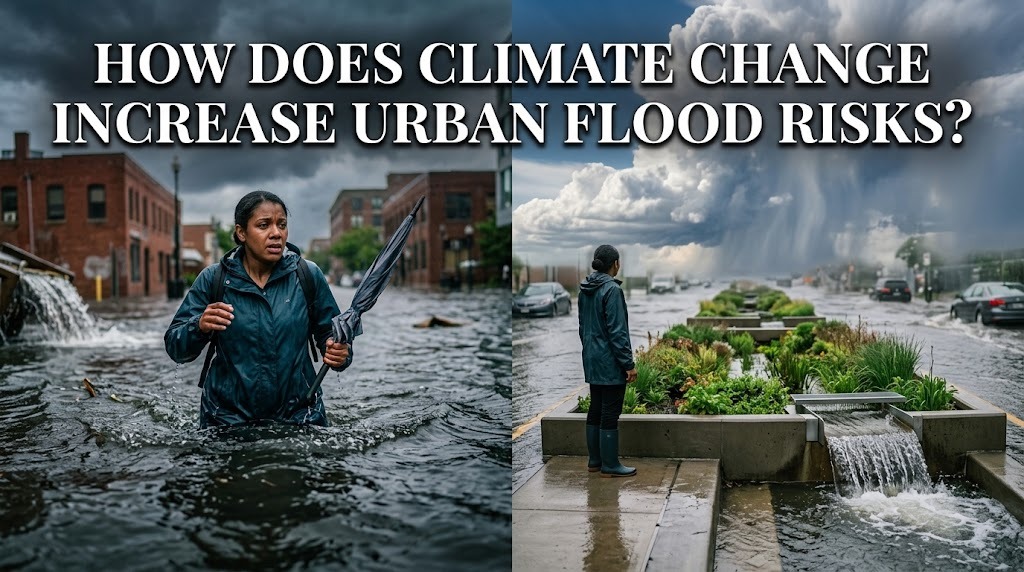
Climate change has become one of the major challenges facing cities around the world. Rising temperatures, changing rainfall patterns, and rising sea levels can increase the likelihood and severity of urban flooding. As cities continue to grow, these environmental changes place additional pressure on drainage systems, roads, buildings, and other essential infrastructure. Understanding the connection between climate change and urban flood risks is important for developing effective prevention strategies and protecting communities from future disasters.
HOW RISING TEMPERATURES AFFECT RAINFALL
Higher global temperatures influence the water cycle by increasing evaporation from oceans, rivers, lakes, and other water sources. Warmer air can also hold more water vapor, creating conditions that support heavier rainfall when suitable weather systems develop. As a result, some regions experience more intense downpours, even when their total annual rainfall does not increase significantly.
Heavy rainfall can overwhelm urban drainage systems within a short period. When water enters streets faster than drains and waterways can carry it away, flooding may occur. This problem is especially serious in densely populated cities with limited open land for absorbing rainwater.
MORE FREQUENT EXTREME WEATHER EVENTS
Climate change can increase the intensity or likelihood of certain extreme rainfall events, although the effects vary by region. Some cities may experience stronger storms, prolonged periods of heavy rain, or sudden downpours that produce large volumes of runoff. These events can create dangerous flooding in areas that previously experienced fewer serious incidents.
Extreme rainfall also makes flood management more difficult because existing infrastructure is often designed around historical weather patterns. If rainfall exceeds the capacity of drainage channels, pumps, and retention ponds, water can accumulate rapidly. Cities therefore need to consider changing climate conditions when evaluating flood risks and upgrading infrastructure.
RISING SEA LEVELS AND COASTAL FLOODING
Rising sea levels increase flood risks for coastal cities by raising the baseline water level along shorelines. During high tides or coastal storms, seawater can reach areas that were previously less exposed to flooding. Low-lying neighborhoods, ports, roads, and commercial districts may face greater risks as sea levels continue to rise.
Higher sea levels can also make it more difficult for rivers and drainage channels to discharge water into the sea. When coastal water levels are elevated, rainwater may drain more slowly, increasing the likelihood of flooding during heavy rainfall. In some locations, land subsidence caused by groundwater extraction or other human activities can worsen the effects of rising seas.
THE IMPACT OF URBAN DEVELOPMENT
Urban development can intensify the effects of climate change on flooding. Roads, parking lots, sidewalks, and buildings replace natural surfaces with materials that allow little water to soak into the ground. Consequently, more rainwater flows across the surface and enters drainage systems during storms.
When rapid development occurs without adequate flood planning, drainage infrastructure may become insufficient for the growing urban area. The combination of intense rainfall and extensive paved surfaces can produce flash floods, especially in low-lying neighborhoods. Preserving wetlands, expanding green spaces, and using permeable paving can help cities absorb more rainfall and reduce surface runoff.
PRESSURE ON DRAINAGE SYSTEMS AND RIVERS
Urban drainage systems are essential for directing rainwater away from streets and buildings. However, many systems were designed using past rainfall records that may not fully reflect future climate conditions. More intense rainfall can exceed their capacity, causing water to back up into roads, homes, and commercial areas.
Rivers and canals may also overflow when they receive more water than their channels can contain. Flood risks become greater when waterways are narrowed by development, blocked by waste, or surrounded by buildings that restrict access for maintenance. Regular inspections, improved drainage networks, river restoration, and larger water storage facilities can help cities manage these challenges.
ECONOMIC AND SOCIAL CONSEQUENCES
Climate-related urban flooding can cause significant financial losses. Floodwater may damage homes, vehicles, businesses, electrical equipment, and public infrastructure. When roads and public transportation systems become unusable, workers may struggle to reach their workplaces, deliveries may be delayed, and local businesses may lose income.
The social consequences can be equally serious. Flooding may force families to leave their homes, interrupt education, contaminate water supplies, and increase exposure to waterborne diseases. Low-income communities often face greater difficulties recovering because they may have fewer financial resources, limited insurance coverage, and homes located in high-risk areas.
THE IMPORTANCE OF CLIMATE-RESILIENT CITY PLANNING
Climate-resilient planning helps cities prepare for changing environmental conditions. Local governments can assess flood-prone areas, update rainfall projections, improve drainage capacity, and prevent new development in locations with unacceptable flood risks. Reliable flood forecasting and early warning systems can also give residents more time to protect their belongings and evacuate when necessary.
Nature-based solutions are another important part of urban flood management. Parks, wetlands, rain gardens, green roofs, and restored riverbanks can slow runoff and provide places for rainwater to collect or infiltrate the ground. Combining these approaches with engineered infrastructure creates a more flexible system for managing both ordinary rainfall and extreme weather events.
HOW COMMUNITIES CAN HELP REDUCE FLOOD RISKS
Communities can support flood prevention by keeping drains free of waste, protecting local waterways, and participating in neighborhood environmental programs. Residents should also understand local evacuation routes, monitor official weather warnings, and prepare emergency supplies when living in flood-prone areas. These actions cannot prevent every flood, but they can reduce damage and improve public safety.
Community participation is most effective when supported by local authorities and reliable infrastructure. Governments, businesses, and residents need to work together to maintain drainage networks, restore green spaces, and share accurate information about flood hazards. Coordinated action makes it easier to identify vulnerable areas and implement practical solutions.
CONCLUSION
Climate change increases urban flood risks by influencing rainfall intensity, raising sea levels, and increasing pressure on drainage systems and coastal infrastructure. These effects can become more severe when combined with rapid urban development, limited green spaces, and inadequate flood management. Although cities cannot eliminate every flood hazard, they can reduce potential damage through climate-resilient planning, improved infrastructure, nature-based solutions, and community preparedness. Taking action today can help create safer and more sustainable cities for future generations.
Recent Posts

Bagaimana Sistem SKS pada Program Kuliah... 22.11.2026/54 View

How Does Technology Make Daily Evaluation... 21.11.2026/83 View

Apa Strategi Menghadapi Kesenjangan antara Kompetensi... 21.11.2026/81 View

Mengapa Inventaris Aset Penting bagi Kelancaran... 21.11.2026/78 View

When Should Musicians Join a Record... 21.11.2026/82 View
