

How Does Climate Change Influence Urban Flooding Risks?
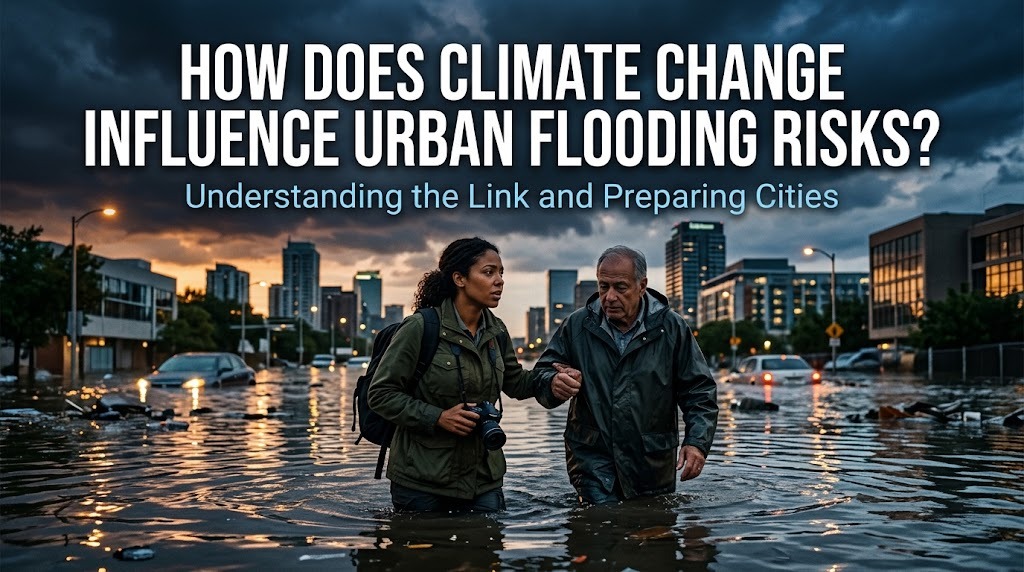
Urban flooding is a growing problem in many cities, especially in areas with high population density, limited green spaces, and inadequate drainage systems. Flooding occurs when water accumulates faster than the environment and infrastructure can absorb or channel it away. Heavy rainfall, overflowing rivers, poor drainage, and rapid urban development are common factors that contribute to this problem.
Climate change can make urban flooding risks more severe by influencing rainfall patterns, increasing temperatures, and raising sea levels. These changes place additional pressure on city infrastructure and natural water systems. Understanding the relationship between climate change and urban flooding is important for developing effective mitigation strategies and protecting communities.
INCREASING THE INTENSITY OF HEAVY RAINFALL
One major way climate change influences urban flooding is by changing rainfall patterns. Warmer air can hold more water vapor, which may contribute to heavier rainfall when suitable atmospheric conditions occur.
Intense rainfall can overwhelm urban drainage systems, particularly when large amounts of water fall within a short period. When drains and waterways cannot carry the excess water efficiently, streets, homes, and public facilities may become flooded. Cities with limited drainage capacity are especially vulnerable to these conditions.
RISING SEA LEVELS INCREASE COASTAL FLOODING
Climate change contributes to rising sea levels through the expansion of warmer ocean water and the melting of glaciers and ice sheets. Higher sea levels increase the risk of coastal flooding, especially in low-lying urban areas near the shoreline.
When sea levels rise, coastal communities become more exposed to tidal flooding and storm surges. In some locations, seawater can also interfere with the discharge of rainwater from drainage channels into the ocean. This makes it more difficult for cities to remove excess water during periods of heavy rainfall.
MORE FREQUENT FLOODING IN LOW-LYING AREAS
Low-lying urban neighborhoods are particularly vulnerable because water naturally flows toward lower elevations. When heavy rainfall occurs, these areas may experience water accumulation, especially if drainage channels are insufficient or blocked.
Climate-related changes in rainfall and sea levels can increase pressure on these locations. Coastal settlements may experience overlapping problems from intense rain, high tides, and storm surges. As a result, residents may face repeated flooding that disrupts daily activities and damages property.
URBANIZATION REDUCES NATURAL WATER ABSORPTION
Urban development can intensify the effects of climate change on flooding. Roads, parking areas, rooftops, and concrete surfaces replace natural ground that would otherwise absorb rainwater.
As green spaces decrease, more rainfall becomes surface runoff and flows into drainage systems. When heavy rain occurs, these systems may become overwhelmed. Combining urban expansion with changing rainfall patterns can therefore increase the likelihood of flooding in densely developed areas.
DRAINAGE SYSTEMS FACE GREATER PRESSURE
Drainage infrastructure is designed to manage water based on expected rainfall and local environmental conditions. However, changing weather patterns can create rainfall events that exceed the capacity of existing systems.
Blocked drains, damaged channels, and inadequate maintenance can make the problem worse. In coastal cities, high sea levels may also slow the movement of water through drainage outlets. Improving drainage capacity and maintaining waterways are important steps toward reducing urban flood risks.
INCREASING RIVER FLOODING IN URBAN AREAS
Climate change can influence river flooding by changing the intensity and distribution of rainfall across river basins. Heavy rainfall upstream may increase river discharge and cause water levels to rise in downstream urban areas.
When rivers exceed their capacity, water can overflow into nearby settlements, roads, and public facilities. Urban development along riverbanks may increase the number of people and buildings exposed to these hazards. Protecting river corridors and improving flood monitoring can help reduce potential impacts.
DAMAGING URBAN INFRASTRUCTURE AND PUBLIC FACILITIES
Flooding can damage roads, bridges, drainage networks, electrical systems, and public buildings. Repeated exposure to floodwater may weaken infrastructure and increase maintenance costs for local governments.
Transportation disruptions can also affect schools, hospitals, workplaces, and emergency services. In severe situations, flooded roads may prevent rescue teams from reaching affected communities. Climate adaptation planning should therefore consider the ability of essential infrastructure to withstand changing flood conditions.
AFFECTING PUBLIC HEALTH AND COMMUNITY WELL-BEING
Urban flooding can create serious health and social problems. Floodwater may contain sewage, chemicals, waste, and harmful microorganisms that can contaminate homes and public spaces.
Standing water can also create conditions that support mosquito breeding, while damp buildings may contribute to mold growth. In addition, residents may experience stress, financial losses, and temporary displacement. Communities with limited resources often face greater difficulties recovering from repeated flooding.
USING CLIMATE DATA FOR FLOOD RISK MANAGEMENT
Climate data helps city planners understand how rainfall, temperature, and sea-level changes may influence future flood risks. Weather observations, satellite imagery, geographic information systems, and hydrological models can support more detailed flood assessments.
These tools allow authorities to identify vulnerable neighborhoods, estimate potential water accumulation, and improve early warning systems. Combining climate information with population data and infrastructure maps can also help determine which communities need additional protection.
DEVELOPING CLIMATE-RESILIENT FLOOD MITIGATION STRATEGIES
Cities need long-term strategies to reduce flooding risks under changing climate conditions. Improving drainage systems, restoring wetlands, protecting urban forests, and increasing green open spaces can help manage excess rainwater.
Other measures include constructing retention ponds, developing permeable surfaces, improving river management, and strengthening coastal protection where appropriate. Governments should also use updated flood hazard maps and climate projections when planning new settlements and infrastructure.
CONCLUSION
Climate change influences urban flooding risks through heavier rainfall in some regions, rising sea levels, and changes in river flow patterns. These effects can become more serious when combined with urbanization, limited green spaces, and inadequate drainage infrastructure.
Reducing urban flood risks requires climate-informed planning, stronger infrastructure, environmental protection, and reliable early warning systems. By preparing for changing weather conditions and improving water management, cities can protect communities and become more resilient to future flooding.
Recent Posts

Bagaimana Sistem SKS pada Program Kuliah... 22.11.2026/37 View

How Does Technology Make Daily Evaluation... 21.11.2026/70 View

Apa Strategi Menghadapi Kesenjangan antara Kompetensi... 21.11.2026/73 View

Mengapa Inventaris Aset Penting bagi Kelancaran... 21.11.2026/68 View

When Should Musicians Join a Record... 21.11.2026/71 View
