

How Does Commercialization Affect the Authenticity of Cultural Heritage?
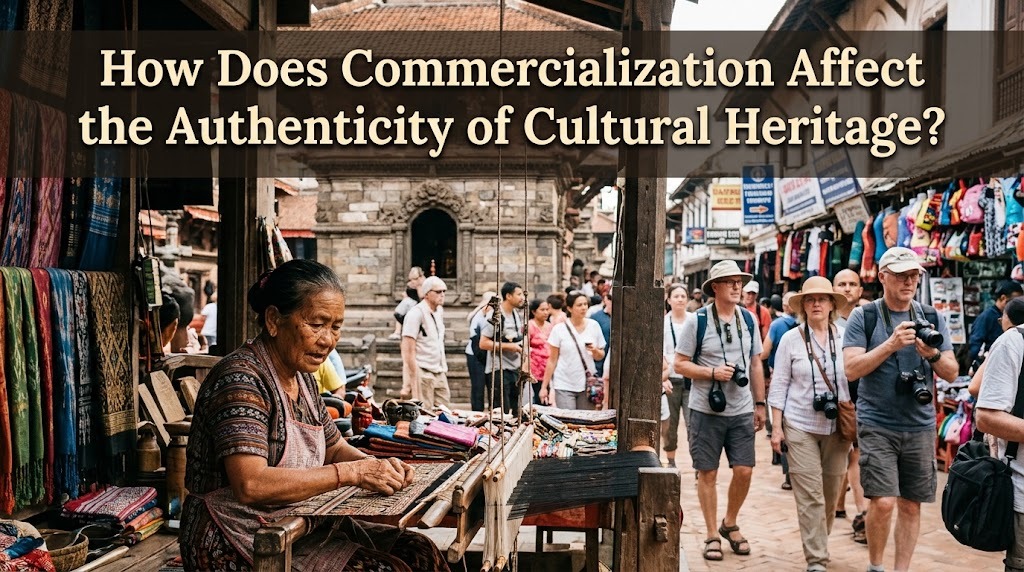
Cultural heritage represents the traditions, values, knowledge, and artistic expressions passed down through generations. It includes traditional clothing, handicrafts, local languages, music, dances, historical sites, and cultural ceremonies. Commercialization occurs when cultural elements are used to generate income through tourism, entertainment, advertising, or product sales. Although commercialization can create economic opportunities, it may also affect the authenticity and original meaning of cultural heritage.
When cultural traditions become commercial products, they may be modified to attract customers or meet market demand. Some changes can help traditions survive, while others may weaken their cultural significance. Understanding this relationship is important for ensuring that cultural heritage remains meaningful to local communities.
UNDERSTANDING CULTURAL HERITAGE AUTHENTICITY
Cultural heritage authenticity refers to the extent to which cultural traditions, objects, and practices maintain their historical context, cultural meaning, and connection to the communities that preserve them. Authenticity does not always mean that traditions must remain completely unchanged. Cultural practices naturally evolve as communities respond to social, economic, and technological changes.
However, problems can arise when cultural elements are altered mainly for commercial purposes without respecting their original significance. For example, a traditional ceremony may be shortened or redesigned solely to entertain tourists. These changes can remove important symbolic elements and reduce the community's role in maintaining the tradition. Preserving authenticity therefore requires balancing adaptation with respect for cultural values and historical context.
THE POSITIVE EFFECTS OF COMMERCIALIZATION
Commercialization can provide financial support for cultural preservation. Traditional artists, craftspeople, musicians, and performers can earn income by selling their products or sharing their skills with visitors. These opportunities may encourage younger generations to learn traditional crafts and continue cultural practices. Commercial activities can also introduce cultural heritage to wider audiences through exhibitions, festivals, and tourism.
For example, selling handmade batik can help Indonesian artisans maintain traditional textile-making techniques while supporting their livelihoods. Cultural workshops can also teach visitors about the materials, patterns, and processes involved in producing traditional crafts. When artisans receive fair payment and maintain control over their work, commercialization can strengthen cultural continuity. In this way, economic activity can support rather than undermine cultural authenticity.
THE NEGATIVE EFFECTS ON CULTURAL AUTHENTICITY
Commercialization can weaken cultural authenticity when traditions are changed excessively to satisfy consumer preferences. Traditional products may be mass-produced using cheaper materials or industrial methods that differ from established craftsmanship. Cultural performances may also be simplified, shortened, or modified to fit entertainment schedules. Although these changes can make cultural products more accessible, they may remove details that carry historical or symbolic meaning.
Another problem occurs when cultural practices are presented without proper context. Sacred ceremonies, traditional clothing, or cultural symbols may be marketed as decorative attractions without explaining their significance. This can create misunderstandings and reduce respect for the communities that maintain them. Commercial pressure may also encourage inaccurate representations of cultural traditions, especially when businesses prioritize profit over cultural responsibility.
THE IMPACT OF TOURISM ON TRADITIONAL CULTURES
Tourism is one of the main ways commercialization affects cultural heritage. Visitors often seek memorable cultural experiences, including traditional dances, local cuisine, craft demonstrations, and historical tours. Tourism income can help communities maintain cultural attractions and support local businesses. However, strong demand can encourage cultural practices to be adapted primarily for tourist expectations.
For example, a traditional performance may be changed to make it shorter or more visually appealing to visitors. If these changes become widespread, the performance may gradually lose some of its original cultural purpose. Nevertheless, not every adaptation damages authenticity, because communities may choose to develop new ways of presenting their traditions. The important consideration is whether local cultural practitioners remain involved in decision-making and whether the cultural meaning is respected.
PROTECTING CULTURAL HERITAGE FROM EXPLOITATION
Protecting cultural heritage from commercial exploitation requires cooperation between local communities, governments, businesses, and cultural organizations. Communities should have a meaningful role in deciding how their traditions, symbols, and knowledge are presented or used commercially. Businesses should provide accurate information about cultural products and acknowledge the communities responsible for maintaining them. Fair compensation can also help ensure that economic benefits reach the people who preserve cultural heritage.
Governments can support these efforts through cultural protection policies, intellectual property measures where applicable, and programs that promote responsible tourism. Educational campaigns can help consumers distinguish traditional handmade products from mass-produced imitations. Cultural practitioners can also document their techniques and explain the historical meaning of their work. These measures help reduce exploitation while allowing communities to benefit from legitimate commercial opportunities.
BALANCING ECONOMIC DEVELOPMENT AND CULTURAL PRESERVATION
Commercialization does not necessarily destroy cultural authenticity. The effects depend on how commercial activities are planned, who controls them, and whether cultural values are respected. Traditional crafts can evolve to meet modern needs while retaining important techniques, meanings, and connections to their communities. Responsible innovation can help cultural heritage remain relevant to younger generations.
A balanced approach should prioritize community participation, fair economic benefits, accurate cultural representation, and the protection of important traditions. Tourism businesses can collaborate with local artists, while governments can provide training and conservation support. Consumers can contribute by choosing authentic products and learning about their cultural origins. Through these efforts, cultural heritage can support economic development without losing its distinctive identity.
CONCLUSION
Commercialization affects the authenticity of cultural heritage in both positive and negative ways. It can generate income, create employment, promote cultural awareness, and support the continuation of traditional skills. However, excessive commercial pressure can simplify traditions, encourage inaccurate representations, and weaken their original meanings.
The key is to ensure that commercialization respects cultural values and gives local communities control over how their heritage is shared. By combining fair economic opportunities with responsible cultural preservation, societies can protect the authenticity of their traditions while allowing them to develop in a changing world.
Recent Posts

Bagaimana Sistem SKS pada Program Kuliah... 22.11.2026/49 View

How Does Technology Make Daily Evaluation... 21.11.2026/77 View

Apa Strategi Menghadapi Kesenjangan antara Kompetensi... 21.11.2026/78 View

Mengapa Inventaris Aset Penting bagi Kelancaran... 21.11.2026/74 View

When Should Musicians Join a Record... 21.11.2026/79 View
