

How Does Data Science Help Businesses Make Better Decisions?
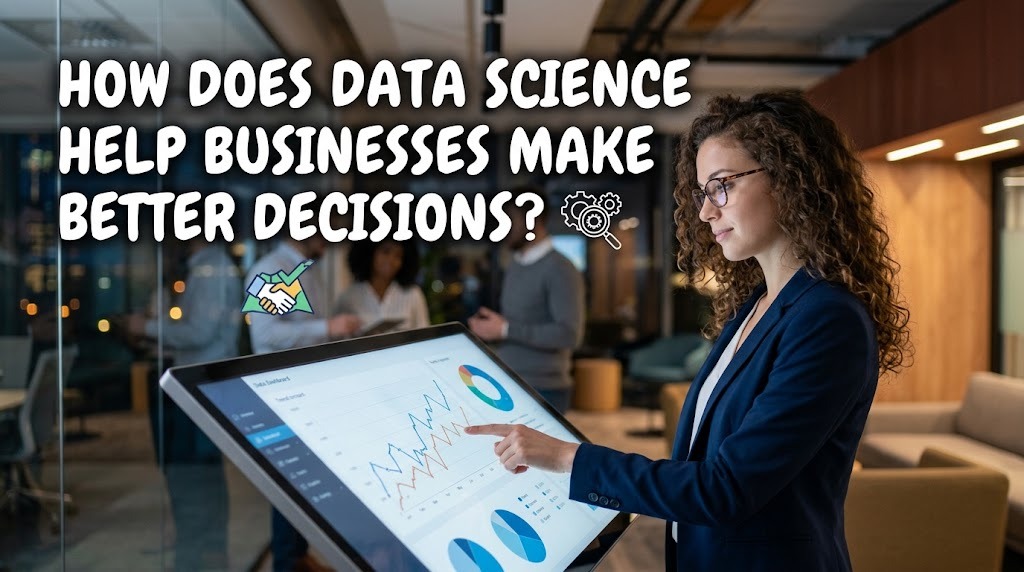
In the modern business world, data science has become an important tool for making smarter and more effective decisions. Every day, businesses collect large amounts of information from customer transactions, websites, social media, and operational activities. However, this information is only valuable when companies can analyze it properly and turn it into useful insights. By combining statistics, programming, analytical methods, and machine learning, data science helps businesses understand problems, identify opportunities, and predict possible outcomes. As a result, companies can make decisions based on reliable evidence rather than assumptions alone.
UNDERSTANDING CUSTOMER NEEDS AND BEHAVIOR
One of the most important benefits of data science is its ability to help businesses understand their customers. Companies can analyze information such as purchasing habits, product preferences, browsing activity, and customer feedback to discover what people need. These insights help businesses identify customer groups with similar interests and develop products or services that match their expectations. For example, an online shopping platform can recommend products based on a customer's previous purchases and searches. This approach can improve the shopping experience and increase the likelihood of repeat purchases.
Data science also helps companies recognize changes in customer behavior over time. If customers begin choosing different products or stop purchasing certain items, businesses can investigate the reasons behind these changes. Companies can then adjust their marketing strategies, improve product quality, or provide better customer support. However, businesses must handle customer information responsibly and protect data privacy throughout the process.
PREDICTING MARKET TRENDS AND BUSINESS OPPORTUNITIES
Data science enables businesses to examine historical information and identify patterns that may indicate future market conditions. Through predictive analytics, companies can estimate future demand, anticipate customer preferences, and recognize potential business opportunities. For instance, a clothing retailer can analyze previous sales, seasonal patterns, and current purchasing trends to estimate which products may become popular. These predictions help businesses prepare their inventory and avoid ordering too many or too few products.
Although predictions can support better planning, they do not guarantee that future events will happen as expected. Market conditions can change because of economic developments, new competitors, technological advances, or unexpected events. Therefore, businesses should combine data-driven forecasts with professional judgment and up-to-date market information. This balanced approach allows managers to respond more effectively to uncertainty and make informed strategic decisions.
IMPROVING OPERATIONAL EFFICIENCY AND REDUCING COSTS
Another significant advantage of data science is its ability to improve daily business operations. Companies can analyze production times, employee workloads, delivery performance, energy consumption, and operating expenses to identify inefficiencies. For example, a logistics company can use delivery records and traffic patterns to determine more efficient transportation routes. This can help reduce fuel consumption, shorten delivery times, and improve customer satisfaction. Similarly, manufacturers can analyze machine performance to identify potential equipment problems before they cause major disruptions.
By identifying unnecessary expenses and inefficient processes, businesses can allocate their resources more effectively. Operational analytics can also help managers determine which activities require improvement and which investments provide the greatest value. However, successful implementation requires accurate data, appropriate technology, and employees who understand how to interpret analytical results. When these elements work together, data science can support cost reduction, productivity improvement, and sustainable business growth.
SUPPORTING MARKETING STRATEGIES AND FINANCIAL DECISIONS
Data science helps businesses develop more effective marketing strategies by measuring how customers respond to different campaigns. Companies can examine website visits, advertisement engagement, conversion rates, and purchasing behavior to determine which marketing activities perform best. For example, a business can compare two advertising campaigns to identify which one attracts more customers at a lower cost. These findings allow marketing teams to direct their budgets toward strategies that deliver better results. Data-driven marketing also helps businesses personalize messages and reach audiences whose interests match their products or services.
In financial management, data science supports budgeting, revenue forecasting, risk assessment, and investment planning. Businesses can examine sales trends, cash flow, payment histories, and expenses to understand their financial position more clearly. For example, a company may identify products with declining profit margins and investigate whether production costs or pricing strategies need adjustment. Financial analysis can also help detect unusual transactions that may require further investigation. Nevertheless, business leaders should consider economic conditions, regulatory requirements, and potential risks before making important financial decisions.
MAKING STRATEGIC DECISIONS THROUGH DATA ANALYSIS
Data science provides business leaders with a stronger foundation for making long-term strategic decisions. Instead of relying entirely on intuition, managers can use data visualization, statistical analysis, and predictive models to evaluate different options. Charts, dashboards, and reports make complex information easier to understand and help decision-makers recognize important patterns. For example, a company planning to open a new branch can examine customer demand, population characteristics, competitor locations, and operating costs before selecting a site. This analysis can reduce uncertainty and help the company allocate its resources more carefully.
However, data science cannot replace human judgment completely. The quality of a decision depends on the accuracy of the data, the suitability of the analytical methods, and the ability to interpret the findings correctly. Businesses should also consider ethical principles, customer privacy, and potential bias in their data. By combining analytical evidence with industry experience and clear business objectives, companies can make decisions that are more consistent, responsible, and effective.
CONCLUSION
Data science helps businesses make better decisions by transforming raw information into practical insights. It supports customer understanding, market forecasting, operational efficiency, marketing performance, financial management, and long-term planning. With the right analytical tools and reliable data, businesses can identify opportunities, reduce unnecessary costs, and respond more effectively to changing market conditions. Nevertheless, successful data science requires responsible data management, appropriate analytical methods, and human judgment. Ultimately, companies that use data-driven decision-making effectively can strengthen their competitiveness and build a more sustainable foundation for growth.
Recent Posts

Bagaimana Sistem SKS pada Program Kuliah... 22.11.2026/46 View

How Does Technology Make Daily Evaluation... 21.11.2026/74 View

Apa Strategi Menghadapi Kesenjangan antara Kompetensi... 21.11.2026/75 View

Mengapa Inventaris Aset Penting bagi Kelancaran... 21.11.2026/72 View

When Should Musicians Join a Record... 21.11.2026/75 View
