

How Does Digital Technology Help Businesses Reduce Operating Costs?
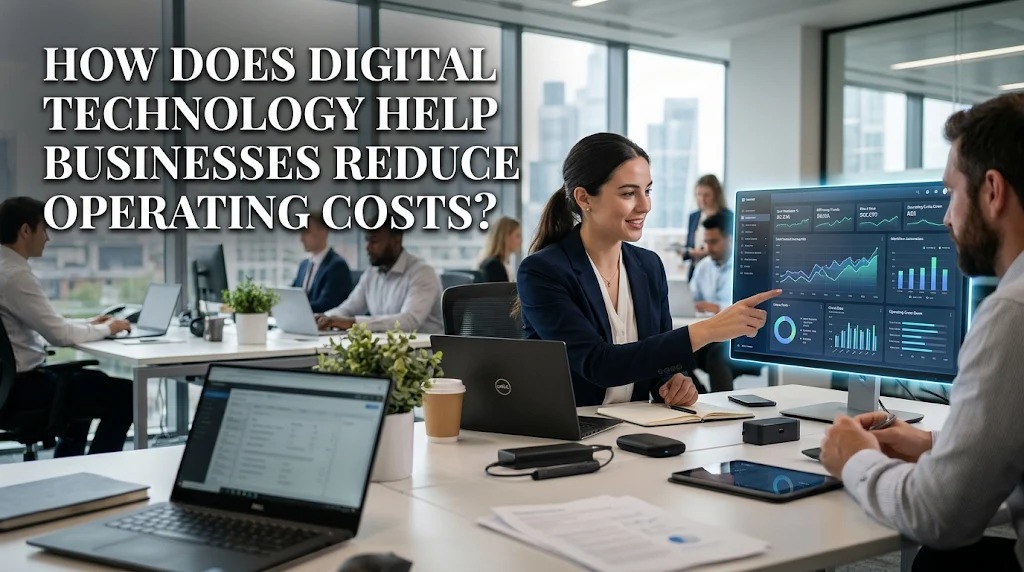
Digital technology has become an important part of modern business operations. Companies increasingly use digital tools to manage daily activities, communicate with customers, process transactions, and organize financial records. These technologies help businesses complete tasks more efficiently while reducing the time, labor, and resources required for various activities.
Reducing operating costs is one of the main reasons businesses adopt digital solutions. Traditional business processes often require more paperwork, manual work, and physical resources. By using technology, companies can automate repetitive tasks, improve communication, manage inventory, and monitor expenses more accurately. Understanding how digital technology reduces operating costs can help businesses make better decisions and improve long-term financial performance.
AUTOMATING DAILY BUSINESS OPERATIONS
One of the most effective ways digital technology reduces operating costs is through automation. Businesses can use software to handle repetitive activities such as processing invoices, recording transactions, managing employee attendance, and organizing financial reports. These systems reduce the need for employees to complete every task manually, allowing them to focus on activities that require greater attention and decision-making. Automation also helps reduce human errors that may lead to additional expenses or inaccurate business records.
For example, accounting software can automatically calculate expenses, generate financial statements, and organize payment records. Online payment systems can also process transactions without requiring extensive manual administration. As a result, businesses can save time, reduce administrative workloads, and improve productivity. However, companies should choose automation tools based on their actual needs to avoid unnecessary subscription and maintenance expenses.
REDUCING PAPERWORK AND ADMINISTRATIVE EXPENSES
Digital technology allows businesses to replace many paper-based processes with electronic documents. Companies can create, store, edit, and share files through digital platforms without printing large amounts of paperwork. This reduces expenses related to paper, ink, printers, physical storage, and document transportation. Digital records also make information easier to find, which helps employees complete administrative tasks more quickly.
Cloud storage systems provide additional benefits by allowing authorized employees to access business documents from different locations. Instead of maintaining extensive physical archives, companies can organize files digitally and manage access through security settings. Electronic contracts, digital invoices, and online forms can also simplify communication with customers and business partners. Nevertheless, businesses must maintain proper backups and security measures to protect important digital information.
IMPROVING COMMUNICATION AND REMOTE WORK
Digital communication tools help businesses reduce expenses associated with meetings, transportation, and office activities. Video conferencing, instant messaging, and project management platforms allow employees to communicate and collaborate without always meeting in person. This can reduce travel costs, accommodation expenses, and the time spent attending physical meetings. Businesses with suitable remote work arrangements may also reduce some office-related expenses, including electricity, workspace, and office supplies.
Remote collaboration platforms make it easier for teams to share documents, assign responsibilities, and monitor project progress. Employees can access important information without being physically present in the same office. These systems can improve coordination and reduce delays caused by communication problems. However, companies still need clear work procedures, reliable internet connections, and appropriate cybersecurity policies to maintain productivity.
OPTIMIZING INVENTORY AND SUPPLY CHAIN MANAGEMENT
Digital inventory management systems help businesses monitor stock levels and control purchasing activities. These tools can record incoming and outgoing products, identify low inventory levels, and provide information about items that sell quickly or remain unsold. With more accurate stock information, companies can avoid excessive purchases, reduce storage expenses, and minimize losses caused by expired or damaged products. This is particularly useful for retail businesses, manufacturers, and companies that manage large inventories.
Technology also improves supply chain management by helping businesses coordinate suppliers, deliveries, and product distribution. Digital tracking systems allow companies to monitor shipments and identify possible delivery delays. Data analysis can help managers select more efficient purchasing schedules and transportation methods. Better coordination reduces unnecessary logistics expenses and helps ensure that products reach customers at the right time.
USING DATA ANALYTICS TO CONTROL BUSINESS EXPENSES
Data analytics helps businesses understand how money is spent and identify opportunities to reduce operating costs. Digital systems collect information about sales, employee productivity, customer behavior, inventory, and daily expenses. Managers can analyze this information to identify unnecessary spending, inefficient processes, and activities that do not produce sufficient business value. These insights support more accurate budgeting and better financial decisions.
For example, a company may discover that certain marketing campaigns generate high expenses but produce relatively few sales. By reviewing this information, managers can adjust their marketing strategies and focus on more effective channels. Businesses can also monitor energy consumption, equipment performance, and employee workloads to identify areas where resources are being wasted. Regular data analysis helps companies control expenses while maintaining service quality and operational efficiency.
CONCLUSION
Digital technology helps businesses reduce operating costs by automating routine activities, minimizing paperwork, improving communication, optimizing inventory, and supporting better financial analysis. These solutions allow companies to use their resources more efficiently and reduce expenses associated with manual processes. They can also improve productivity and make business operations easier to monitor.
However, adopting technology does not automatically guarantee lower costs. Businesses must consider software prices, employee training, maintenance, and cybersecurity requirements before implementing digital solutions. By selecting appropriate tools and evaluating their performance regularly, companies can achieve more efficient operations, control unnecessary expenses, and support sustainable business growth.
Recent Posts

Bagaimana Sistem SKS pada Program Kuliah... 22.11.2026/34 View

How Does Technology Make Daily Evaluation... 21.11.2026/68 View

Apa Strategi Menghadapi Kesenjangan antara Kompetensi... 21.11.2026/68 View

Mengapa Inventaris Aset Penting bagi Kelancaran... 21.11.2026/66 View

When Should Musicians Join a Record... 21.11.2026/67 View
