

How Does Digital Technology Help Homeroom Teachers Manage Classroom Activities?
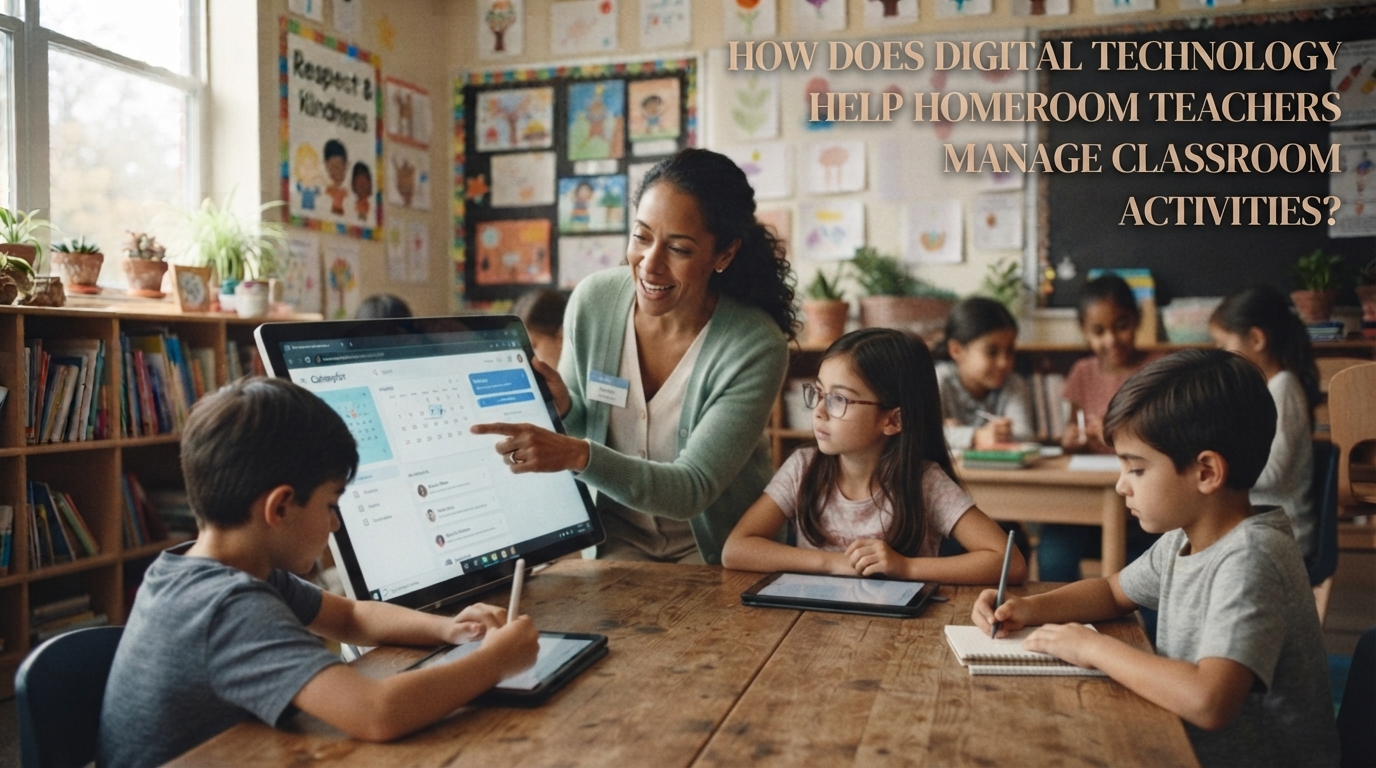
Digital technology has become an important part of modern education. Schools increasingly use digital tools to support teaching activities, manage student information, and improve communication between teachers, students, and parents. These developments also influence the responsibilities of homeroom teachers, who must organize classroom activities, monitor student progress, manage administrative tasks, and maintain positive relationships with students.
Using appropriate technology can make these responsibilities more efficient and organized. Digital platforms allow teachers to record attendance, manage student data, share announcements, monitor academic development, and communicate with parents more easily. Digital technology helps homeroom teachers save time, improve accuracy, and provide more effective classroom management. However, teachers must also understand how to use these tools responsibly to protect student information and maintain meaningful interactions.
1. MAKING STUDENT ATTENDANCE RECORDS MORE EFFICIENT
Digital technology helps homeroom teachers manage student attendance more quickly and accurately. Instead of recording attendance entirely through paper documents, teachers can use digital attendance systems, school applications, or online forms. These tools make it easier to record students who are present, absent, late, or excused from classroom activities. Digital attendance systems also help reduce repetitive administrative work and simplify attendance documentation. Teachers can review attendance information whenever necessary without searching through multiple paper records.
In addition, digital attendance records can help teachers identify patterns of frequent absence or lateness. This information allows them to follow up with students and communicate with parents when necessary. Some school systems also provide automatic attendance summaries and reports. By using these features appropriately, homeroom teachers can monitor student attendance more systematically and efficiently.
2. ORGANIZING STUDENT DATA AND CLASSROOM ADMINISTRATION
Homeroom teachers handle various administrative responsibilities, including maintaining student profiles, recording achievements, managing documents, and preparing school reports. Digital technology provides tools that help organize this information in a more structured way. Digital student databases allow teachers to store and retrieve relevant information without relying entirely on physical documents. Spreadsheet applications and school management systems can also simplify data organization and reporting.
Digital records can be updated when students' information changes, making administration more practical. Teachers can also organize documents according to categories such as attendance, academic performance, extracurricular activities, and student development. However, they must ensure that student information is stored securely and accessed only by authorized individuals. Proper digital administration helps teachers work more efficiently while maintaining accurate records.
3. IMPROVING COMMUNICATION WITH STUDENTS AND PARENTS
Effective communication is essential for maintaining good relationships between homeroom teachers, students, and parents. Digital technology provides several communication channels, including messaging applications, email, school portals, and online meeting platforms. Through these tools, teachers can share classroom announcements, schedule information, assignment reminders, and important school updates. Digital communication platforms make it easier to distribute information without requiring every announcement to be delivered through face-to-face meetings.
Teachers can also use digital communication to discuss students' academic progress, attendance, and behavioral development with parents. Online meetings can provide additional opportunities for consultation when direct meetings are difficult to arrange. However, teachers should maintain professional communication and respect appropriate boundaries when contacting parents and students. They must also protect confidential information and avoid sharing sensitive student details in public groups.
4. MONITORING STUDENTS' ACADEMIC DEVELOPMENT
Digital technology allows homeroom teachers to access information about students' academic progress more conveniently. Learning management systems and school platforms can provide assessment results, assignment records, learning activities, and progress reports. Digital academic monitoring helps teachers identify students who demonstrate improvement or require additional academic assistance. It also makes it easier to communicate with subject teachers about students' learning difficulties.
Teachers can use this information to provide appropriate guidance and encourage students to improve their performance. For example, students who frequently miss assignments may need help managing their study schedules, while those who experience difficulties in certain subjects may benefit from additional learning support. Digital records should be used together with classroom observations and direct communication because academic numbers alone cannot explain every student's circumstances. This combination helps teachers understand student development more accurately.
5. SUPPORTING CLASSROOM ACTIVITIES THROUGH DIGITAL LEARNING TOOLS
Digital learning tools can make classroom activities more varied, interactive, and engaging. Homeroom teachers can use presentation software, educational videos, online quizzes, and collaborative platforms to support discussions and classroom projects. These resources help students access information through different learning formats. Interactive learning technology can also encourage students to participate actively rather than depending entirely on traditional classroom explanations.
Teachers can organize group assignments using collaborative digital documents and online learning platforms. Students can share ideas, complete projects, and communicate with classmates even when they are not working in the same physical space. However, digital activities should have clear educational objectives and remain appropriate for students' ages and abilities. Technology should support meaningful learning rather than become a distraction from classroom goals.
6. HELPING TEACHERS MANAGE CLASSROOM SCHEDULES AND ACTIVITIES
Managing classroom activities requires careful planning and coordination. Homeroom teachers often need to organize class meetings, school events, examinations, extracurricular activities, and other important schedules. Digital calendars and task management applications can help teachers arrange these responsibilities systematically. Digital scheduling tools provide reminders about upcoming activities and reduce the possibility of overlooking important deadlines.
Teachers can also use shared calendars to communicate schedules with students and parents. This allows everyone involved to understand important dates and prepare for activities in advance. When schedules change, digital platforms can make it easier to distribute updated information. With better planning and organization, homeroom teachers can manage classroom responsibilities more effectively.
7. IDENTIFYING STUDENTS WHO NEED ADDITIONAL ATTENTION
Digital technology can help teachers recognize students who may need additional guidance or support. Information from attendance systems, academic records, assignment submissions, and school communication platforms can provide useful indicators of student development. Early identification through digital records helps teachers notice patterns that may require further attention, such as repeated absences or declining academic participation. However, these indicators should be treated as signals for further observation rather than automatic conclusions about a student's condition.
Homeroom teachers should combine digital information with direct conversations and personal observations. For example, frequent absences may be related to health, transportation, family circumstances, or other personal challenges. Teachers should communicate with students and parents respectfully before deciding on appropriate support. When necessary, they can cooperate with school counselors and administrators to address the situation.
8. IMPROVING TEACHER PRODUCTIVITY AND PROFESSIONAL SKILLS
Digital technology can reduce repetitive administrative work and give homeroom teachers more time to focus on students. Applications for document creation, spreadsheets, online meetings, and information management can simplify many daily responsibilities. Improved teacher productivity allows educators to organize their work more efficiently and devote greater attention to classroom guidance. Digital tools can also support collaboration between homeroom teachers and other school personnel.
However, teachers need to continuously improve their digital skills to use technology effectively. They should understand basic digital literacy, data management, online communication, and information security. Teachers must also evaluate whether a particular application is reliable, appropriate, and beneficial for classroom activities. Continuous professional development helps them adapt to educational changes and use technology more responsibly.
9. MAINTAINING STUDENT DATA PRIVACY AND DIGITAL SAFETY
Although digital technology provides many benefits, it also creates responsibilities related to privacy and information security. Homeroom teachers often handle sensitive information, including student identities, attendance records, academic performance, and personal circumstances. Student data protection must therefore become an essential consideration when using digital platforms. Teachers should use secure systems, strong passwords, and appropriate access permissions to prevent unauthorized access.
Teachers should also avoid sharing private student information through public groups or unprotected digital channels. They need to understand school policies regarding data collection, storage, and communication. Students should also receive guidance about responsible internet use, online behavior, and protecting personal information. By maintaining digital safety, teachers can use technology while reducing unnecessary risks to students and the school community.
CONCLUSION
Digital technology helps homeroom teachers manage classroom activities through more efficient attendance recording, organized student administration, improved communication, and better monitoring of academic development. It also supports interactive learning, activity scheduling, early identification of student needs, and professional productivity.
However, technology cannot replace the important human responsibilities of a homeroom teacher. Understanding students, providing emotional support, resolving conflicts, and building positive relationships still require empathy and direct communication. The most effective classroom management combines digital technology with professional judgment, responsible data protection, and personal attention to students. By using digital tools appropriately, homeroom teachers can create a more organized, efficient, and supportive educational environment.
Recent Posts

How Does Technology Make Daily Evaluation... 21.11.2026/56 View

Apa Strategi Menghadapi Kesenjangan antara Kompetensi... 21.11.2026/58 View

Mengapa Inventaris Aset Penting bagi Kelancaran... 21.11.2026/52 View

When Should Musicians Join a Record... 21.11.2026/53 View

Daily Evaluation or Daily Planning Which... 21.11.2026/60 View
