

How Does Digital Technology Improve Campus Bus Services?
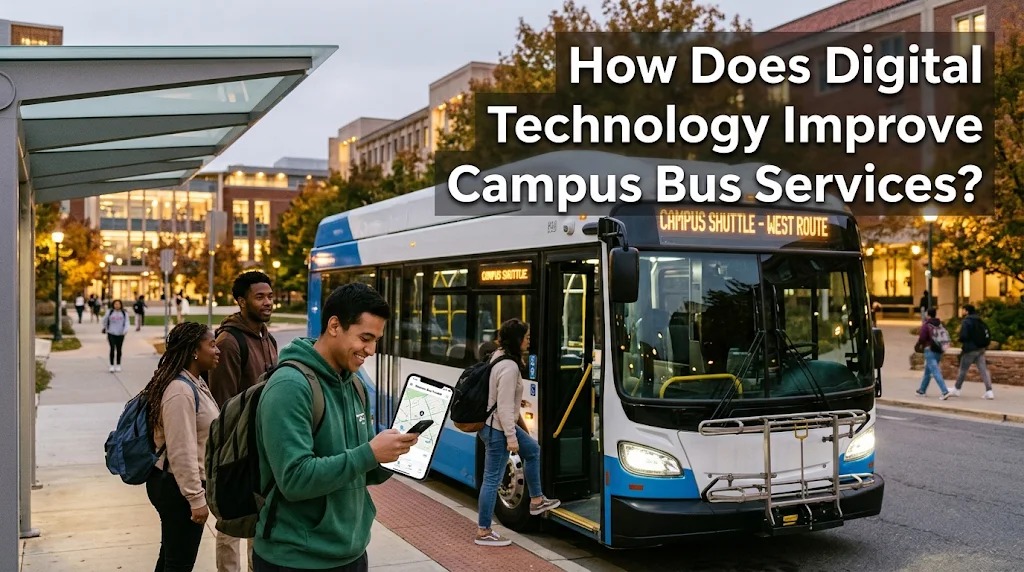
Digital technology plays an important role in improving transportation services at universities. Campus buses are commonly used by students to travel between classrooms, libraries, laboratories, dormitories, and other university facilities. However, traditional transportation systems may experience problems such as unpredictable arrival times, limited route information, and difficulties managing passenger numbers.
By adopting digital technology, universities can make campus bus services more efficient, accessible, and reliable. Technologies such as GPS tracking, mobile applications, digital payment systems, and real-time information displays help students plan their journeys more easily. These innovations also allow universities to monitor transportation operations and improve the overall quality of campus mobility.
GPS TRACKING AND REAL-TIME BUS INFORMATION
GPS tracking is one of the most useful technologies for improving campus bus services. This system allows universities to monitor the location of each bus through satellite-based positioning technology. Students can use this information to estimate when a bus will arrive at a particular stop without waiting unnecessarily.
Real-time bus information also helps students manage their daily schedules. For example, students can check whether a bus is approaching, delayed, or temporarily unavailable. This is especially useful for those who have limited time between classes or need to reach specific campus facilities quickly.
In addition, transportation administrators can use GPS data to evaluate bus movements and identify inefficient routes. By understanding travel patterns and traffic conditions, universities can make better decisions about transportation schedules and route adjustments.
MOBILE APPLICATIONS FOR CAMPUS TRANSPORTATION
Mobile applications make campus bus services easier to access because students can obtain transportation information directly from their smartphones. A well-designed application can provide bus routes, operating schedules, stop locations, and service announcements in one place. This reduces the need for students to search for information through different administrative channels.
Some applications also include digital maps that display nearby bus stops and available transportation options. Students can use these features to determine which bus route is most suitable for their destinations. Notifications can also inform passengers about schedule changes, service disruptions, or temporary route adjustments.
For universities, mobile applications provide an additional communication channel between transportation administrators and passengers. This makes it easier to share important updates and collect feedback about transportation services.
DIGITAL PAYMENT AND ELECTRONIC ACCESS SYSTEMS
Digital payment systems can simplify the process of using campus buses. Instead of carrying cash or purchasing physical tickets, students may be able to pay through electronic wallets, contactless cards, or university transportation applications. These methods can make boarding faster and reduce the need for manual payment transactions.
Electronic access systems can also use QR codes, student identification cards, or other digital credentials to verify passengers. This helps universities identify eligible users and manage access to transportation services more efficiently.
Another advantage is improved transaction monitoring. Digital payment records can help transportation administrators understand service usage, evaluate passenger demand, and prepare more accurate operational budgets. However, universities should ensure that payment systems are secure and provide alternative access methods for students who cannot use digital services.
DATA ANALYTICS FOR BETTER ROUTES AND SCHEDULES
Data analytics helps universities understand how students use campus bus services. Transportation systems can collect information about passenger numbers, frequently used bus stops, travel times, and peak operating periods. This information can be analyzed to identify transportation patterns and areas that require improvement.
For example, if a particular route becomes crowded during morning classes, the university may consider adding another bus or adjusting departure times. Routes with low passenger demand can also be evaluated to determine whether their schedules need modification.
Using accurate transportation data allows universities to make decisions based on actual passenger needs rather than assumptions. This approach can improve vehicle utilization, reduce unnecessary operating costs, and provide more reliable transportation services.
SMART TECHNOLOGY FOR SAFETY AND SERVICE QUALITY
Digital technology can also improve passenger safety through security cameras, electronic monitoring systems, and vehicle diagnostic tools. Security cameras help transportation administrators monitor activities inside buses and provide supporting information when incidents occur. Meanwhile, vehicle monitoring technology can help identify mechanical problems before they develop into more serious issues.
Some modern transportation systems also use automated alerts to notify administrators about unusual vehicle conditions or unexpected delays. These systems can support faster responses and reduce disruptions to daily campus activities.
Universities should also protect passenger information by implementing appropriate data security measures. Personal information, location records, and digital payment details must be handled responsibly. By combining useful technology with proper management, universities can create safer and more trustworthy campus transportation services.
CONCLUSION
Digital technology improves campus bus services by making transportation information more accessible, journeys easier to plan, and operational management more efficient. GPS tracking, mobile applications, digital payments, data analytics, and security systems provide practical benefits for both students and universities. However, successful implementation requires reliable infrastructure, regular maintenance, and proper protection of passenger information. By adopting suitable digital solutions, universities can develop smarter, safer, and more reliable campus transportation systems.
Recent Posts

Bagaimana Sistem SKS pada Program Kuliah... 22.11.2026/30 View

How Does Technology Make Daily Evaluation... 21.11.2026/66 View

Apa Strategi Menghadapi Kesenjangan antara Kompetensi... 21.11.2026/65 View

Mengapa Inventaris Aset Penting bagi Kelancaran... 21.11.2026/64 View

When Should Musicians Join a Record... 21.11.2026/64 View
