

How Does Digital Technology Improve the Work of Financial Staff?
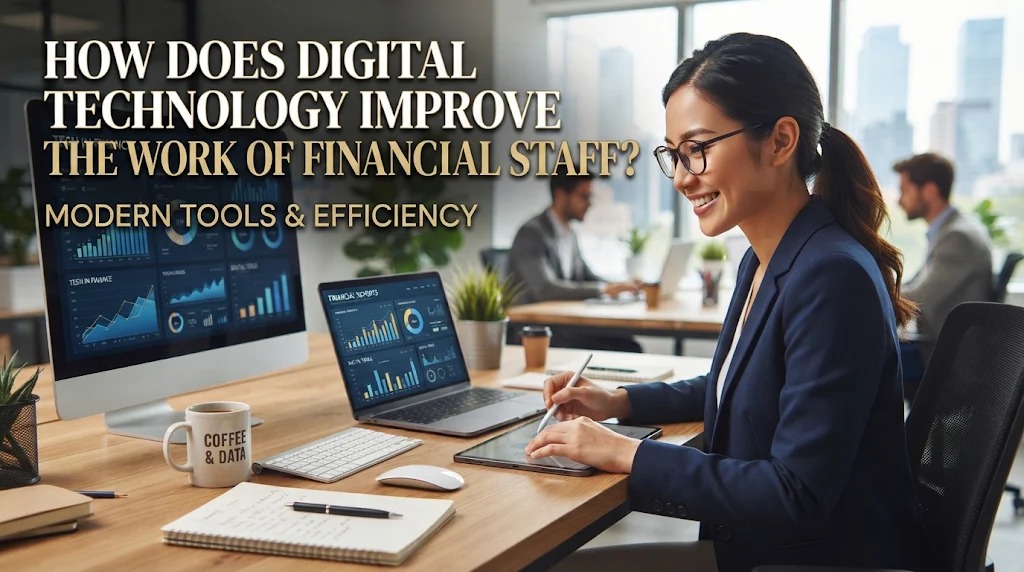
Digital technology has significantly changed how financial staff perform their daily responsibilities in modern companies. Many financial activities that previously required manual calculations, paper documents, and lengthy administrative processes can now be completed using digital systems. These developments help employees manage financial information more quickly, accurately, and efficiently.
Financial staff are responsible for recording transactions, monitoring expenses, preparing financial reports, managing payments, and supporting company financial decisions. With the help of digital technology, these responsibilities can be completed through integrated applications and automated processes. Digital transformation in finance also allows companies to improve productivity, reduce operational costs, and maintain better control over financial activities.
AUTOMATING FINANCIAL RECORDING AND DAILY TASKS
One of the main benefits of digital technology is the automation of routine financial activities. Financial staff can use accounting software to record transactions, organize invoices, calculate expenses, and update financial balances. These systems reduce the need to enter the same information repeatedly and help employees complete administrative tasks more efficiently.
For example, when a company receives customer payments, financial software can record the transaction and update the relevant account information. Some systems can also generate invoices, calculate taxes based on configured rules, and send payment reminders automatically. These features help reduce repetitive work and allow financial staff to focus on more important responsibilities.
Automation can also minimize human errors caused by manual calculations or repeated data entry. However, employees must still review transaction information and ensure that automated processes are configured correctly. Financial process automation is most effective when supported by accurate data and appropriate supervision.
IMPROVING THE ACCURACY OF FINANCIAL DATA
Accuracy is essential in financial management because incorrect information can affect company reports and business decisions. Digital technology helps improve accuracy by providing standardized recording procedures, automatic calculations, and organized transaction histories. These features make it easier for financial staff to identify differences and correct errors.
Accounting applications can also connect related financial activities within one system. For example, information from sales transactions may be connected to customer balances and revenue records. This integration reduces the possibility of inconsistent information being recorded across different documents.
Financial staff can use digital verification tools to compare transaction records with bank statements and supporting documents. Some systems also provide notifications when unusual transactions or incomplete information are detected. Nevertheless, employees must continue checking important financial data because software cannot always recognize incorrect information entered by users.
Accurate financial data provides a reliable foundation for preparing financial statements, monitoring business performance, and evaluating company expenses. By combining digital systems with careful verification, financial staff can maintain better financial records.
MAKING FINANCIAL REPORTING FASTER AND MORE EFFICIENT
Preparing financial reports is another responsibility that has become easier through digital technology. In traditional processes, employees often needed to collect information from multiple documents and calculate financial figures manually. This approach could take considerable time, especially when dealing with large amounts of transaction data.
Modern accounting software can collect financial information and generate reports based on recorded transactions. Financial staff can prepare income statements, balance sheets, cash flow statements, and expense summaries more efficiently. These reports can also be updated when new transactions are entered into the system.
Microsoft Excel remains an important tool for financial reporting. Employees can use formulas, charts, filters, and PivotTables to organize financial data and present information clearly. More advanced financial systems can also provide customized reports that help management examine specific business activities.
Faster reporting allows management to access financial information when making important decisions. However, financial staff must verify the figures and supporting documents before submitting any report. Efficient financial reporting requires both suitable technology and responsible human supervision.
SUPPORTING CASH FLOW AND BUDGET MANAGEMENT
Digital technology helps financial staff monitor company income and expenses more systematically. Through financial management applications, employees can track incoming payments, outgoing transactions, outstanding invoices, and available cash balances. This information helps companies understand their current financial position.
Digital systems can also support cash flow forecasting by organizing historical transaction data and estimating future financial movements. Financial staff can use this information to identify possible cash shortages and prepare suitable financial plans. For example, they may discover that several large supplier payments are due before expected customer payments arrive.
In budget management, digital tools make it easier to compare actual expenses with approved budget allocations. Financial staff can monitor spending across departments and identify expenses that exceed planned limits. Some applications also provide notifications when spending approaches or exceeds an assigned budget.
Cash flow monitoring and budget tracking help companies use their financial resources more responsibly. With timely information, financial staff can provide better recommendations and help management avoid unnecessary financial risks.
STRENGTHENING FINANCIAL SECURITY AND DOCUMENT MANAGEMENT
Financial information contains sensitive details about company operations, employees, customers, and business transactions. Therefore, protecting financial data is an important responsibility for financial staff. Digital technology provides several security features that help companies control access to confidential information.
For example, financial systems can use passwords, user permissions, multi-factor authentication, and activity logs. These features help ensure that only authorized employees can access specific financial records. Activity logs can also help companies review who made changes to particular documents or transactions.
Digital document management also improves the organization of financial records. Instead of storing every document in physical folders, companies can use secure digital storage systems to organize invoices, receipts, payment confirmations, and financial reports. Documents can be categorized by date, transaction type, and department, making them easier to retrieve when needed.
However, storing information digitally also creates security risks, including unauthorized access, phishing attacks, and data loss. Financial staff must follow company security policies, use secure systems, and maintain appropriate backups. Data protection and digital document management are essential for maintaining financial confidentiality and business continuity.
DEVELOPING FINANCIAL ANALYSIS AND PROFESSIONAL COMPETENCIES
Digital technology does not only improve administrative work but also helps financial staff develop stronger analytical abilities. Modern financial systems can organize large amounts of data and present information through charts, dashboards, and performance indicators. These features make it easier to identify financial trends and understand changes in business performance.
For example, financial staff can analyze monthly expenses to determine which operational activities require the largest amount of money. They can also examine revenue patterns, customer payment behavior, and differences between budget estimates and actual results. This information can support management when evaluating business strategies.
Some companies also use artificial intelligence and data analytics to assist with financial forecasting, transaction classification, and the detection of unusual activities. These technologies can provide useful insights, but their results still require human evaluation. Financial staff must understand the information and consider business conditions before making recommendations.
As digital financial systems continue to develop, employees need to improve their technical knowledge and professional competencies. Learning accounting software, spreadsheet applications, data analysis, and cybersecurity practices can increase their workplace value. Digital skills and analytical thinking are increasingly important for financial staff who want to remain competitive in the modern business environment.
CONCLUSION
Digital technology improves the work of financial staff by automating routine tasks, increasing data accuracy, accelerating financial reporting, and supporting cash flow and budget management. It also helps companies organize financial documents, protect confidential information, and analyze business performance more effectively.
However, technology must be supported by human supervision, professional judgment, and responsible data management. Financial staff need to continue developing their digital competencies to adapt to changing workplace requirements. Automation, accuracy, data security, and financial analysis are important elements of modern financial work. By using digital technology effectively, financial staff can contribute to better financial management and long-term company growth.
Recent Posts

How Does Technology Make Daily Evaluation... 21.11.2026/56 View

Apa Strategi Menghadapi Kesenjangan antara Kompetensi... 21.11.2026/58 View

Mengapa Inventaris Aset Penting bagi Kelancaran... 21.11.2026/52 View

When Should Musicians Join a Record... 21.11.2026/53 View

Daily Evaluation or Daily Planning Which... 21.11.2026/60 View
