

How Does Digital Technology Support Modern Learning Research?
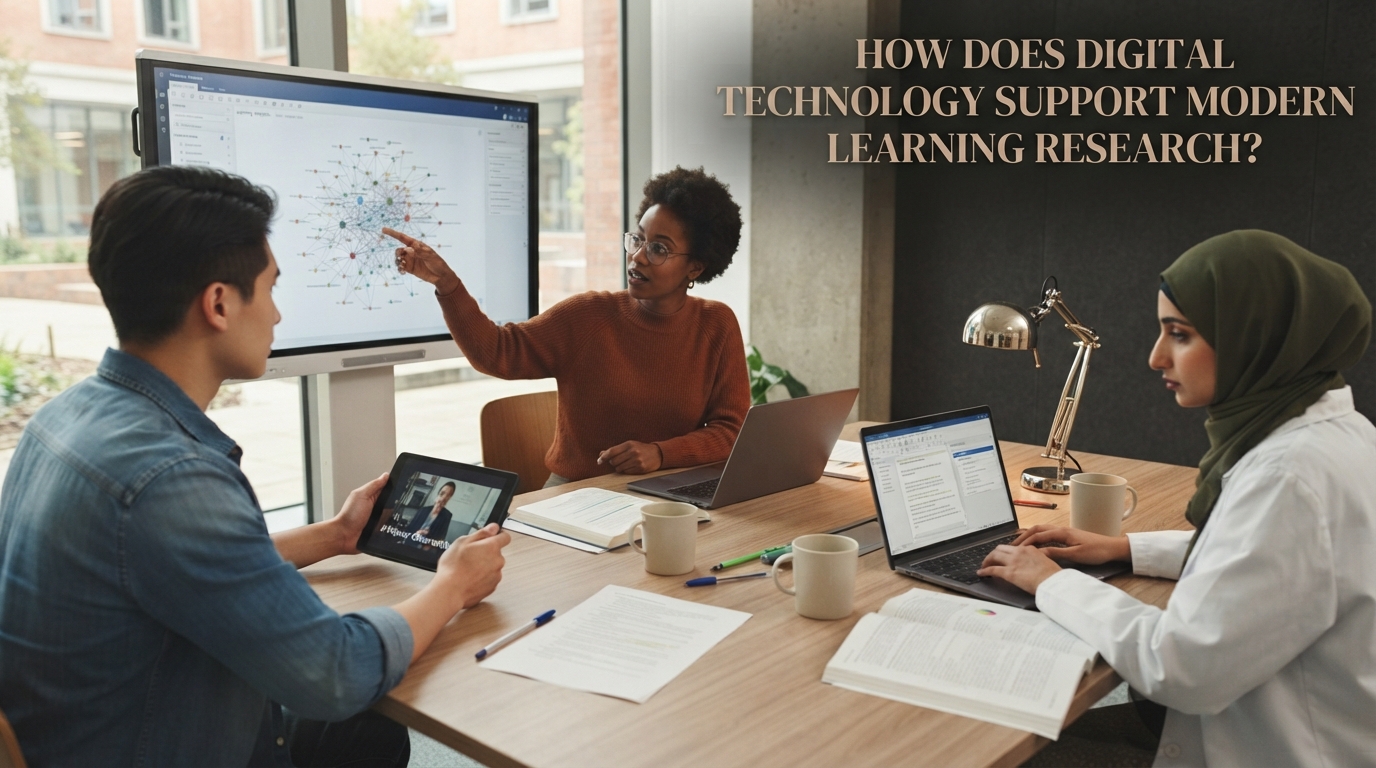
Digital technology has become an important part of modern education, including the way researchers study teaching and learning processes. It provides tools that make it easier to collect information, analyze data, communicate with participants, and share research findings. Through digital platforms, researchers can examine learning activities in classrooms, online courses, and other educational environments. Technology also helps teachers understand students' needs and evaluate the effectiveness of different teaching methods. By using digital tools appropriately, modern learning research can become more efficient, accurate, and relevant to educational development.
THE ROLE OF DIGITAL TECHNOLOGY IN LEARNING RESEARCH
Digital technology supports learning research by providing access to various tools and educational resources. Researchers can use computers, tablets, online platforms, and specialized software to investigate how students learn. These tools make it possible to collect information from different locations without always meeting participants directly. Digital technology also helps researchers organize large amounts of information more systematically. As a result, research activities can become more practical and flexible.
Technology also expands the types of learning activities that researchers can examine. They can study online discussions, digital assignments, virtual classrooms, and interactive learning applications. Digital learning environments provide new opportunities to understand student participation and learning behavior. Researchers can compare different learning approaches and identify factors that influence educational outcomes. This information can help schools and universities develop more effective learning strategies.
MAKING DATA COLLECTION FASTER AND EASIER
One major benefit of digital technology is its ability to simplify research data collection. Researchers can distribute online questionnaires, conduct virtual interviews, and collect responses through digital forms. These methods reduce the need for printed documents and manual data entry. They also make it easier to reach participants from different schools, universities, or regions. This is especially useful when research involves a large number of students or teachers.
Digital tools can also help researchers collect learning data from educational platforms. For example, a learning management system may provide information about assignment submissions, quiz results, and student participation. However, researchers must understand what the data actually represents before drawing conclusions. Accurate data collection requires clear procedures, suitable instruments, and appropriate participant consent. Digital convenience should always be supported by responsible research practices.
IMPROVING DATA ANALYSIS AND RESEARCH ACCURACY
Digital technology helps researchers process and analyze information more efficiently. Spreadsheet applications and statistical software can organize numerical data, calculate results, and identify patterns. Researchers can use these tools to examine examination scores, attendance records, survey responses, and other educational measurements. Some qualitative analysis programs also help organize interview transcripts and identify repeated themes. These capabilities can reduce manual work and make complex information easier to interpret.
However, technology does not automatically guarantee accurate research results. Researchers still need to check the quality of their data, select suitable analytical methods, and interpret findings carefully. Incorrect data entry or unsuitable statistical procedures can produce misleading conclusions. Human judgment and research expertise remain essential throughout the analysis process. When digital tools are used correctly, they can strengthen the consistency and efficiency of research.
SUPPORTING ONLINE LEARNING OBSERVATION
Digital platforms allow researchers to observe learning activities in virtual environments. They can examine online classroom discussions, student responses, assignment activities, and interactions between teachers and learners. Video conferencing platforms may also support remote observations when participants provide the necessary permission. This makes it possible to study learning experiences beyond traditional physical classrooms. Researchers can better understand how students participate in digital education.
Online observation can also reveal challenges that may not appear in face-to-face learning. For instance, researchers may investigate whether students actively participate in virtual discussions or experience difficulties accessing learning materials. They can examine how teachers use digital resources to explain lessons and provide feedback. Nevertheless, online behavior must be interpreted carefully, because activity records do not always show whether students fully understand the material. Combining observation with interviews or assessments can provide a more complete picture.
EXPANDING ACCESS TO EDUCATIONAL INFORMATION
The internet gives researchers access to a wide range of educational information and academic publications. Online libraries, academic databases, digital journals, and institutional repositories make it easier to find previous studies. Researchers can compare existing findings, identify research gaps, and develop stronger theoretical backgrounds. These resources also help students and teachers understand developments in education. Access to reliable information can improve the quality of research planning.
Digital resources also support collaboration between researchers from different institutions and countries. They can exchange documents, discuss findings, and work on research projects through online communication platforms. However, not all information available on the internet is reliable. Researchers should prioritize credible academic sources, check publication details, and evaluate the quality of the evidence. Responsible information selection helps prevent inaccurate claims and weak research conclusions.
USING ARTIFICIAL INTELLIGENCE IN LEARNING RESEARCH
Artificial intelligence (AI) offers additional opportunities to support modern learning research. AI-powered tools can assist with organizing information, identifying patterns, processing text, and preparing initial summaries of research materials. Some educational platforms use AI to analyze learning activities and provide personalized feedback. Researchers can study how these systems influence student engagement, learning progress, and academic performance. This creates new possibilities for understanding technology-based education.
Despite its benefits, AI must be used carefully in research activities. AI-generated information can contain errors, incomplete explanations, or biased results. Researchers should verify important information using reliable sources and remain responsible for their conclusions. Data privacy, transparency, and academic integrity must also be considered when using AI tools. AI should support human research skills rather than replace critical thinking and professional judgment.
ENCOURAGING COLLABORATION AND RESEARCH COMMUNICATION
Digital technology makes collaboration easier by connecting researchers, teachers, and students through online platforms. Shared documents, video meetings, and project management tools allow research teams to work together even when they are in different locations. Team members can exchange ideas, review documents, and monitor project progress more efficiently. This is particularly helpful for research involving several institutions or different areas of expertise. Better communication can support a more organized research process.
Technology also makes it easier to share research findings with wider audiences. Researchers can publish articles in online journals, present results through webinars, or create digital educational materials. These activities help teachers and educational institutions learn from research findings and consider how to apply them. Effective research communication allows valuable knowledge to reach people who can use it to improve education. However, researchers should choose appropriate publication channels and communicate results accurately.
ADDRESSING PRIVACY AND ETHICAL CHALLENGES
Although digital technology provides many benefits, it also creates challenges related to research ethics. Educational data may contain personal information, academic records, or details about students' online activities. If this information is not protected, participants may face privacy risks. Researchers must obtain appropriate permission, explain how data will be used, and follow relevant institutional rules. Extra care is necessary when research involves children or other participants who require additional protection.
Researchers should also consider cybersecurity and responsible data storage. Password protection, restricted access, and secure storage systems can help reduce the risk of unauthorized access. Digital research tools should be selected based on their reliability and suitability for the study. Privacy protection and informed consent are essential parts of responsible learning research. Technology should improve research quality without compromising participants' rights and safety.
CONCLUSION
Digital technology supports modern learning research by making data collection, analysis, observation, collaboration, and information sharing more accessible and efficient. It also creates opportunities to study online learning environments and the use of artificial intelligence in education. However, researchers must use digital tools responsibly by checking data accuracy, protecting privacy, and following research ethics. Technology is most effective when combined with human expertise, critical thinking, and appropriate research methods. Through this balanced approach, digital technology can help researchers develop useful findings and support better learning experiences in modern education.
Recent Posts

How Does Technology Make Daily Evaluation... 21.11.2026/62 View

Apa Strategi Menghadapi Kesenjangan antara Kompetensi... 21.11.2026/63 View

Mengapa Inventaris Aset Penting bagi Kelancaran... 21.11.2026/59 View

When Should Musicians Join a Record... 21.11.2026/58 View

Daily Evaluation or Daily Planning Which... 21.11.2026/66 View
