

How Does Digital Technology Support the Development of Scientific Literacy?
UNDERSTANDING DIGITAL TECHNOLOGY AND SCIENTIFIC LITERACY
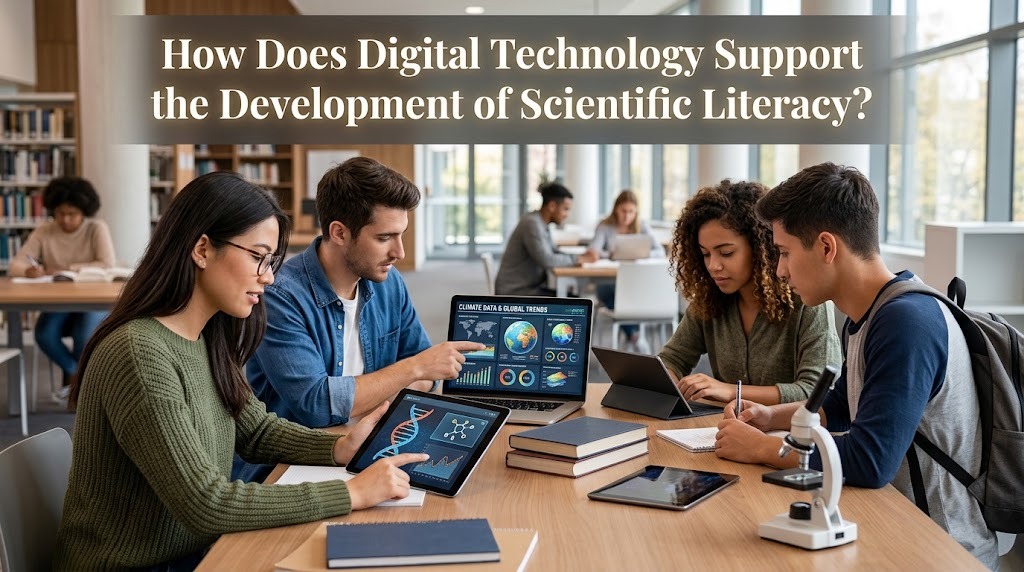
Digital technology has changed the way students and the public access, study, and share scientific information. Scientific literacy involves the ability to understand scientific concepts, evaluate evidence, and apply scientific knowledge to different situations. Through digital platforms, people can access scientific articles, educational videos, digital books, simulations, and online learning resources more easily. These resources can make scientific topics more accessible and engaging. However, users still need the ability to evaluate information because not every digital source is reliable.
Digital technology can also support independent learning. Students can search for explanations when they do not understand a scientific concept and explore additional examples beyond classroom materials. Interactive resources allow them to learn at their own pace and revisit difficult topics. This can encourage curiosity, active learning, and scientific inquiry when digital tools are used appropriately.
PROVIDING ACCESS TO SCIENTIFIC INFORMATION
One major benefit of digital technology is its ability to provide quick access to a wide range of scientific information. Students can find educational resources from universities, research organizations, libraries, and other credible institutions. Digital databases can also provide access to research findings that may be difficult to obtain through traditional learning materials. This allows students to explore scientific topics from different perspectives. Easy access to information can support deeper understanding when students know how to select appropriate sources.
Digital resources can present information in different formats, including text, images, graphs, videos, and interactive content. These formats can help explain complex scientific ideas more clearly. For example, an animation can show a process that is difficult to observe directly, while an interactive graph can help students understand changes in scientific data. Combining different formats can make learning more engaging. It can also help students connect scientific concepts with visual and practical examples.
USING DIGITAL SIMULATIONS AND INTERACTIVE LEARNING
Digital simulations allow students to explore scientific processes in a controlled virtual environment. They can change variables, observe possible results, and compare different outcomes. This approach can help students understand cause and effect relationships without always requiring physical laboratory equipment. Simulations can be particularly useful for concepts that are difficult, expensive, or unsafe to demonstrate directly. Students can repeat activities and examine results at their own pace.
Interactive learning tools can also encourage students to become more involved in the learning process. Instead of only reading an explanation, students can test ideas, interpret results, and solve problems using digital activities. Teachers can use these tools to complement classroom instruction and provide additional opportunities for practice. When combined with discussion and reflection, digital activities can strengthen students' understanding of scientific concepts.
DEVELOPING INFORMATION AND CRITICAL THINKING SKILLS
Digital technology provides a large amount of information, but the availability of information does not automatically make it accurate. Students need information literacy and critical thinking skills to determine whether digital scientific content is trustworthy. They can examine the author or organization, publication date, supporting evidence, and references used by a source. Comparing information from several credible sources can also help students identify inconsistencies or unsupported claims. These skills are essential when scientific information is shared rapidly online.
Students should also learn to recognize misinformation and misleading scientific claims. Some online content may use scientific terms or attractive graphics without providing adequate evidence. Scientific literacy helps students question such claims and investigate the information before accepting or sharing it. Teachers can support this process by giving students activities that involve checking sources and evaluating evidence. This turns digital technology into a tool for developing responsible information habits.
SUPPORTING COLLABORATION AND SCIENTIFIC INQUIRY
Digital technology can make collaboration easier by allowing students to work together on scientific projects even when they are not in the same place. They can use digital documents, discussion platforms, presentations, and other tools to share observations, analyze data, and communicate findings. Collaborative activities can expose students to different ideas and encourage them to explain their reasoning. This can strengthen both scientific understanding and communication skills.
Technology can also support the stages of scientific inquiry, such as asking questions, collecting information, analyzing data, and communicating conclusions. Students can use digital tools to organize observations or create graphs that represent their findings. They can then discuss the results and consider whether their evidence supports their conclusions. These activities provide practical opportunities to apply scientific thinking in meaningful situations.
CONCLUSION
Digital technology supports the development of scientific literacy by providing access to scientific information, interactive learning resources, digital simulations, and opportunities for collaboration. It can help students understand complex concepts through videos, visualizations, simulations, and data based activities. At the same time, students need critical thinking and information literacy to distinguish reliable scientific information from misleading content. When used responsibly, digital technology can encourage curiosity, scientific inquiry, and evidence based reasoning. Therefore, combining digital tools with effective science education can help learners develop stronger scientific literacy skills.
Recent Posts

Bagaimana Sistem SKS pada Program Kuliah... 22.11.2026/33 View

How Does Technology Make Daily Evaluation... 21.11.2026/67 View

Apa Strategi Menghadapi Kesenjangan antara Kompetensi... 21.11.2026/67 View

Mengapa Inventaris Aset Penting bagi Kelancaran... 21.11.2026/65 View

When Should Musicians Join a Record... 21.11.2026/66 View
