

How Does Exercise Help Develop Bodily Kinesthetic Intelligence?
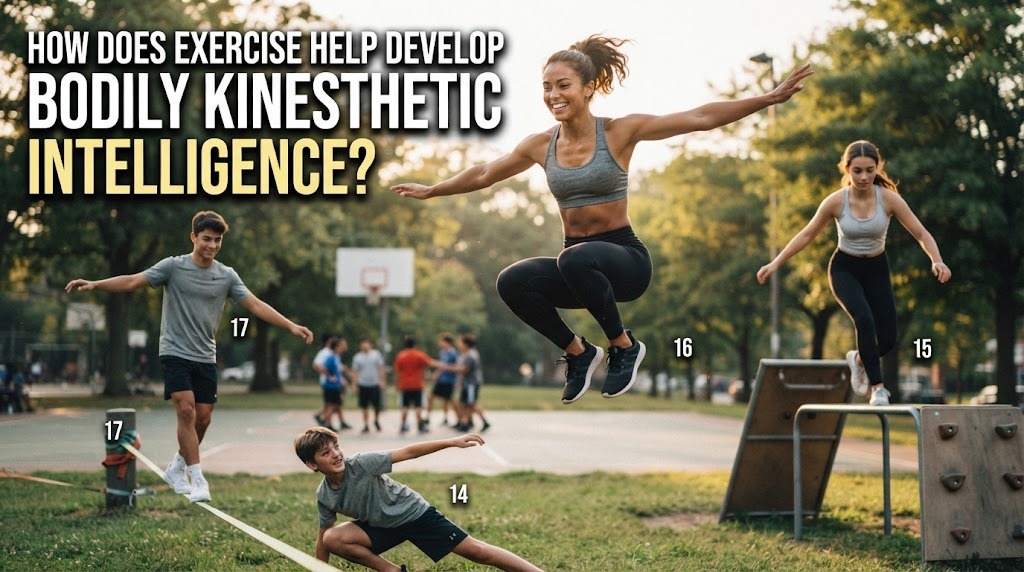
Exercise is a practical way to develop bodily kinesthetic intelligence, which involves using the body with coordination, control, and awareness. Regular movement gives people opportunities to practice how their muscles, joints, eyes, and brain work together. Activities such as running, swimming, dancing, and sports can train different physical abilities. With consistent practice, exercise can help people become more comfortable and precise when performing physical tasks.
EXERCISE IMPROVES BODY COORDINATION
Exercise requires different parts of the body to work together in an organized way. For example, catching a ball requires the eyes to follow its movement while the hands and body prepare to respond. Repeated practice can improve hand eye coordination, timing, balance, and movement control. These abilities are important components of bodily kinesthetic intelligence. Better coordination can make physical movements more accurate and efficient.
Different exercises provide different coordination challenges. Swimming involves coordinating the arms, legs, breathing, and body position, while cycling requires balance and controlled leg movement. Activities that involve several body parts can give the brain repeated opportunities to organize movement. Regular coordination practice can gradually improve physical control.
EXERCISE INCREASES BODY AWARENESS
Body awareness means understanding where the body is positioned and how it moves during an activity. Exercise encourages people to pay attention to posture, balance, direction, speed, and muscle movement. For example, strength exercises require people to control their body position while performing specific movements. Stretching activities can also help people notice flexibility and tension in different parts of the body.
As people become more aware of their movements, they can make adjustments more easily. They may notice that their posture is incorrect or that a movement needs to be slower or more controlled. This awareness can support better technique and safer exercise. Understanding how the body moves is an important part of kinesthetic development.
EXERCISE DEVELOPS MOTOR SKILLS
Motor skills allow people to control and coordinate body movements. Exercise can help develop both gross motor skills and fine motor control, depending on the activity. Running, jumping, and throwing involve larger body movements, while activities using sports equipment can require more precise hand movements. Repeated practice gives the body opportunities to improve these skills.
Motor skills generally develop gradually through experience and practice. Beginners may need more time to perform a movement correctly, while repeated practice can make the action feel more natural. Coaches, teachers, or instructors can provide useful feedback during this process. Consistent practice helps improve control, accuracy, and movement efficiency.
EXERCISE STRENGTHENS BALANCE AND AGILITY
Balance is an important physical ability because it helps people maintain control while standing or moving. Exercises such as yoga, gymnastics, skating, and certain sports can challenge the body to maintain stability. Agility involves changing direction or position efficiently, which can be practiced through running drills and other movement activities. Both abilities contribute to effective body control.
Improving balance and agility can help people respond more effectively to physical situations. For example, a player may need to change direction quickly during a game, while a dancer may need to maintain balance during a complex movement. These activities require quick adjustments and controlled body movements. Regular practice can make such responses more coordinated.
EXERCISE SUPPORTS LEARNING THROUGH MOVEMENT
People with strong bodily kinesthetic abilities may find physical experience useful when learning new skills. Exercise provides opportunities to learn by doing, repeating, and adjusting movements. Instead of simply thinking about how a movement should be performed, individuals can physically experience the movement themselves. This direct experience can help them understand timing, position, and technique.
For example, a beginner learning a sport usually needs to practice the movement rather than only read about it. Demonstrations followed by physical practice can make instructions easier to understand. This approach can also help people recognize mistakes and correct them. Active participation creates valuable physical learning experiences.
EXERCISE IMPROVES TIMING AND REACTION
Many exercises and sports require people to respond quickly to changes. A tennis player may need to react to the direction of a ball, while a basketball player must respond to teammates and opponents. These activities train the connection between visual information, decision making, and physical movement. Over time, repeated practice can help people respond more efficiently.
Reaction skills are not developed equally through every exercise. Activities involving changing directions, catching, throwing, or responding to signals may provide more opportunities to practice quick reactions. The goal is not simply to move faster but to respond with appropriate control. Good timing combines awareness, coordination, and accurate movement.
EXERCISE BUILDS CONFIDENCE AND DISCIPLINE
Exercise can contribute to bodily kinesthetic development while also supporting confidence. Learning a new physical skill and seeing gradual improvement can create a sense of achievement and motivation. Regular exercise also teaches discipline because physical abilities often require repeated practice. These experiences can encourage people to remain patient when progress takes time.
A supportive environment can make this process more positive. People can focus on personal progress instead of constantly comparing their abilities with others. Setting realistic goals can help them recognize small improvements. Confidence and discipline can encourage continued practice, which is important for developing physical skills.
CONSISTENT PRACTICE SUPPORTS LONG TERM DEVELOPMENT
Exercise is more likely to support physical development when it is performed regularly and safely. People can choose activities that match their interests, fitness level, and experience. They should learn appropriate techniques, use suitable equipment, and allow enough time for rest and recovery. Gradually increasing activity can help the body adapt without unnecessary strain.
There is no need to master difficult movements immediately. Starting with simple exercises and building skills over time can make development more manageable. Consistency is more important than perfection when improving bodily kinesthetic abilities. A balanced exercise routine can provide repeated opportunities to strengthen coordination, body awareness, and motor skills.
CONCLUSION
Exercise can help develop bodily kinesthetic intelligence by giving people regular opportunities to move, coordinate, practice, and understand their bodies. It can improve body coordination, motor skills, balance, agility, reaction, timing, and body awareness. Exercise can also encourage learning through movement while building confidence and discipline. Different activities develop different physical abilities, so people can choose exercises based on their interests and goals. With consistent practice, safe techniques, and adequate recovery, exercise can become an effective part of developing bodily kinesthetic intelligence.
Recent Posts

Bagaimana Sistem SKS pada Program Kuliah... 22.11.2026/28 View

How Does Technology Make Daily Evaluation... 21.11.2026/65 View

Apa Strategi Menghadapi Kesenjangan antara Kompetensi... 21.11.2026/65 View

Mengapa Inventaris Aset Penting bagi Kelancaran... 21.11.2026/62 View

When Should Musicians Join a Record... 21.11.2026/63 View
