

How Does Global Warming Affect Agriculture and Food Security?
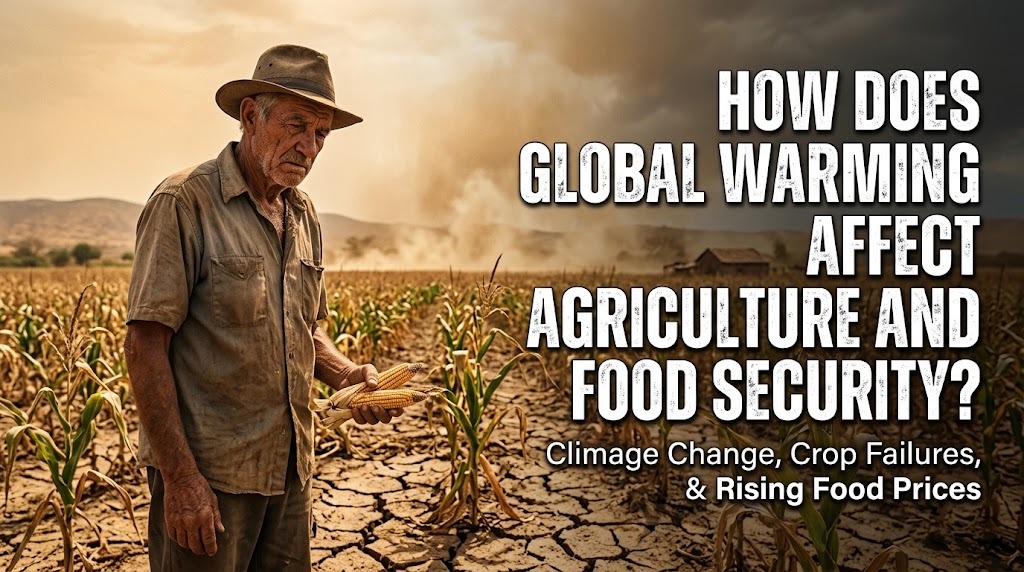
Agriculture plays an essential role in providing food, creating jobs, and supporting economies around the world. However, global warming is changing the environmental conditions that farmers depend on, including temperature, rainfall, soil moisture, and seasonal patterns. These changes can affect crop growth, livestock health, agricultural productivity, and the stability of food supplies.
The effects of global warming on agriculture and food security vary by region, crop type, and farming method. Some areas may temporarily benefit from longer growing seasons, while others face increasing risks from heat stress, droughts, floods, and changing pest populations. Understanding these challenges is important for developing sustainable agricultural practices and protecting access to sufficient, nutritious food.
RISING TEMPERATURES CAN REDUCE CROP PRODUCTIVITY
One of the main ways global warming affects agriculture is by exposing crops to higher temperatures. Plants require suitable temperature ranges to grow, flower, and produce seeds or fruits. When temperatures exceed these ranges, important processes such as photosynthesis and pollination can become less effective, potentially reducing crop yields.
Extreme heat during sensitive growth stages can be especially damaging to crops such as wheat, rice, and maize. High temperatures can also increase water loss from soil and plants, making it more difficult for crops to obtain enough moisture. Although some crops may benefit from warmer conditions in certain regions, these advantages can be limited by heat stress and other climate-related pressures. As warming continues, farmers may need to adjust planting dates, select suitable crop varieties, or change farming practices to maintain productivity.
CHANGING RAINFALL PATTERNS INCREASE WATER CHALLENGES
Agriculture depends heavily on the availability of water, whether from rainfall, rivers, reservoirs, or groundwater. Climate change and rainfall patterns are connected because global warming influences evaporation and the movement of moisture through the atmosphere. Some regions may experience longer dry periods, while others face heavier rainfall and an increased risk of flooding.
Drought can reduce soil moisture and limit the water available for irrigation, causing crops to grow poorly or fail. On the other hand, excessive rainfall can damage plants, erode fertile soil, and delay planting or harvesting. Flooding may also damage farm equipment and contaminate agricultural land. Improving irrigation efficiency, collecting rainwater where appropriate, and protecting soil moisture can help farmers manage changing water conditions.
LIVESTOCK AND FISHERIES FACE CLIMATE-RELATED PRESSURES
Global warming can also affect livestock production. High temperatures may cause heat stress in cattle, poultry, and other farm animals, potentially reducing feed intake, growth, milk production, and reproductive performance. Animals may also require more water and shaded areas to remain healthy during hot periods.
Fisheries and aquaculture can face different challenges as water temperatures rise. Warmer water holds less dissolved oxygen under similar conditions, while changes in ocean conditions can affect fish distribution, breeding, and food availability. These changes may influence the livelihoods of fishing communities and the supply of fish for human consumption. Appropriate animal care, improved farm management, and sustainable fisheries practices can help reduce some risks, although adaptation options vary across regions and species.
GLOBAL WARMING CAN DISRUPT FOOD SUPPLY AND PRICES
When climate-related events damage crops, livestock, or fisheries, the effects can extend beyond farms. Reduced harvests in important agricultural regions can limit the supply of certain foods and contribute to price increases, particularly when several producing regions experience difficulties at the same time. Transportation and storage systems may also be disrupted by floods, heatwaves, and other extreme weather events.
Food security means that people have reliable access to sufficient, safe, and nutritious food. Global warming can threaten this security by affecting food availability, affordability, and stability. However, food prices and shortages are also influenced by factors such as conflict, trade policies, production costs, and economic conditions. Strengthening food storage, improving transport infrastructure, reducing food waste, and supporting diverse agricultural systems can help communities become more resilient to climate-related disruptions.
CLIMATE-SMART AGRICULTURE CAN HELP REDUCE RISKS
Farmers and communities can adapt to climate challenges through climate-smart agriculture, which aims to improve productivity, strengthen resilience, and reduce greenhouse gas emissions where possible. Practical measures include using crop varieties suited to local conditions, adjusting planting schedules, improving irrigation, and protecting soil through practices such as mulching and cover cropping.
Agroforestry, which combines trees with crops or livestock systems, can provide shade, protect soil, and support biodiversity when designed appropriately. Precision agriculture can also help farmers use water, fertilizers, and other resources more efficiently. Governments and agricultural organizations can contribute by providing reliable climate information, training, research, and access to suitable technologies. These measures cannot eliminate every climate risk, but they can help protect agricultural production and support long-term food security.
CONCLUSION
Global warming affects agriculture and food security by increasing heat stress, changing rainfall patterns, threatening livestock and fisheries, and creating disruptions in food production and distribution. These effects can reduce agricultural productivity and make access to affordable, nutritious food more difficult in vulnerable regions. The severity of the impacts depends on local climate conditions, farming systems, infrastructure, and the ability of communities to adapt.
Reducing greenhouse gas emissions and improving agricultural resilience are both important for addressing these challenges. Farmers can adopt water-efficient methods and climate-resilient practices, while governments and businesses can support research, infrastructure, and sustainable food systems. By combining climate action with agricultural adaptation, communities can better protect food supplies and strengthen their ability to respond to future environmental changes.
Recent Posts

Bagaimana Sistem SKS pada Program Kuliah... 22.11.2026/49 View

How Does Technology Make Daily Evaluation... 21.11.2026/76 View

Apa Strategi Menghadapi Kesenjangan antara Kompetensi... 21.11.2026/78 View

Mengapa Inventaris Aset Penting bagi Kelancaran... 21.11.2026/74 View

When Should Musicians Join a Record... 21.11.2026/78 View
