

How Does Global Warming Affect Animals and Plants?
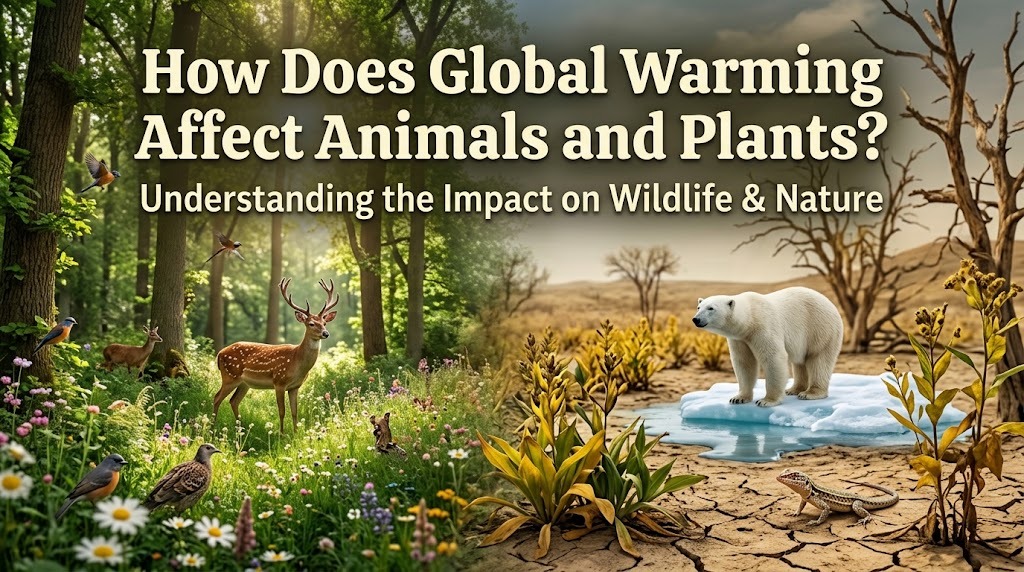
Global warming is an environmental problem that affects ecosystems across the world. As the Earth's average temperature increases, animals and plants face changes in their habitats, food availability, water supply, and seasonal patterns. These changes can make it more difficult for some species to survive, reproduce, and maintain stable populations.
The effects of global warming on animals and plants vary depending on the species and the environment in which they live. Some organisms can adapt to changing conditions, while others may struggle when temperatures rise too quickly or their habitats become unsuitable. Understanding these impacts is important for protecting biodiversity and maintaining the balance of natural ecosystems.
RISING TEMPERATURES CHANGE NATURAL HABITATS
One of the most direct effects of global warming on wildlife and plants is the change in temperature within their natural habitats. Many species are adapted to specific environmental conditions, including particular temperature ranges, humidity levels, and seasonal patterns. When these conditions change, animals and plants may need to adjust their behavior, growth, or distribution to survive.
Some animals move toward cooler regions, such as higher elevations or areas closer to the poles. Plants may also shift their growing ranges when temperatures and rainfall patterns change. However, not every species can move easily because of geographical barriers, habitat fragmentation, or limited access to suitable environments. These challenges can increase the risk of population decline, especially for species with narrow habitat requirements.
GLOBAL WARMING DISRUPTS FOOD CHAINS AND ECOSYSTEMS
Food chains depend on relationships between plants, herbivores, predators, and other organisms. Global warming can disrupt these relationships by changing the availability and timing of food resources. For example, warmer conditions may cause plants to flower earlier, while animals that depend on those plants may not adjust their seasonal activities at the same rate.
When the timing of food availability changes, some animals may have difficulty finding enough resources during important periods of growth or reproduction. Predators can also be affected if the populations of their prey decline or move to different areas. These disruptions may influence several species within the same ecosystem. Over time, continued changes can reduce ecosystem stability and affect the natural processes that support biodiversity.
CHANGING WEATHER PATTERNS AFFECT PLANT GROWTH
Plants require suitable temperatures, sunlight, water, and soil conditions to grow. Global warming and plant growth are closely connected because rising temperatures can influence photosynthesis, flowering, seed production, and water use. In some environments, a longer growing season may benefit certain plants, but excessive heat can damage tissues and reduce growth.
Changes in rainfall can create additional challenges. Prolonged droughts may limit the water available to plants, while intense rainfall and flooding can damage roots, erode soil, and reduce access to oxygen. Heat stress can also make plants more vulnerable to pests and diseases. When these conditions persist, forests, grasslands, and agricultural systems may experience reduced productivity and changes in species composition.
RISING TEMPERATURES THREATEN ANIMAL SURVIVAL AND REPRODUCTION
Animals are affected by changes in temperature because their bodies and behaviors depend on environmental conditions. Some species rely on specific temperatures for breeding, nesting, migration, or the development of their young. When these conditions change, reproductive success and survival rates may be affected.
For example, sea turtles depend on suitable beach conditions for nesting, and temperature can influence the sex of their hatchlings. Rising temperatures can therefore alter the balance between male and female hatchlings in some turtle populations. Polar animals may also lose access to important habitats as sea ice declines, while freshwater species can face warmer water and lower oxygen levels. These examples show how climate change affects animal populations through several interconnected processes.
HABITAT LOSS INCREASES THE RISK OF BIODIVERSITY DECLINE
Many species already face pressure from deforestation, pollution, habitat fragmentation, and other human activities. Global warming and habitat loss can intensify these existing threats by making remaining habitats less suitable for survival. When species lose access to food, water, shelter, or breeding areas, their populations may become smaller and more vulnerable to other environmental pressures.
Some species may adapt or move to new areas, but others have limited options. Organisms that live on mountain peaks, in isolated ecosystems, or in specialized habitats may have difficulty finding suitable conditions elsewhere. If populations decline significantly, local extinctions can occur, and the loss of species may affect other organisms that depend on them. Protecting natural habitats, restoring degraded ecosystems, and reducing greenhouse gas emissions can help limit these risks and support biodiversity conservation.
CONCLUSION
Global warming affects animals and plants by changing natural habitats, disrupting food chains, influencing plant growth, and creating challenges for animal survival and reproduction. Rising temperatures, shifting rainfall patterns, and habitat changes can make it difficult for some species to adapt, particularly when environmental conditions change rapidly. These impacts can also affect the stability of ecosystems and the benefits that nature provides to people.
Reducing greenhouse gas emissions and protecting natural habitats are important steps toward limiting the effects of global warming on biodiversity. Communities can contribute by conserving forests, restoring green spaces, reducing waste, and supporting responsible environmental practices. Although individual species respond differently to climate change, coordinated conservation efforts can help protect ecosystems and improve their ability to withstand future environmental changes.
Recent Posts

Bagaimana Sistem SKS pada Program Kuliah... 22.11.2026/48 View

How Does Technology Make Daily Evaluation... 21.11.2026/76 View

Apa Strategi Menghadapi Kesenjangan antara Kompetensi... 21.11.2026/78 View

Mengapa Inventaris Aset Penting bagi Kelancaran... 21.11.2026/73 View

When Should Musicians Join a Record... 21.11.2026/78 View
