

How Does Global Warming Affect Climate Change?
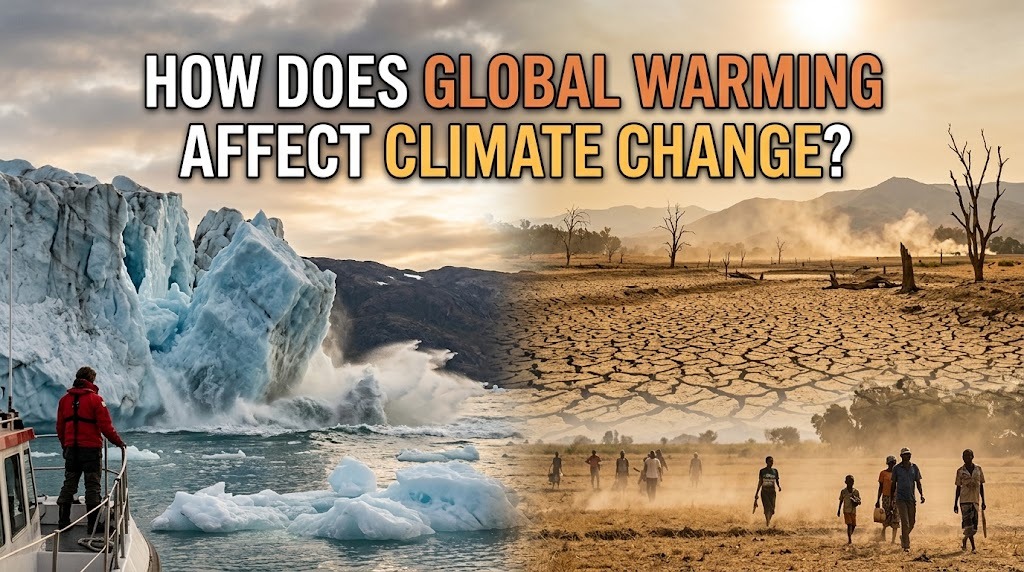
Global warming and climate change are closely connected environmental issues that affect the planet's atmosphere, oceans, land, and living organisms. Global warming refers specifically to the long-term increase in Earth's average temperature, while climate change describes broader, long-term changes in climate patterns. These changes can include shifts in rainfall, rising sea levels, melting ice, and changes in the frequency or intensity of certain extreme weather events.
Understanding how global warming affects climate change helps explain why increasing greenhouse gas emissions are a major concern. As the planet warms, energy moves through the climate system differently, influencing weather patterns and natural processes. The effects vary across regions, but continued warming can create serious challenges for ecosystems, human health, agriculture, and communities.
GLOBAL WARMING INCREASES THE EARTH'S AVERAGE TEMPERATURE
One of the most direct effects of global warming on climate change is the increase in Earth's average surface temperature. Human activities, especially burning fossil fuels and clearing forests, release greenhouse gases such as carbon dioxide and methane. These gases absorb and re-emit heat that would otherwise escape into space, strengthening the natural greenhouse effect.
As greenhouse gas concentrations rise, more energy remains within the Earth system, causing long-term warming. Higher average temperatures can influence the atmosphere, oceans, and land surfaces. Although temperatures may fluctuate from one year to another because of natural variations, the long-term trend shows that the planet is warming. This increase in temperature creates conditions that can contribute to other changes in the global climate system.
GLOBAL WARMING CHANGES RAINFALL AND WEATHER PATTERNS
Climate change and rainfall patterns are connected because warmer air can hold more water vapor. When suitable weather conditions occur, this additional moisture can contribute to heavier rainfall. As a result, some regions may experience more intense downpours and an increased risk of flooding, especially where drainage systems and infrastructure are not prepared for heavy precipitation.
At the same time, global warming can increase evaporation from soil and water surfaces, contributing to drought conditions in some areas. Changes in atmospheric circulation can also shift where and when rainfall occurs. These effects are not uniform, so some regions may become wetter while others experience reduced rainfall or longer dry periods. Such changes can influence agriculture, water supplies, and the natural environments that depend on seasonal weather patterns.
GLOBAL WARMING CONTRIBUTES TO MELTING ICE AND RISING SEA LEVELS
Rising temperatures cause glaciers and other land-based ice masses to lose ice in many parts of the world. Warmer air and ocean water also contribute to the loss of ice sheets in Greenland and Antarctica. In addition, warmer ocean water expands, a process known as thermal expansion, which contributes to rising sea levels.
These changes create risks for coastal communities and low-lying islands. Higher sea levels can increase coastal flooding, accelerate erosion, and allow saltwater to enter some freshwater sources. Melting land ice can also affect ecosystems and the seasonal availability of water in regions that depend on glacier melt. Although floating sea ice melting does not directly raise sea levels significantly, its loss can influence how much sunlight the Earth reflects, potentially reinforcing warming.
GLOBAL WARMING INCREASES CERTAIN EXTREME WEATHER RISKS
Global warming affects extreme weather by changing the conditions in which weather events develop. Heatwaves have become more frequent and intense in many regions, while higher temperatures can increase the likelihood of severe heat stress for people, animals, and plants. A warmer atmosphere can also contribute to heavier rainfall when moisture and weather conditions combine.
The relationship between global warming and individual storms, droughts, or wildfires is more complex. Climate change can influence the likelihood or severity of some events, but local weather patterns and other factors also play important roles. For example, hotter and drier conditions can increase wildfire risk in certain regions, although ignition sources and land management matter as well. Understanding these connections helps communities improve early-warning systems, disaster preparation, and infrastructure planning.
GLOBAL WARMING DISRUPTS ECOSYSTEMS AND HUMAN ACTIVITIES
Changes in temperature and rainfall can affect ecosystems and biodiversity. Some species depend on specific climatic conditions, seasonal cycles, or habitats to survive. When those conditions change too quickly, animals may need to move, plants may struggle to grow, and food chains may become disrupted. Warmer oceans can also contribute to coral bleaching, threatening marine habitats and the species that depend on them.
Human activities are affected in similar ways. Agriculture may become less predictable as heat, drought, and heavy rainfall influence crop production. Water supplies can become less reliable in some regions, while extreme heat can affect human health and workplace safety. Coastal infrastructure and communities may face greater risks from rising sea levels and flooding. Reducing emissions and improving adaptation measures can help limit these effects and strengthen the resilience of both natural and human systems.
CONCLUSION
Global warming affects climate change by increasing Earth's average temperature and influencing rainfall, ice loss, sea levels, extreme weather risks, and ecosystems. These changes are interconnected because the atmosphere, oceans, land, and living organisms form a climate system in which changes in one part can influence other parts. The effects differ across regions, but continued warming increases the risks faced by people and the environment.
Limiting global warming requires reducing greenhouse gas emissions through cleaner energy, improved energy efficiency, forest protection, and more sustainable production and consumption. At the same time, communities need to prepare for climate impacts that are already occurring or expected to continue. By combining emissions reduction with practical adaptation, societies can reduce future risks and protect the natural systems that support life on Earth.
Recent Posts

Bagaimana Sistem SKS pada Program Kuliah... 22.11.2026/47 View

How Does Technology Make Daily Evaluation... 21.11.2026/75 View

Apa Strategi Menghadapi Kesenjangan antara Kompetensi... 21.11.2026/77 View

Mengapa Inventaris Aset Penting bagi Kelancaran... 21.11.2026/73 View

When Should Musicians Join a Record... 21.11.2026/77 View
