

How Does Global Warming Affect Coastal Communities?
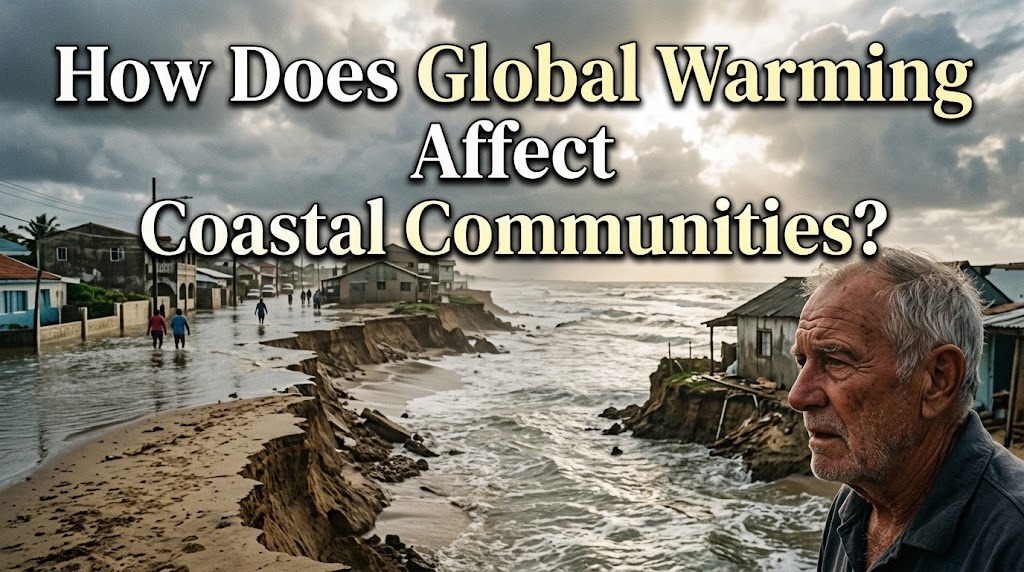
Coastal communities depend on the ocean for food, employment, transportation, tourism, and other economic activities. However, global warming is changing coastal environments through rising sea levels, warmer ocean temperatures, and shifts in weather patterns. These changes can threaten homes, infrastructure, livelihoods, and the natural ecosystems that protect coastal areas.
The effects of global warming on coastal communities vary depending on geography, population density, local infrastructure, and the ability to prepare for environmental changes. Low-lying islands, coastal cities, and fishing villages may face different challenges, but many share concerns about flooding, erosion, saltwater intrusion, and extreme weather. Understanding these risks can help communities develop strategies to protect people, livelihoods, and coastal environments.
RISING SEA LEVELS INCREASE COASTAL FLOODING
One of the most significant effects of global warming on coastal communities is rising sea levels. As ocean water warms, it expands, while melting glaciers and land-based ice sheets add more water to the oceans. These processes contribute to a gradual rise in global sea levels.
Higher sea levels can make coastal flooding more frequent, especially during high tides and storms. Roads, homes, ports, drainage systems, and other infrastructure may become more vulnerable to seawater entering normally dry areas. In low-lying locations, repeated flooding can disrupt daily activities and increase the cost of maintaining buildings and public facilities. Although the level of risk differs from place to place, rising seas can make existing coastal hazards more damaging.
COASTAL EROSION AND HABITAT LOSS BECOME GREATER CONCERNS
Coastal erosion occurs when waves, currents, and other processes remove sand or soil from shorelines. Global warming and coastal erosion are connected partly because rising sea levels allow waves to reach farther inland and can increase the pressure on vulnerable coastlines. Strong storms and changes in wave conditions may add to these impacts in some areas.
Erosion can damage homes, roads, public spaces, and facilities located close to the shoreline. It can also affect beaches, wetlands, mangroves, and other natural habitats that provide shelter for wildlife. The extent of erosion depends on local geology, sediment movement, coastal development, and human activities such as sand extraction. Protecting natural coastal habitats and managing construction near vulnerable shorelines can help reduce some risks.
SALTWATER INTRUSION THREATENS FRESHWATER SUPPLIES
Many coastal communities rely on groundwater, rivers, and other freshwater sources for drinking, sanitation, farming, and daily activities. Rising sea levels can contribute to saltwater intrusion, a process in which seawater moves into freshwater aquifers or other freshwater systems. The risk can increase when groundwater is heavily extracted or when freshwater supplies are already limited.
Saltwater intrusion can make groundwater unsuitable for drinking or irrigation without appropriate treatment. It can also affect agricultural land by increasing soil salinity, which may reduce the growth of crops that are sensitive to salt. Communities may need to invest in improved water management, alternative water supplies, or treatment systems to maintain access to safe freshwater. Protecting groundwater and reducing unnecessary water extraction can help lower the risk in vulnerable locations.
FISHERIES AND COASTAL LIVELIHOODS FACE CHALLENGES
Many coastal residents depend on fishing, aquaculture, tourism, and other ocean-related activities for their income. Rising ocean temperatures and changes in marine ecosystems can affect fish distribution, breeding patterns, and food availability. These changes may influence the location and abundance of species that local fishing communities depend on.
Coastal infrastructure can also be damaged by flooding, storms, and erosion, affecting fishing boats, landing sites, markets, and tourism facilities. When catches decline or operating conditions become less predictable, households may experience reduced income and greater financial uncertainty. The effects differ between communities because they depend on local ecosystems, fishing practices, markets, and available resources. Supporting sustainable fisheries, diversifying livelihoods, and improving coastal infrastructure can help communities adapt to changing conditions.
COASTAL PLANNING AND CLIMATE ADAPTATION CAN REDUCE RISKS
Reducing the effects of global warming on coastal areas requires both climate action and local adaptation. Communities can improve drainage systems, strengthen suitable infrastructure, restore mangroves, and protect wetlands that help absorb wave energy and provide natural barriers. Early-warning systems and evacuation plans can also help protect residents when dangerous weather or flooding is expected.
Local governments can use coastal risk assessments to guide development away from highly vulnerable areas and identify locations that may need additional protection. In some places, carefully designed seawalls or other protective structures may be appropriate, while other locations may benefit more from restoring natural habitats or adjusting land use. Reducing greenhouse gas emissions remains essential for limiting future warming and sea level rise. Combining long-term emissions reductions with practical coastal planning can help protect communities and support more resilient development.
CONCLUSION
Global warming affects coastal communities through rising sea levels, coastal erosion, saltwater intrusion, and changes in marine ecosystems. These impacts can threaten homes, freshwater supplies, fisheries, tourism, and other important sources of income. The risks are particularly serious in low-lying areas and places where infrastructure and resources are limited.
Protecting coastal communities requires a combination of climate adaptation, environmental conservation, and greenhouse gas reduction. Restoring mangroves, improving drainage, strengthening early-warning systems, and managing coastal development can help reduce some risks. Through cooperation among residents, governments, scientists, and businesses, coastal areas can improve their ability to respond to environmental changes and protect their long-term livelihoods.
Recent Posts

Bagaimana Sistem SKS pada Program Kuliah... 22.11.2026/49 View

How Does Technology Make Daily Evaluation... 21.11.2026/76 View

Apa Strategi Menghadapi Kesenjangan antara Kompetensi... 21.11.2026/78 View

Mengapa Inventaris Aset Penting bagi Kelancaran... 21.11.2026/74 View

When Should Musicians Join a Record... 21.11.2026/78 View
