

How Does Global Warming Affect Extreme Weather in Indonesia?
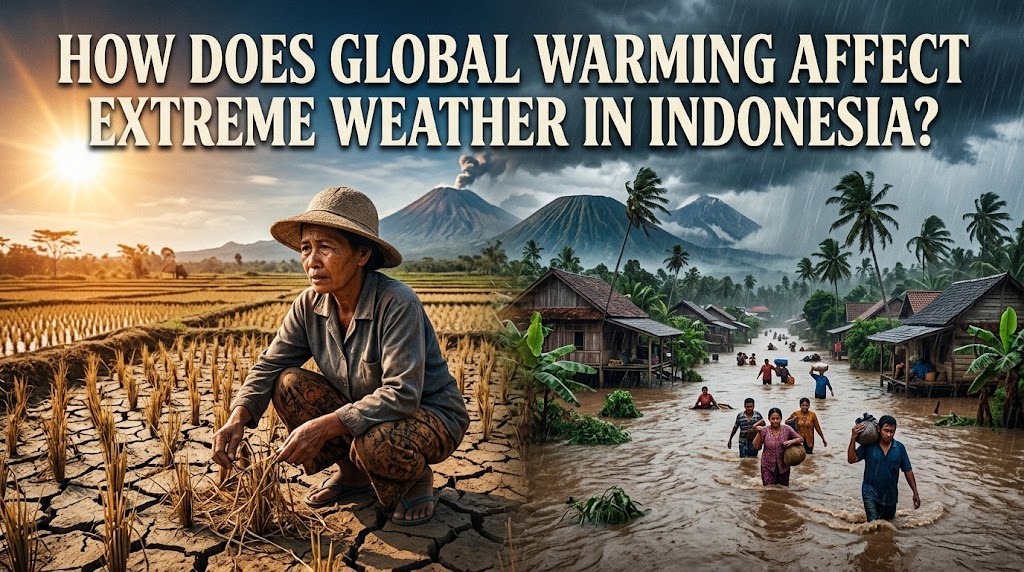
Indonesia is an archipelagic country with a tropical climate, making weather patterns an important part of everyday life. Changes in temperature, rainfall, and ocean conditions can affect agriculture, transportation, public health, and the environment. Global warming can influence these conditions by increasing average temperatures and changing aspects of the climate system that shape weather patterns.
In Indonesia, the effects may include more intense heat, changes in rainfall, increased risks of certain floods and droughts, and rising sea levels that worsen coastal flooding. However, not every extreme weather event is caused by global warming alone. Understanding how global warming affects extreme weather in Indonesia requires considering climate trends alongside natural climate variability, local geography, and human activities.
RISING TEMPERATURES INCREASE THE RISK OF EXTREME HEAT
One of the clearest effects of global warming in Indonesia is the increase in average temperatures. As the planet warms, hot days and warm nights can become more frequent or intense in many regions. High temperatures can make outdoor activities more difficult, particularly for people who work in agriculture, construction, transportation, and other jobs that require time outside.
Extreme heat can also increase the risk of dehydration and heat-related illness, especially among children, older adults, and people with existing health vulnerabilities. Cities may experience additional heat because buildings, roads, and other surfaces absorb and retain heat. Communities can reduce some of these risks by improving access to drinking water, increasing shade, maintaining green spaces, and providing heat-safety information. These measures support climate change adaptation while helping people manage increasingly hot conditions.
CHANGES IN RAINFALL CAN INCREASE FLOOD AND DROUGHT RISKS
Global warming can influence the water cycle because warmer air can hold more water vapor. When atmospheric conditions are suitable, this can contribute to heavier rainfall. In Indonesia, intense rainfall can increase the risk of flooding and landslides, particularly in areas with steep slopes, poor drainage, or extensive land development.
At the same time, some regions may experience longer dry periods or changes in the timing of seasonal rainfall. These conditions can contribute to drought and water shortages, especially when water storage and distribution systems are limited. Natural climate patterns, including El Niño and La Niña, also influence rainfall in Indonesia, so individual floods or droughts cannot automatically be attributed to global warming. Better drainage, watershed protection, water conservation, and reliable seasonal forecasts can help communities prepare for changing extreme rainfall patterns.
DRY CONDITIONS CAN INCREASE THE RISK OF FOREST AND LAND FIRES
Changes in rainfall and prolonged dry conditions can increase the risk of forest and land fires in Indonesia. When vegetation and peatlands become dry, fires may spread more easily, particularly when people use fire to clear land or when other ignition sources are present. Global warming can intensify fire-conducive conditions in some circumstances, although land management, human activities, and natural climate variability also play major roles.
Forest and peatland fires can release substantial amounts of carbon dioxide and other pollutants into the atmosphere. The resulting smoke can reduce air quality and affect people living far from the fire locations. Peatland fires are especially concerning because they can release carbon stored in organic soils. Protecting forests, restoring degraded peatlands, improving fire monitoring, and preventing unsafe land-clearing practices are important steps toward reducing fire risks and greenhouse gas emissions.
RISING SEA LEVELS INCREASE COASTAL WEATHER RISKS
Indonesia has extensive coastlines and many communities that depend on coastal resources. As global temperatures rise, seawater expands as it warms, while melting land-based ice adds water to the oceans. These processes contribute to sea level rise, which can worsen coastal flooding and increase the reach of storm-driven seawater in vulnerable areas.
Coastal communities may face greater risks when high tides coincide with strong winds, heavy rainfall, or other unfavorable conditions. Sea level rise can also contribute to coastal erosion and saltwater intrusion into freshwater sources. The level of risk varies according to local geography, land subsidence, coastal ecosystems, and infrastructure. Protecting mangroves, improving coastal planning, maintaining drainage systems, and developing early warning systems can help reduce the impacts of coastal flooding in Indonesia.
IMPACTS ON AGRICULTURE, HEALTH, AND DAILY ACTIVITIES
Extreme weather influenced by a warming climate can affect important sectors of Indonesian society. Changes in rainfall and temperature can disrupt planting schedules, reduce crop productivity in some conditions, and increase pressure on irrigation systems. Farmers may need better seasonal forecasts, climate-resilient crop varieties, and more efficient water management to respond to changing conditions.
Public health can also be affected by extreme heat, flooding, drought, and smoke from fires. Floods may damage homes and infrastructure, disrupt transportation, and contaminate water supplies. Meanwhile, prolonged hot and dry periods can increase water demand and place additional pressure on electricity systems. These effects show why climate resilience in Indonesia requires cooperation among governments, communities, farmers, health services, and infrastructure providers. Preparing for climate risks can reduce disruption and help protect livelihoods.
CONCLUSION
Global warming affects extreme weather in Indonesia by increasing average temperatures and influencing rainfall patterns, fire-conducive conditions, and sea level rise. These changes can contribute to greater risks from extreme heat, heavy rainfall, flooding, drought, forest fires, and coastal inundation. However, the severity of each event also depends on natural climate variability, land use, local geography, and the condition of infrastructure.
Reducing greenhouse gas emissions remains essential for limiting further global warming, while adaptation measures can help communities manage the impacts already occurring. Protecting forests and mangroves, improving drainage, strengthening early warning systems, and supporting climate-resilient agriculture are practical steps. Through coordinated climate action in Indonesia, communities can become better prepared for extreme weather and protect people, ecosystems, and livelihoods.
Recent Posts

Bagaimana Sistem SKS pada Program Kuliah... 22.11.2026/49 View

How Does Technology Make Daily Evaluation... 21.11.2026/76 View

Apa Strategi Menghadapi Kesenjangan antara Kompetensi... 21.11.2026/78 View

Mengapa Inventaris Aset Penting bagi Kelancaran... 21.11.2026/74 View

When Should Musicians Join a Record... 21.11.2026/78 View
