

How Does Global Warming Affect Human Health?
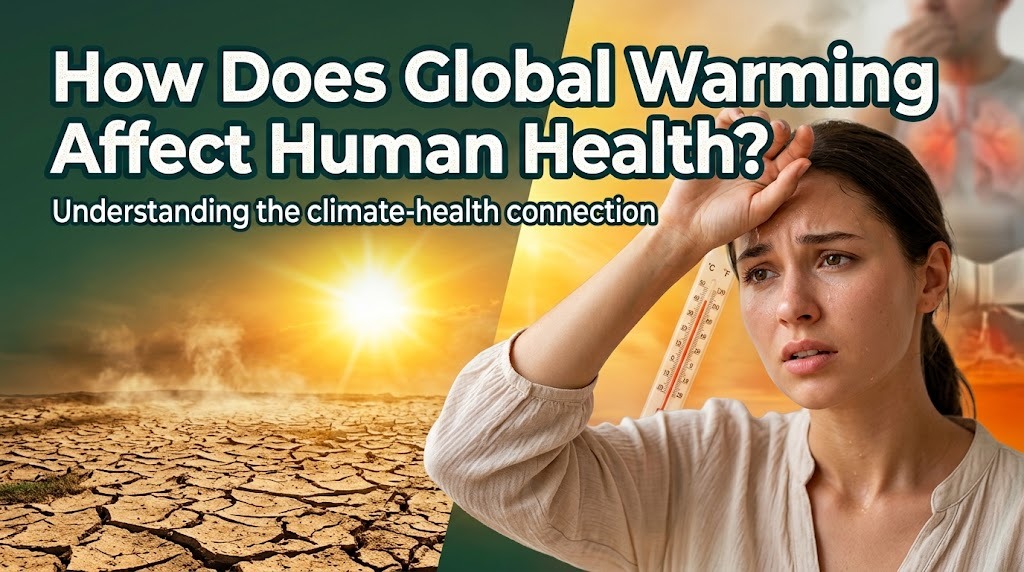
Global warming is an increase in the Earth's average surface temperature, mainly caused by greenhouse gas emissions from human activities. Its effects extend beyond rising temperatures and environmental changes because they can also influence human health. Extreme heat, changing rainfall patterns, air pollution, and shifts in the distribution of disease-carrying organisms can create additional health risks for communities around the world.
The effects of global warming on human health vary depending on location, age, existing health conditions, living environments, and access to healthcare. Some people face greater risks because they work outdoors, live in areas vulnerable to flooding, or have limited access to clean water and cooling facilities. Understanding these impacts can help individuals and communities prepare for climate-related health challenges.
EXTREME HEAT INCREASES THE RISK OF HEAT-RELATED ILLNESS
One of the most direct effects of global warming on health is the increased risk associated with extreme heat. High temperatures can make it difficult for the body to maintain a stable internal temperature, particularly during prolonged exposure or strenuous physical activity. Heat-related conditions can include dehydration, heat exhaustion, and heatstroke, which requires urgent medical attention.
People who work outdoors, older adults, young children, and individuals with certain health conditions may face greater risks during hot weather. High temperatures can also make sleeping difficult and increase discomfort during everyday activities. Staying hydrated, limiting strenuous activity during the hottest hours, wearing suitable clothing, and seeking cooler environments can help reduce exposure. Communities can further protect residents through heat warnings, shaded public spaces, and access to cooling facilities as part of climate-related health protection.
AIR POLLUTION AND RESPIRATORY PROBLEMS CAN BECOME MORE CONCERNING
Global warming can affect air quality through several pathways. Hot conditions can contribute to the formation of ground-level ozone under suitable atmospheric conditions, while drought and certain weather patterns can increase the risk of wildfires. Smoke from forest and land fires contains fine particles and other pollutants that can irritate the respiratory system and worsen existing health problems.
People exposed to polluted air may experience coughing, breathing difficulties, or worsening asthma symptoms. Long-term exposure to certain air pollutants is also associated with cardiovascular and respiratory diseases. However, air pollution has multiple sources, including traffic, industry, and household fuel use, so not every pollution event is caused by global warming. Reducing emissions, monitoring air quality, preventing land fires, and following public health guidance during smoke events can help protect respiratory health.
CHANGES IN RAINFALL CAN AFFECT CLEAN WATER AND FOOD SECURITY
Global warming can influence rainfall patterns and increase the risks of certain floods and droughts. Flooding may contaminate drinking water sources with sewage, chemicals, and other harmful substances. Drought can reduce water availability and make it more difficult for communities to maintain safe water supplies and sanitation.
Changes in temperature and rainfall can also affect agriculture, livestock, fisheries, and food distribution. These effects may reduce the availability or affordability of nutritious food in some locations, particularly when extreme weather damages crops or disrupts transportation. The severity of these impacts depends on local conditions, infrastructure, and the ability of communities to respond. Protecting water sources, improving sanitation, strengthening food systems, and preparing for extreme weather can help reduce climate-related health risks.
WARMER CONDITIONS CAN INFLUENCE THE SPREAD OF SOME DISEASES
Temperature, rainfall, and humidity can influence the survival and activity of mosquitoes, ticks, and other organisms that transmit infectious diseases. As climate conditions change, some areas may become more suitable for certain disease-carrying species. This can alter the geographic distribution or seasonal patterns of diseases such as dengue and malaria, depending on local environmental and public health conditions.
However, warmer temperatures do not automatically mean that every disease will spread more widely. Disease transmission also depends on factors such as sanitation, housing, human behavior, mosquito control, healthcare access, and public health programs. In Indonesia, where dengue is already a public health concern, reducing mosquito breeding sites and maintaining effective disease surveillance remain important. Climate-informed monitoring and community prevention efforts can support infectious disease prevention as environmental conditions change.
VULNERABLE COMMUNITIES MAY FACE GREATER HEALTH RISKS
The health effects of global warming are not distributed equally. Communities with limited access to healthcare, clean water, reliable electricity, safe housing, or emergency services may find it harder to cope with extreme heat, flooding, and other climate-related hazards. People living in coastal areas, flood-prone neighborhoods, and regions affected by drought may also face additional challenges.
Climate-related events can disrupt medical services, damage health facilities, interrupt medication supplies, and force families to leave their homes. These disruptions may affect both physical health and emotional well-being. Governments and communities can reduce risks by strengthening healthcare systems, improving early warning services, protecting essential infrastructure, and providing support to people who need it most. Building climate-resilient healthcare systems is an important step toward protecting public health as the climate continues to change.
CONCLUSION
Global warming affects human health through extreme heat, air pollution, changing water availability, food insecurity, and shifts in conditions that influence certain infectious diseases. These impacts can increase health risks and place additional pressure on healthcare systems, particularly in communities already facing environmental or economic challenges.
Reducing greenhouse gas emissions can help limit future warming, while adaptation measures can protect people from climate-related hazards that are already occurring. Access to clean water, safe housing, healthcare, reliable health information, and effective early warning systems can make communities more resilient. Through coordinated climate action and public health protection, societies can reduce risks and better safeguard human health.
Recent Posts

Bagaimana Sistem SKS pada Program Kuliah... 22.11.2026/49 View

How Does Technology Make Daily Evaluation... 21.11.2026/77 View

Apa Strategi Menghadapi Kesenjangan antara Kompetensi... 21.11.2026/78 View

Mengapa Inventaris Aset Penting bagi Kelancaran... 21.11.2026/74 View

When Should Musicians Join a Record... 21.11.2026/79 View
