

How Does Global Warming Affect Marine Ecosystems?
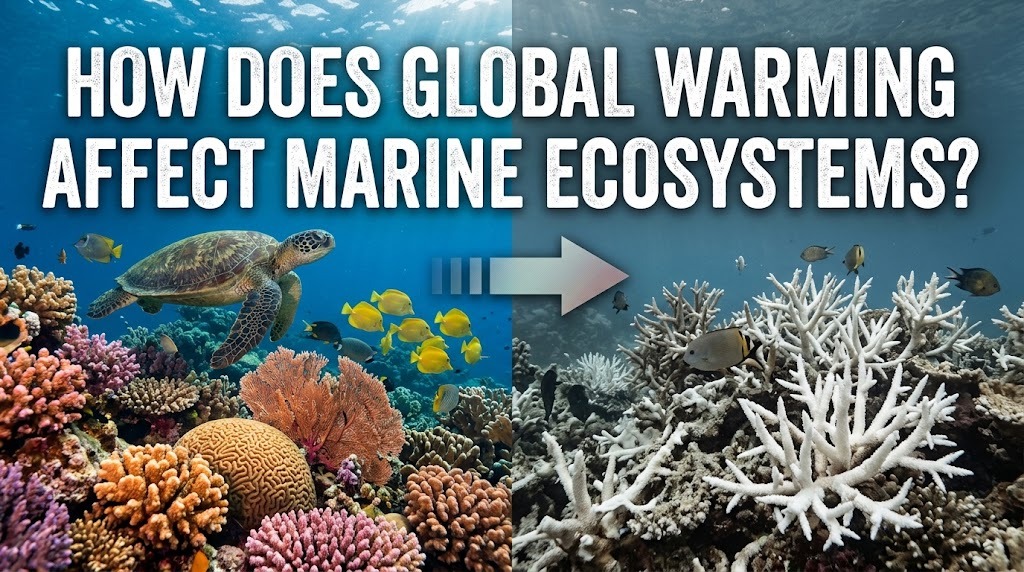
Global warming affects marine ecosystems by increasing ocean temperatures and changing the physical and chemical conditions that support marine life. Oceans absorb much of the excess heat trapped by greenhouse gases, making them an important part of the Earth's climate system. However, continued warming can place pressure on coral reefs, fish populations, marine mammals, and other organisms that depend on stable ocean conditions.
Understanding how global warming affects marine ecosystems is important because oceans provide food, support biodiversity, regulate the climate, and sustain the livelihoods of millions of people. Rising temperatures can cause coral bleaching, alter the distribution of marine species, and contribute to sea-level rise. When these changes occur together with pollution, overfishing, and habitat destruction, marine environments can become even more vulnerable.
RISING OCEAN TEMPERATURES STRESS MARINE LIFE
One of the most direct effects of global warming on marine ecosystems is the increase in ocean temperatures. Many marine organisms depend on particular temperature ranges to grow, reproduce, and survive. When water becomes too warm, these organisms may experience heat stress, changes in metabolism, or reduced reproductive success.
Some marine species respond by moving toward cooler waters, including deeper areas or higher latitudes. However, not every species can move easily, especially those that depend on specific habitats or have limited mobility. Changes in the distribution of fish and other organisms can also affect fishing activities and the communities that rely on them. As ocean temperatures continue to rise, protecting marine habitats and reducing greenhouse gas emissions become increasingly important.
CORAL BLEACHING DAMAGES CORAL REEF ECOSYSTEMS
Coral reefs are among the marine ecosystems most vulnerable to unusually warm ocean temperatures. Corals live in a close relationship with microscopic algae that provide much of their energy through photosynthesis and contribute to their color. When corals experience excessive heat stress, they may expel these algae, causing a condition known as coral bleaching.
Bleached corals are not necessarily dead, but they become more vulnerable when stressful conditions continue for too long. If temperatures return to suitable levels, some corals can recover. However, prolonged or repeated bleaching can lead to coral death and damage the reef structures that provide shelter and feeding areas for many marine species. Reef degradation can affect biodiversity, tourism, fisheries, and coastal protection. Reducing warming and limiting local pressures, such as pollution and destructive fishing, can improve the chances of reef recovery.
OCEAN ACIDIFICATION CREATES ADDITIONAL CHALLENGES
Although ocean acidification is not caused by warming alone, it is closely connected to the increase in atmospheric carbon dioxide that drives modern global warming. Oceans absorb a portion of human-produced carbon dioxide, which reacts with seawater and changes its chemistry. This process lowers ocean pH and reduces the availability of carbonate ions that many marine organisms need to build shells and skeletons.
Ocean acidification can affect corals, shellfish, and certain plankton species. When these organisms struggle to build or maintain their structures, the effects can spread through marine food webs. Some species may also experience changes in growth, development, or survival. The severity of these impacts varies among organisms and locations, but continued carbon dioxide emissions can increase the pressure on marine ecosystems. Reducing emissions helps address both global warming and the ongoing chemical changes occurring in the oceans.
CHANGES IN MARINE FOOD CHAINS AND SPECIES DISTRIBUTION
Marine ecosystems depend on complex marine food chains that connect microscopic organisms, small fish, larger predators, and other marine life. Warming can affect the growth and distribution of plankton, which forms the foundation of many ocean food webs. If the timing or location of plankton production changes, fish and other animals that depend on it may struggle to find enough food.
As ocean conditions change, some species move toward cooler waters while others remain in their existing habitats. These movements can alter interactions between predators and prey, affect competition for food, and change the composition of marine communities. Fisheries may also experience changes in the location and availability of commercially important species. Monitoring ocean conditions, managing fisheries sustainably, and protecting connected habitats can help reduce pressure on marine populations as the climate changes.
RISING SEA LEVELS THREATEN COASTAL AND MARINE HABITATS
Global warming contributes to rising sea levels through the expansion of warming seawater and the melting of land-based glaciers and ice sheets. Higher sea levels can increase coastal flooding, erosion, and saltwater intrusion in some areas. These changes can threaten habitats such as mangroves, salt marshes, seagrass meadows, and coastal wetlands.
These habitats provide important nursery areas for fish, store carbon, support biodiversity, and help protect coastlines from waves and erosion. When coastal development prevents habitats from moving inland as sea levels rise, some ecosystems may lose area or become fragmented. Coastal communities may also experience damage to infrastructure and disruptions to fishing and tourism. Protecting coastal habitats, restoring mangroves, and planning development carefully can help improve resilience to rising sea levels.
CONCLUSION
Global warming affects marine ecosystems by raising ocean temperatures, increasing the risk of coral bleaching, changing marine species distribution, and contributing to rising sea levels. The increase in atmospheric carbon dioxide also causes ocean acidification, creating additional challenges for organisms that build shells or skeletons. These effects can disrupt food webs, reduce biodiversity, and affect fisheries and coastal communities.
Protecting marine ecosystems requires both reducing greenhouse gas emissions and managing local environmental pressures. Expanding clean energy, conserving coral reefs, restoring mangroves, reducing pollution, and managing fisheries responsibly can help marine environments become more resilient. Although oceans face significant challenges from global warming, coordinated conservation and climate action can help protect marine life and the communities that depend on healthy seas.
Recent Posts

Bagaimana Sistem SKS pada Program Kuliah... 22.11.2026/48 View

How Does Technology Make Daily Evaluation... 21.11.2026/76 View

Apa Strategi Menghadapi Kesenjangan antara Kompetensi... 21.11.2026/78 View

Mengapa Inventaris Aset Penting bagi Kelancaran... 21.11.2026/73 View

When Should Musicians Join a Record... 21.11.2026/78 View
