

How Does Globalization Affect the Survival of Regional Languages?
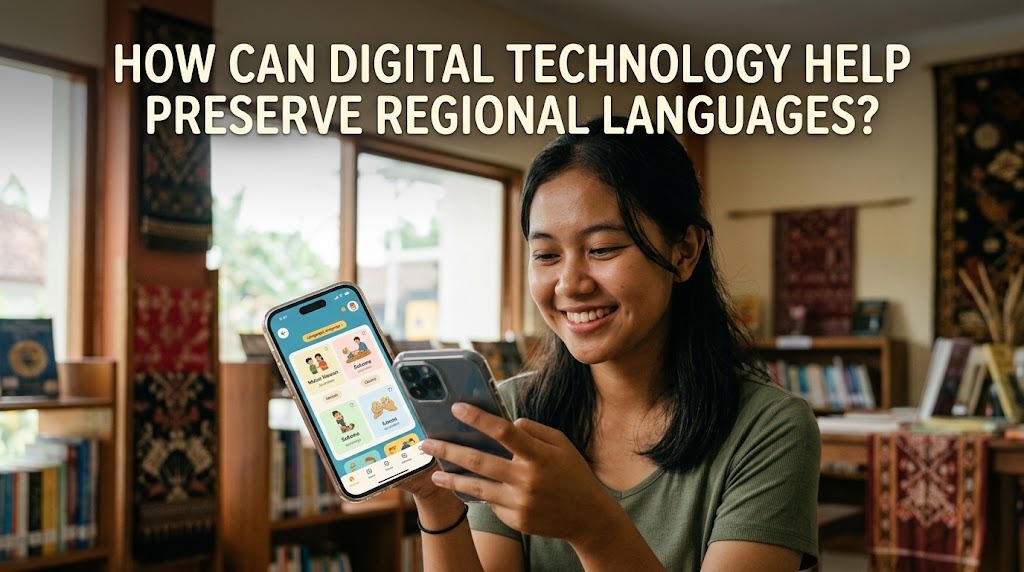
Globalization has changed how people communicate, learn, work, and interact with different cultures around the world. In Indonesia, these changes have influenced the use of regional languages, which represent the cultural identity and heritage of local communities. Many people now communicate more frequently in Indonesian and international languages, especially in education, business, entertainment, and digital environments. Although globalization creates opportunities to learn new languages and connect with people worldwide, it can also reduce the everyday use of some regional languages. Understanding how globalization affects the survival of regional languages is important for finding ways to preserve linguistic diversity while embracing modern developments.
THE DOMINANCE OF MAJOR LANGUAGES IN GLOBAL COMMUNICATION
Globalization increases the need for communication across regions and countries. Indonesian serves as a common language for people from different parts of Indonesia, while English is widely used in international business, higher education, science, and digital communication. These languages provide important advantages because they allow people to access information, pursue education, and participate in broader social and economic activities. However, their widespread use may reduce opportunities to practice regional languages in certain situations.
In some communities, young people gradually use Indonesian more frequently than their local languages because it is the language they encounter at school, university, and work. English may also become more prominent through entertainment, online games, social media, and international learning resources. When regional languages are used less often, speakers may gradually lose familiarity with certain words, expressions, and traditional forms of communication. Language survival depends partly on whether people continue using a language in everyday life. Maintaining regional languages alongside Indonesian and English can help communities benefit from globalization without abandoning their linguistic heritage.
THE INFLUENCE OF SOCIAL MEDIA AND DIGITAL ENTERTAINMENT
Social media has become an important part of how young people communicate and discover information. Platforms such as TikTok, Instagram, YouTube, and other digital services provide large amounts of content in Indonesian and English. Popular videos, music, online discussions, and entertainment trends often use these languages, exposing young people to them every day. As a result, some regional languages may receive less attention in the digital spaces where younger generations spend much of their time.
However, the influence of digital technology is not entirely negative. Social media can help regional-language speakers create videos, share traditional stories, teach vocabulary, and introduce local expressions to wider audiences. Digital creators can also produce podcasts, songs, short films, and educational content that make regional languages more appealing to younger users. Digital platforms can either contribute to language decline or support language revitalization, depending on how communities use them. Creating engaging local-language content can make regional languages more visible and encourage people to use them in contemporary settings.
CHANGES IN FAMILY COMMUNICATION AND CULTURAL TRANSMISSION
Globalization influences family lifestyles, communication habits, and expectations about education and employment. Some parents prefer speaking Indonesian with their children because they believe it will help them communicate confidently at school and in wider society. In multilingual households, Indonesian may also become the easiest shared language when family members come from different linguistic backgrounds. Although these choices can be practical, they may reduce children's opportunities to learn their regional languages naturally.
When children rarely hear or speak a regional language at home, they may understand only basic expressions or become unable to hold fluent conversations. This situation can create a gap between generations because grandparents may communicate more comfortably in a regional language than younger family members. Traditional stories, proverbs, and cultural knowledge may also become harder to pass down when the original language is no longer used. Families play a crucial role in intergenerational language transmission. Regular conversations, storytelling, traditional songs, and family activities can help children maintain their regional languages while learning Indonesian and other languages.
GLOBALIZATION AND THE DECLINE OF LOCAL CULTURAL PRACTICES
Globalization introduces people to new lifestyles, entertainment, and cultural influences from different parts of the world. These experiences can broaden perspectives and encourage cultural exchange, but they may also change how frequently people participate in local traditions. In some communities, traditional ceremonies, storytelling gatherings, and performances that use regional languages receive less attention from younger generations. When participation in these activities decreases, opportunities to hear and practice local languages may decline as well.
The relationship between language and culture is particularly important because many traditions contain expressions that have specific meanings within their communities. Certain ceremonial terms, traditional songs, and customary phrases may be difficult to translate without losing some of their cultural significance. When these practices become less common, the knowledge associated with them may also become less familiar. Nevertheless, globalization does not automatically destroy local culture. Communities can adapt traditions to modern conditions while preserving their original meanings, for example by organizing cultural festivals, documenting oral histories, and sharing traditional performances through digital platforms.
ECONOMIC OPPORTUNITIES AND LANGUAGE CHOICES
Economic globalization affects language choices because people often learn languages that provide access to employment, education, and business opportunities. Indonesian is important for communication across the country, while English can help people participate in international industries and access global information. In some circumstances, speakers may prioritize these languages because they believe they offer greater economic advantages. Regional languages may consequently receive less attention if they are viewed as having limited practical value outside the local community.
However, regional languages can also provide meaningful economic and social benefits. They are useful in community services, local businesses, cultural tourism, traditional arts, and communication with residents who prefer their mother tongue. People who understand regional languages may help visitors connect with local culture and support communication in culturally sensitive situations. Multilingual skills can be an advantage rather than a disadvantage. Encouraging the use of regional languages alongside Indonesian and English can help people develop broader communication abilities while maintaining connections with their communities.
STRATEGIES TO PROTECT REGIONAL LANGUAGES IN A GLOBALIZED WORLD
Protecting regional languages requires cooperation among families, schools, communities, researchers, and government institutions. Families can encourage children to speak their regional languages at home, while schools can introduce language lessons, traditional storytelling, and cultural projects. Community organizations can arrange local-language festivals, reading activities, and conversations between younger and older speakers. These activities provide opportunities to practice regional languages in meaningful social situations.
Digital technology can strengthen these efforts by making regional-language resources easier to access. Communities can develop digital dictionaries, record native speakers, publish online stories, and create educational videos for different age groups. Researchers and cultural institutions can document vocabulary, grammar, pronunciation, and oral traditions, particularly for languages with few remaining speakers. Long-term preservation requires both documentation and regular language use. By combining traditional learning methods with modern communication tools, communities can adapt to globalization without losing the languages that express their cultural identities.
CONCLUSION
Globalization affects the survival of regional languages through the growing dominance of major languages, digital entertainment, changing family habits, declining participation in some traditional practices, and economic pressures. These influences can reduce opportunities for younger generations to learn and use their local languages. However, globalization also provides new tools for recording, teaching, and promoting regional languages to wider audiences. Families, schools, communities, and governments can work together to encourage everyday use, create digital learning resources, and preserve traditional knowledge. Regional languages can survive in a globalized world when communities value them as living languages that remain useful in modern life. Maintaining regional languages alongside Indonesian and English supports both global communication and Indonesia's cultural diversity.
Recent Posts

Bagaimana Sistem SKS pada Program Kuliah... 22.11.2026/48 View

How Does Technology Make Daily Evaluation... 21.11.2026/76 View

Apa Strategi Menghadapi Kesenjangan antara Kompetensi... 21.11.2026/78 View

Mengapa Inventaris Aset Penting bagi Kelancaran... 21.11.2026/73 View

When Should Musicians Join a Record... 21.11.2026/78 View
