

How Does Land Conversion Increase the Risk of Landslides?
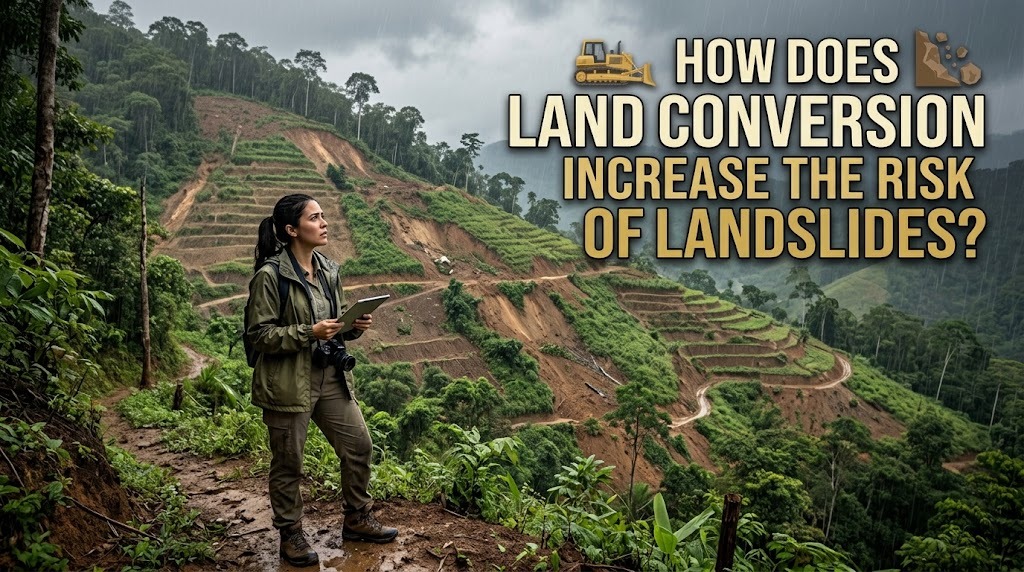
Land conversion is the process of changing natural land into areas used for housing, agriculture, roads, industries, or other human activities. Although these changes can support economic development, they may also disturb the natural balance of the environment. One serious consequence is an increased risk of landslides, particularly in hilly and mountainous regions.
Landslides occur when soil, rocks, or other materials move down a slope due to gravity. Natural factors such as heavy rainfall, steep terrain, and weak soil conditions can trigger these events. However, uncontrolled land conversion can make slopes less stable and increase the likelihood of landslides, especially during periods of intense rainfall.
HOW LAND CONVERSION AFFECTS SOIL STABILITY
Natural landscapes often have vegetation and soil structures that help maintain slope stability. Plant roots hold soil particles together, while vegetation reduces the direct impact of rainfall on the ground.
When land is converted for construction or agriculture, these natural protections may be removed. Exposed soil becomes more vulnerable to erosion, water infiltration, and surface movement. As the soil loses its natural support, slopes can become more unstable and susceptible to landslides.
DEFORESTATION REDUCES NATURAL SLOPE PROTECTION
Deforestation is one of the main activities associated with land conversion. Trees and other vegetation help stabilize slopes through their root systems, which strengthen the soil and reduce erosion.
When forests are cleared for plantations, settlements, or infrastructure, the loss of vegetation can weaken this natural protection. Rainwater can also reach the soil more directly, increasing erosion and the possibility of slope failure. The risk is particularly concerning on steep hillsides with loose or weathered soil.
AGRICULTURAL ACTIVITIES CAN INCREASE EROSION
Converting forests into agricultural land can change how water moves across a slope. Certain farming practices, especially those that leave soil exposed or involve cultivation along steep terrain, can accelerate erosion.
Repeated tilling may disturb soil structure, while poorly designed drainage systems can concentrate water in specific areas. If these conditions are combined with heavy rainfall, the soil may become saturated and lose strength. Sustainable farming practices and proper land management can help reduce these risks.
CONSTRUCTION CHANGES NATURAL SLOPE CONDITIONS
Building houses, roads, and commercial facilities often requires cutting, filling, or reshaping hillsides. These activities can change the natural angle of a slope and disturb the layers of soil and rock beneath the surface.
Cutting into the lower part of a hillside may remove support from the material above it. Meanwhile, adding buildings or construction materials can increase the load on unstable ground. Without appropriate engineering assessments, these changes may contribute to slope failure.
POOR DRAINAGE INCREASES WATER PRESSURE IN THE SOIL
Water management is an important factor in preventing landslides. Natural vegetation and soil systems help absorb, store, and gradually release rainwater. However, land conversion can replace these systems with roofs, roads, and concrete surfaces that change natural drainage patterns.
Blocked drains, leaking water pipes, and poorly designed drainage channels can direct excess water into unstable slopes. When water accumulates inside the soil, pore-water pressure may increase and reduce the friction that helps hold soil particles together. This condition can make a slope more likely to collapse.
URBAN EXPANSION CREATES ADDITIONAL LANDSLIDE RISKS
Urban expansion often pushes settlements into hillsides and other areas with challenging terrain. The construction of roads, housing developments, and public facilities can disturb natural slopes and increase pressure on surrounding land.
Unplanned development may also reduce vegetation and create drainage problems. When residential areas are built in landslide-prone locations, more people and infrastructure are exposed to potential hazards. Land-use planning is therefore essential for reducing the risks associated with urban growth.
HEAVY RAINFALL CAN TRIGGER LANDSLIDES ON CONVERTED LAND
Heavy rainfall is a common landslide trigger, particularly when the soil becomes saturated. Land conversion can make some slopes more vulnerable because vegetation has been removed, drainage systems have been altered, or soil structures have been disturbed.
When rainfall continues for an extended period, water may accumulate within the ground and increase the weight of the soil. If the forces acting down the slope become greater than the soil's ability to resist movement, a landslide may occur. This explains why land-use changes can intensify the impact of extreme weather conditions.
THE IMPORTANCE OF RESPONSIBLE LAND-USE PLANNING
Responsible land-use planning helps prevent development in areas that are unsuitable or highly vulnerable to landslides. Governments and developers should consider slope steepness, soil characteristics, geological conditions, vegetation coverage, and drainage patterns before approving construction projects.
Environmental impact assessments and landslide hazard maps can help identify areas that require protection or special construction measures. Maintaining vegetation, limiting excessive hillside excavation, and designing effective drainage systems are also important preventive actions.
HOW COMMUNITIES CAN HELP PREVENT LANDSLIDES
Local communities can support landslide prevention by protecting trees, avoiding uncontrolled excavation, and reporting changes in the surrounding environment. Warning signs may include cracks in the ground, leaning trees, unusual water seepage, or small movements along slopes.
Residents should also avoid building in restricted hazard zones and follow local land-use regulations. Community education can help people understand how human activities affect slope stability and encourage more responsible environmental practices.
CONCLUSION
Land conversion can increase landslide risks by removing vegetation, disturbing soil structures, changing natural drainage, and altering slope conditions. Activities such as deforestation, intensive agriculture, and uncontrolled construction may weaken natural slope stability, especially when combined with heavy rainfall.
Reducing these risks requires responsible land-use planning, environmental protection, proper drainage, and community participation. Development should consider the natural characteristics of the land to protect both the environment and people living in vulnerable areas.
Recent Posts

Bagaimana Sistem SKS pada Program Kuliah... 22.11.2026/37 View

How Does Technology Make Daily Evaluation... 21.11.2026/70 View

Apa Strategi Menghadapi Kesenjangan antara Kompetensi... 21.11.2026/73 View

Mengapa Inventaris Aset Penting bagi Kelancaran... 21.11.2026/68 View

When Should Musicians Join a Record... 21.11.2026/71 View
