

How Does Learning Research Help Teachers Understand Students Learning Needs?
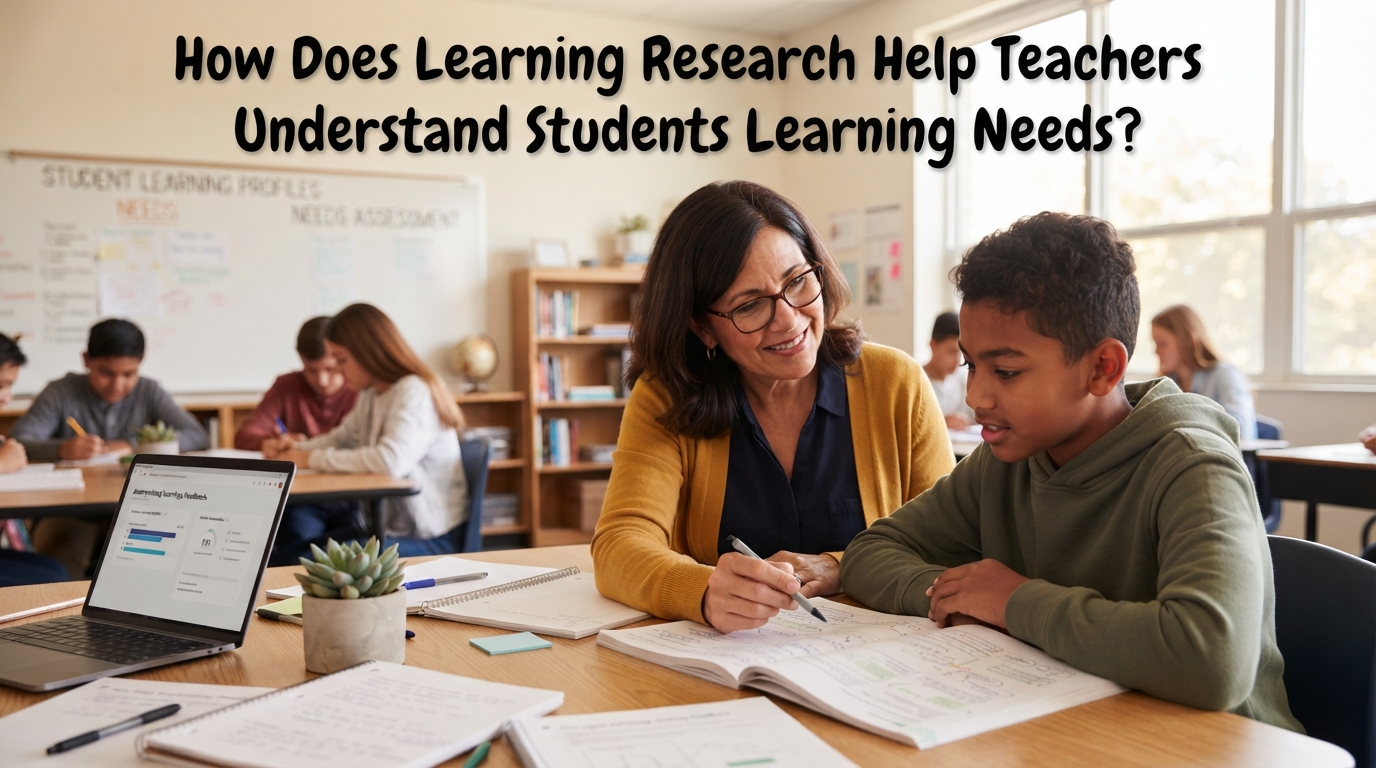
Every student has different abilities, interests, learning habits, and ways of understanding information. Some students can understand lessons quickly, while others need additional explanations, practice, or individual guidance. These differences create challenges for teachers who want to provide effective learning experiences for everyone in the classroom. Learning research offers a systematic way to understand these differences by collecting information about students' learning experiences, academic progress, and educational challenges. Through research, teachers can identify students' needs more accurately, select appropriate teaching strategies, and create supportive learning environments that encourage every student to develop their potential.
IDENTIFYING INDIVIDUAL STUDENT LEARNING NEEDS
Learning research helps teachers recognize that students do not always learn in the same way or at the same pace. Some students may need additional practice, while others benefit from practical activities, visual explanations, or classroom discussions. Teachers can use observations, interviews, questionnaires, and learning assessments to understand these differences. The collected information provides a clearer picture of students' abilities, interests, and difficulties. By identifying individual learning needs, teachers can provide more appropriate support instead of using the same approach for every student.
UNDERSTANDING STUDENTS' ACADEMIC STRENGTHS AND WEAKNESSES
One important contribution of learning research is helping teachers identify students' academic strengths and weaknesses. Through regular assessments and classroom observations, teachers can discover which subjects students understand well and which topics require additional attention. For example, a student may demonstrate strong reading skills but experience difficulties with mathematical problem-solving. This information helps teachers develop suitable learning activities based on actual student performance. Understanding these strengths and weaknesses also allows educators to provide constructive feedback and guide students toward continuous improvement.
DEVELOPING MORE EFFECTIVE TEACHING STRATEGIES
Learning research provides useful evidence for selecting and improving teaching strategies. Teachers can examine how different instructional methods influence students' understanding, participation, and academic performance. For example, group discussions may encourage communication, while practical demonstrations can help students understand complex concepts. Research findings also help teachers recognize when a particular teaching method is not producing the expected results. By adjusting their instructional approaches, educators can create more effective lessons that respond to students' learning needs.
RECOGNIZING LEARNING DIFFICULTIES EARLY
Some students experience learning difficulties that may affect their academic progress if they are not recognized early. These difficulties can involve reading, writing, concentration, memory, communication, or understanding specific subjects. Learning research helps teachers identify possible problems through classroom observations, student assessments, and discussions with parents. Early identification allows educators to provide additional explanations, learning exercises, or referrals for further assessment when necessary. This approach helps students receive appropriate support before their difficulties become more challenging.
UNDERSTANDING STUDENT MOTIVATION AND LEARNING INTERESTS
Students' motivation and interests can strongly influence their participation and learning outcomes. Learning research helps teachers understand what encourages students to participate actively and what factors make them lose interest in classroom activities. Researchers can collect information through interviews, questionnaires, classroom observations, and student feedback. For example, some students may feel more motivated when lessons involve real-life examples, while others prefer collaborative activities or independent assignments. By understanding these preferences, teachers can develop more engaging learning experiences and encourage students to become more actively involved in education.
SUPPORTING PERSONALIZED LEARNING APPROACHES
Every student has different educational needs, which makes personalized learning an important consideration in modern education. Learning research provides information that teachers can use to adjust lesson materials, learning activities, and levels of assistance. For example, students who need additional support may receive simplified explanations and extra exercises, while students who understand lessons quickly can explore more advanced activities. Teachers can also provide different learning resources to help students understand the same topic through various approaches. These adjustments create more flexible learning opportunities while maintaining appropriate educational goals for the entire class.
IMPROVING TEACHER AND STUDENT COMMUNICATION
Effective communication helps teachers understand students' experiences, concerns, and expectations during the learning process. Learning research encourages educators to collect student feedback and pay attention to their opinions about classroom activities. Through discussions, interviews, and reflection activities, students can explain which lessons they find difficult and what kind of assistance they need. This information helps teachers build stronger relationships with their students and recognize problems that may not appear in academic assessments. Better communication also creates a classroom environment where students feel comfortable asking questions and expressing their ideas.
EVALUATING STUDENT PROGRESS AND LEARNING OUTCOMES
Learning research helps teachers monitor whether students are making progress and achieving the expected educational objectives. Teachers can evaluate learning outcomes through assignments, quizzes, projects, presentations, and classroom participation. Comparing students' performance over time can reveal improvements as well as areas that still require attention. Research findings also help teachers determine whether their instructional strategies are effective or need further adjustment. Through continuous evaluation, educators can provide timely support and make more informed decisions about students' educational development.
CONCLUSION
Learning research helps teachers understand students' learning needs by providing reliable information about their abilities, interests, academic challenges, and learning progress. Through observation, assessment, student feedback, and data analysis, educators can develop more effective teaching strategies and provide appropriate learning support. Research also encourages personalized learning, early identification of difficulties, and continuous evaluation of educational outcomes. Although every student has different needs, teachers can use research findings to create more inclusive and supportive classroom environments. Ultimately, learning research helps teachers make informed educational decisions and provide learning experiences that support every student's academic development.
Recent Posts

How Does Technology Make Daily Evaluation... 21.11.2026/62 View

Apa Strategi Menghadapi Kesenjangan antara Kompetensi... 21.11.2026/63 View

Mengapa Inventaris Aset Penting bagi Kelancaran... 21.11.2026/59 View

When Should Musicians Join a Record... 21.11.2026/58 View

Daily Evaluation or Daily Planning Which... 21.11.2026/66 View
