

How Does Lecturer Certification Improve Teaching Professionalism?
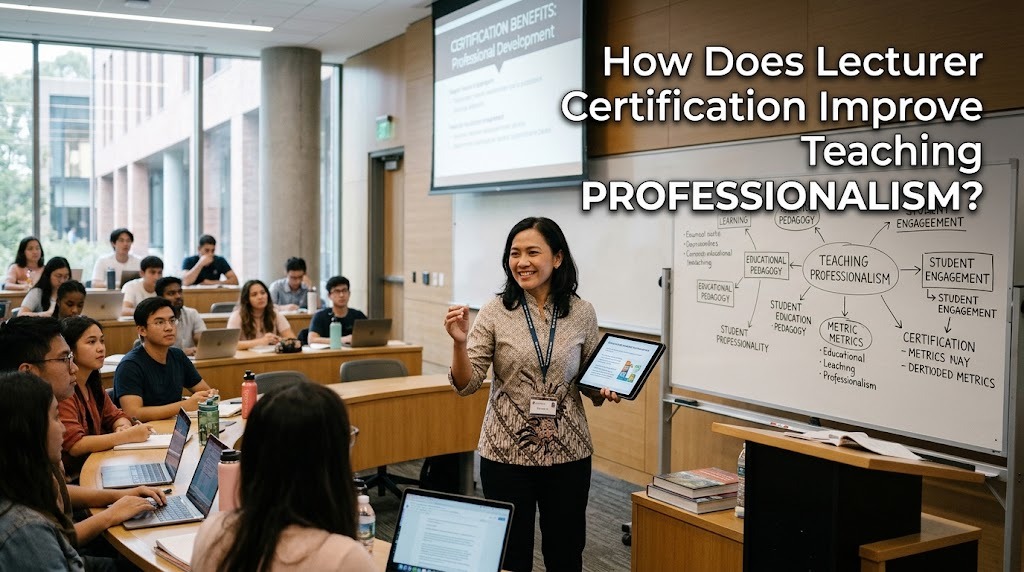
Lecturer certification plays an important role in recognizing the professional competence of educators in higher education. The certification process encourages lecturers to demonstrate their academic qualifications, teaching abilities, and commitment to fulfilling their responsibilities. Through this recognition, lecturers are expected to maintain and improve the quality of their work.
Teaching professionalism involves more than delivering course materials in a classroom. It also includes preparing effective learning activities, evaluating student progress, conducting research, and contributing to the community. Lecturer certification can support these responsibilities by encouraging educators to meet professional standards and continue developing their academic abilities.
STRENGTHENING LECTURERS' TEACHING COMPETENCE
One way lecturer certification improves teaching professionalism is by encouraging lecturers to demonstrate their teaching competence. Educators need to understand their subjects, organize learning activities, communicate information clearly, and select appropriate teaching methods. These abilities help create a learning environment that supports students' academic development.
Certification also encourages lecturers to reflect on their teaching practices. By evaluating how students respond to learning materials and classroom activities, lecturers can identify areas that need improvement. They may adjust their explanations, learning strategies, or assessment methods to make the educational process more effective. Continuous improvement helps lecturers maintain relevant teaching skills as academic needs change.
IMPROVING THE QUALITY OF LEARNING ACTIVITIES
Lecturer professionalism is closely connected to the quality of learning activities provided to students. Certified lecturers are expected to demonstrate the competencies required for their professional responsibilities. These competencies can support better course planning, clearer learning objectives, and more appropriate methods of evaluating student understanding.
Lecturers can apply their knowledge by preparing structured course materials, using relevant learning resources, and encouraging student participation. They can also incorporate discussions, practical assignments, case studies, or digital learning tools when these approaches are suitable for the subject. The purpose is not simply to use different teaching methods, but to ensure that learning activities support the intended academic outcomes.
ENCOURAGING CONTINUOUS PROFESSIONAL DEVELOPMENT
Another contribution of lecturer certification is encouraging educators to continue developing their professional abilities. Higher education constantly changes through advances in research, technology, teaching methods, and academic requirements. Lecturers therefore need to update their knowledge and adapt their practices to remain effective in their fields.
Professional development can take many forms, including academic training, seminars, workshops, research activities, and collaboration with other educators. Lecturers can also improve their abilities by participating in academic communities and learning from feedback. These activities help maintain professional competence beyond the certification process itself. Certification should therefore be viewed as part of a longer development journey rather than the final stage of professional learning.
STRENGTHENING ACADEMIC RESPONSIBILITY AND ETHICS
Teaching professionalism also requires lecturers to demonstrate responsibility, fairness, and integrity. Educators have an important role in providing appropriate guidance, assessing students objectively, and maintaining respectful academic relationships. Professional certification reinforces the importance of meeting established standards and carrying out academic duties responsibly.
Lecturers should also understand the ethical principles that apply to teaching, research, and community service. For example, they need to respect academic honesty, protect relevant student information, and avoid unfair treatment in learning and assessment activities. By applying these principles consistently, lecturers can help create a trustworthy academic environment. Professional conduct is essential because students and other academic stakeholders rely on educators to fulfill their responsibilities fairly.
SUPPORTING THE QUALITY AND CREDIBILITY OF HIGHER EDUCATION
The professionalism of individual lecturers can contribute to the overall quality of a university. When educators maintain their competencies and fulfill their responsibilities, they help strengthen the institution's academic activities. Lecturer certification can support this process by providing professional recognition based on applicable standards and requirements.
However, certification alone cannot guarantee that every aspect of higher education will improve. Educational quality also depends on institutional support, adequate learning facilities, academic leadership, research opportunities, and student participation. Universities need to provide an environment that allows lecturers to apply and develop their professional abilities. Cooperation between lecturers and institutions can help translate professional standards into meaningful improvements in teaching and learning.
CONCLUSION
Lecturer certification improves teaching professionalism by encouraging educators to demonstrate their teaching competence, improve learning activities, pursue continuous professional development, and maintain academic ethics. These responsibilities help lecturers provide more structured learning experiences and fulfill their roles in higher education.
Nevertheless, professional certification should not be treated as the only measure of teaching quality. Lecturers must continue developing their knowledge, evaluating their teaching practices, and maintaining academic integrity. With consistent professional development and institutional support, certification can become part of broader efforts to strengthen educational quality and support student learning.
Recent Posts

Bagaimana Sistem SKS pada Program Kuliah... 22.11.2026/44 View

How Does Technology Make Daily Evaluation... 21.11.2026/73 View

Apa Strategi Menghadapi Kesenjangan antara Kompetensi... 21.11.2026/75 View

Mengapa Inventaris Aset Penting bagi Kelancaran... 21.11.2026/70 View

When Should Musicians Join a Record... 21.11.2026/74 View
