

How Does Lecturer Training Improve Teaching Competencies in Higher Education
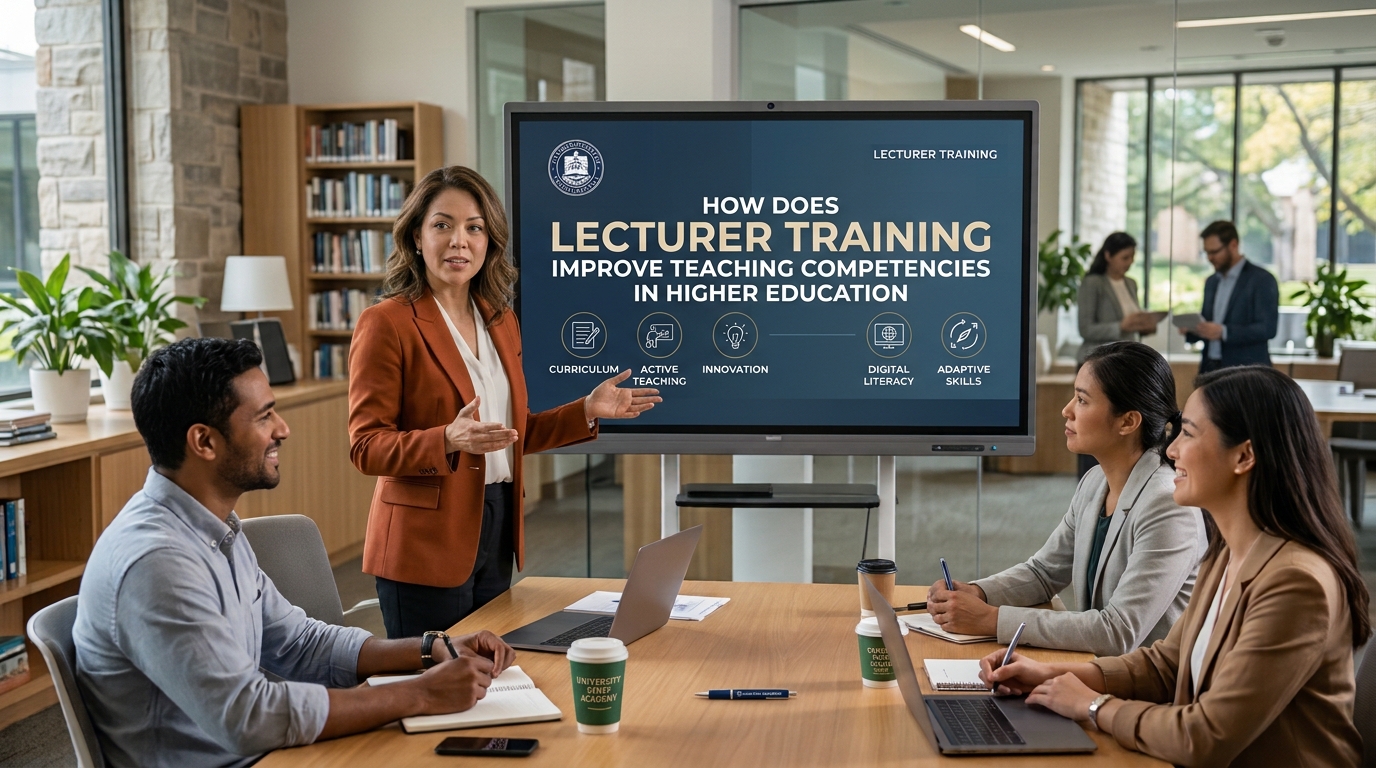
Teaching quality is one of the most important factors in determining the success of higher education. Lecturers are responsible not only for delivering knowledge but also for helping students develop critical thinking, creativity, and practical skills. To fulfill these responsibilities, lecturers need to continuously improve their professional abilities. Lecturer training provides opportunities for educators to strengthen their teaching methods, understand new technologies, and respond to students’ learning needs. Through well-designed training programs, universities can improve teaching competencies and create more effective learning environments.
UNDERSTANDING TEACHING COMPETENCIES IN HIGHER EDUCATION
Teaching competencies refer to the knowledge, skills, and professional attitudes that lecturers need to support effective learning. These competencies include subject knowledge, communication, classroom management, lesson planning, and student assessment. Lecturers must also understand how students learn and how to explain complex concepts in accessible ways. Strong teaching competencies help educators create lessons that are organized, engaging, and aligned with learning objectives. They also support a positive academic environment where students feel encouraged to participate.
In higher education, teaching competencies involve more than explaining theories and presenting information. Lecturers must guide discussions, encourage independent learning, supervise academic projects, and provide constructive feedback. They also need to recognize differences in students’ abilities and learning preferences. Continuous professional development helps lecturers maintain these competencies as educational practices and student expectations evolve. As a result, lecturers can provide learning experiences that support both academic achievement and personal growth.
HOW LECTURER TRAINING IMPROVES TEACHING METHODS
Lecturer training helps educators discover and apply teaching methods that make learning more effective. Training programs may introduce interactive lectures, group discussions, case studies, and project-based learning. These approaches encourage students to participate actively rather than simply memorize information. Lecturers can learn how to select methods based on course objectives, subject requirements, and student needs. This makes classroom activities more purposeful and relevant.
Training also allows lecturers to evaluate the strengths and weaknesses of their existing teaching practices. Through workshops, peer discussions, and teaching demonstrations, they can receive feedback and explore alternative approaches. They can then apply these ideas in their classrooms and assess whether they improve student understanding. Effective teaching strategies help lecturers explain difficult material, encourage collaboration, and develop students’ problem-solving abilities. Over time, these improvements can contribute to better learning outcomes.
DEVELOPING COMMUNICATION AND CLASSROOM MANAGEMENT SKILLS
Clear communication is essential for effective teaching in higher education. Lecturers need to explain concepts logically, provide understandable instructions, and respond to student questions respectfully. Training can help them improve presentation skills, active listening, and the ability to give constructive feedback. These skills reduce misunderstandings and make academic discussions more productive. Effective communication also helps build trust between lecturers and students.
Classroom management is another important competency developed through training. Lecturers need to establish clear expectations, manage classroom activities, and respond appropriately to disruptive behavior. They must also create an inclusive environment where students with different backgrounds can participate comfortably. Training can provide practical techniques for managing discussions, resolving conflicts, and encouraging respectful collaboration. Strong classroom management supports a focused learning environment and allows students to make better use of their learning time.
STRENGTHENING DIGITAL TEACHING COMPETENCIES
Technology has become an important part of modern higher education. Learning management systems, video conferencing platforms, digital libraries, and online assessment tools provide new ways to deliver educational content. However, lecturers need appropriate skills to use these technologies effectively. Digital training helps them design online learning materials, organize virtual discussions, and assess student progress through digital platforms. It also supports the development of flexible learning experiences that combine classroom instruction with online activities.
Lecturers must also understand the limitations and responsibilities associated with digital education. They should consider students’ internet access, digital literacy, accessibility needs, and the protection of personal information. Training can help educators select suitable tools without allowing technology to distract from learning objectives. They can also learn to evaluate digital resources and use them responsibly. With the right preparation, digital teaching skills can improve learning access, interaction, and educational efficiency.
IMPROVING STUDENT ASSESSMENT AND FEEDBACK
Student assessment helps lecturers understand whether learning objectives have been achieved. Training enables lecturers to develop assessments that measure knowledge, practical skills, critical thinking, and problem-solving abilities. They can learn to create clear assessment criteria, design appropriate assignments, and apply grading standards consistently. These practices make evaluations more transparent and meaningful. Accurate assessment also helps lecturers identify areas where students need additional support.
Feedback is equally important because it shows students what they have done well and what they need to improve. Through training, lecturers can learn to provide specific, constructive, and timely feedback. They can also use assessment results to adjust teaching materials and classroom activities. This creates a continuous cycle of teaching, evaluation, and improvement. Effective feedback supports student progress and helps lecturers make informed decisions about their teaching methods.
ENCOURAGING CRITICAL THINKING AND STUDENT ENGAGEMENT
Higher education should prepare students to analyze information, evaluate evidence, and solve complex problems. Lecturer training can introduce strategies that encourage these abilities, including debates, research assignments, case studies, and problem-based learning. Such activities require students to explain their reasoning rather than simply repeat information. Lecturers learn how to guide discussions and ask questions that stimulate deeper thinking. This supports the development of critical thinking skills.
Training also helps lecturers recognize factors that influence student engagement. Clear learning objectives, relevant examples, interactive activities, and supportive feedback can make students more interested in their studies. Lecturers can adapt their teaching approaches to encourage participation from students with different levels of confidence. They can also connect course materials with practical situations to demonstrate their relevance. Improved student engagement can make learning more active, meaningful, and collaborative.
THE ROLE OF UNIVERSITIES IN LECTURER TRAINING
Universities have an important responsibility to provide relevant professional development opportunities for their lecturers. They can organize workshops, seminars, mentoring sessions, teaching observations, and online courses. Training programs should be based on lecturers’ needs, institutional goals, and developments within each academic field. Universities can identify these needs through student feedback, teaching evaluations, and discussions with faculty members. This approach ensures that training addresses real challenges rather than relying on general activities.
Institutions should also evaluate whether training produces meaningful improvements. They can review changes in teaching practices, assessment quality, classroom participation, and student learning outcomes. Follow-up mentoring and peer collaboration can help lecturers apply their new knowledge consistently. Universities should provide sufficient time, resources, and recognition to encourage participation. Institutional support makes professional development more sustainable and strengthens the overall quality of higher education.
CONCLUSION
Lecturer training improves teaching competencies by helping educators strengthen their teaching methods, communication, classroom management, digital skills, and assessment practices. It also equips lecturers with strategies to encourage critical thinking and increase student engagement. However, effective training requires relevant content, practical activities, and ongoing evaluation. Universities must support lecturers in applying what they learn and improving their teaching over time. By investing in continuous lecturer training, higher education institutions can improve teaching quality and provide students with more effective and meaningful learning experiences.
Recent Posts

Bagaimana Sistem SKS pada Program Kuliah... 22.11.2026/46 View

How Does Technology Make Daily Evaluation... 21.11.2026/73 View

Apa Strategi Menghadapi Kesenjangan antara Kompetensi... 21.11.2026/75 View

Mengapa Inventaris Aset Penting bagi Kelancaran... 21.11.2026/71 View

When Should Musicians Join a Record... 21.11.2026/75 View
